Staff Correspondent
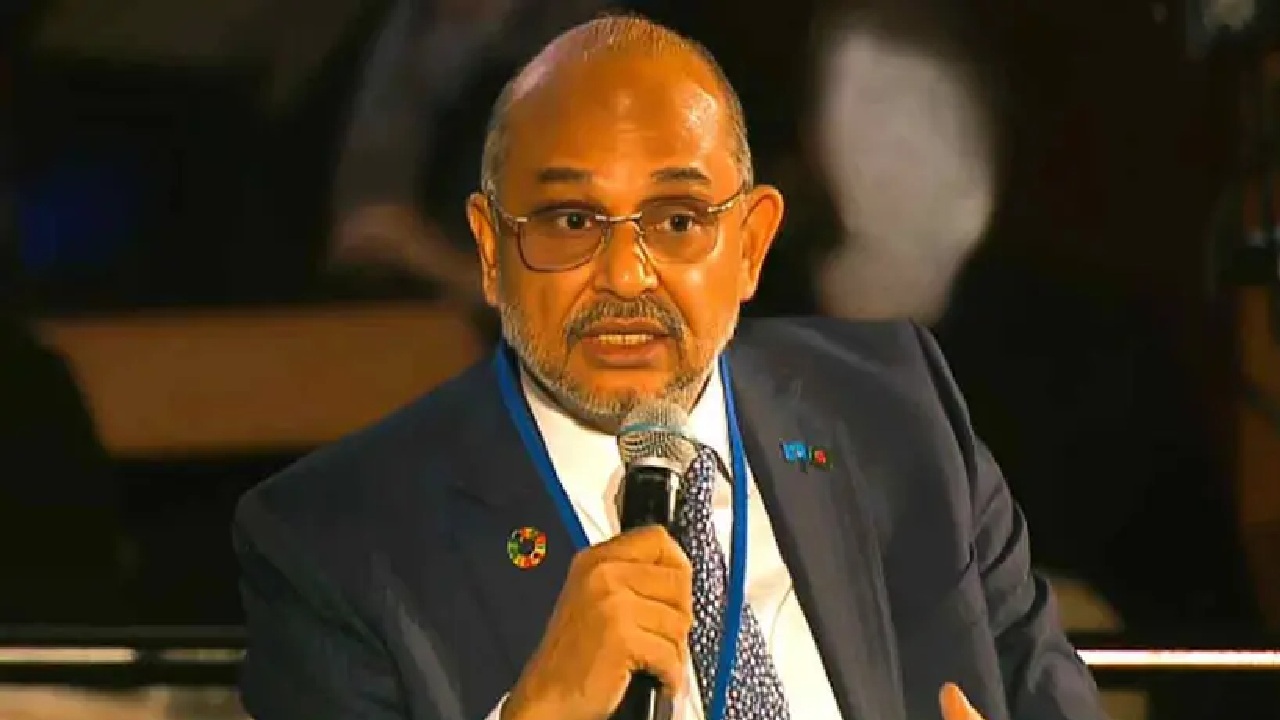
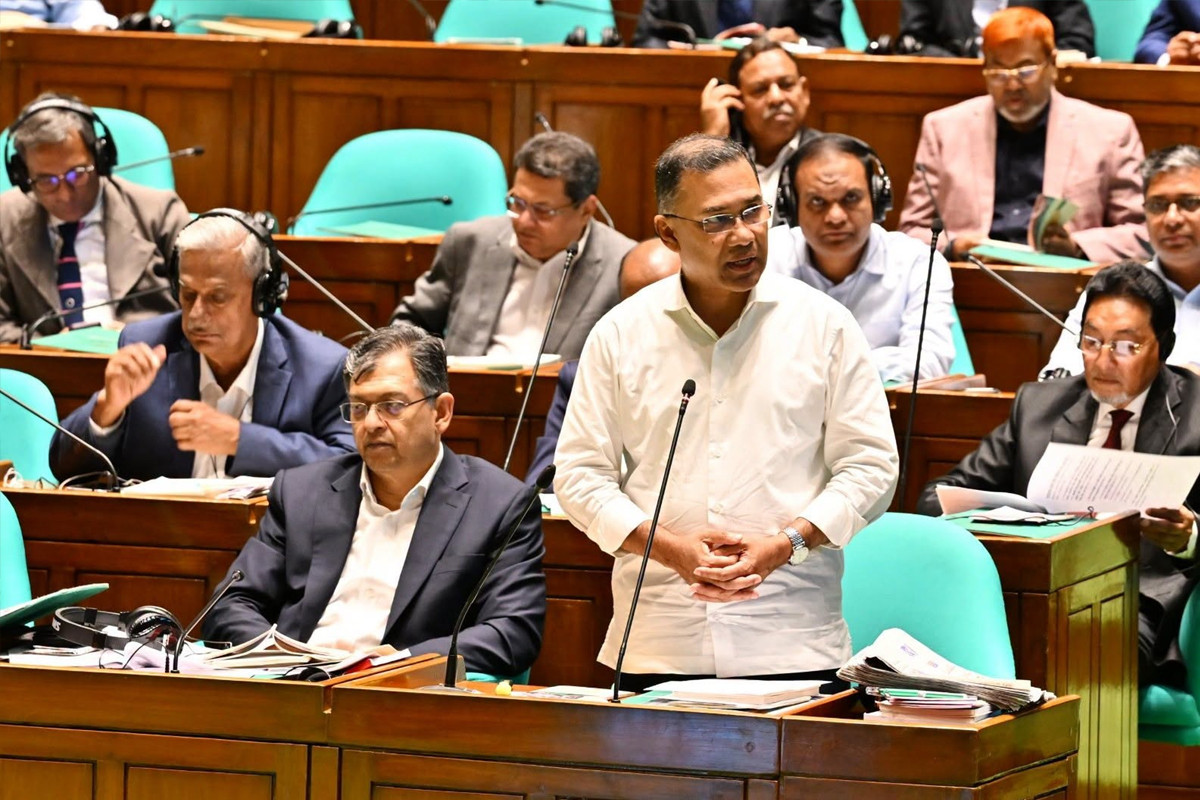
The government has taken office amid a fragile economy, low revenue collection and a mounting debt burden, said Prime Minister’s Adviser on Finance and Planning Professor Rashed Al Mahmud Titumir. He said the government has undertaken recovery and reform programmes to address two major challenges: inadequate revenue collection and growing debt pressure.
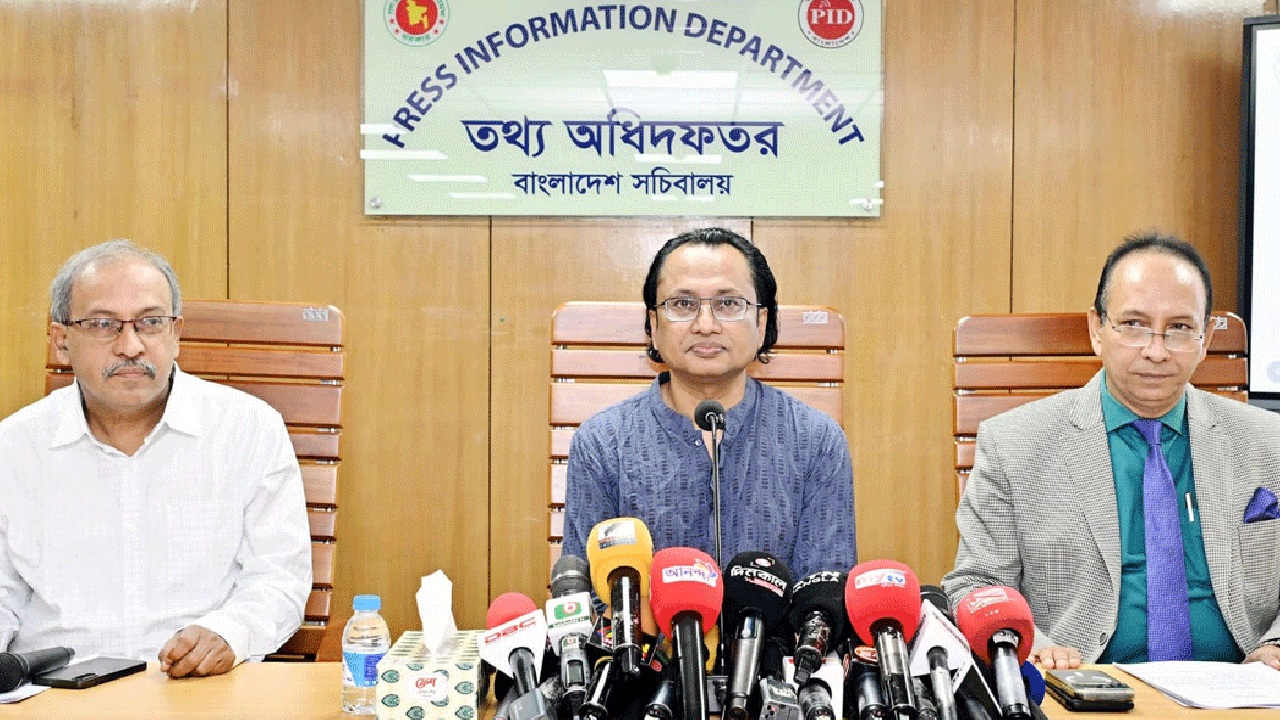
He made the remarks while responding to questions from journalists at the conference room of the National Board of Revenue (NBR) on Tuesday (November 10).
Titumir said domestic revenue collection stood at 6.67 percent of GDP when the government assumed office. This rate is among the lowest not only in South Asia but also by global standards. To overcome the situation, the government has prioritised reforming the revenue system.
He stressed that increasing domestic resource mobilisation is essential to achieving both qualitative and quantitative improvements in social sectors, including education and healthcare. The government aims to raise spending on education and health to 5 percent of GDP.
Highlighting the growing debt burden as another major challenge, the Finance Adviser said the country’s debt increased by 300 percent over the past decade under the previous government. Compared with the 2006-07 fiscal year, the increase stands at 323 percent.
By June 2026, government debt and government-guaranteed loans could reach approximately $90 billion. Including private-sector borrowing, the combined amount of government debt, guarantees and private-sector debt could stand at around $114 billion, he added.
He said $4.49 billion had already been spent on interest and principal repayments. According to some estimates, the amount could rise to $7.6 billion by 2030.
To reform the revenue system, three task forces have been formed covering income tax, customs duties and value-added tax (VAT), Titumir said. As a result, revenue growth has shown improvement. Revenue collection grew by 2.5 percent in the 2024-25 fiscal year, but the growth rate increased to 12.03 percent following the formation of the task forces.
He also noted that customs houses recorded the highest-ever duty collection in the country’s history towards the end of the last fiscal year. However, the Middle East crisis has created economic pressure, affecting revenue collection. Despite this, he expressed optimism that the government would achieve its target through the measures taken.
Responding to a question about the revenue shortfall of nearly Tk 50,000 crore between July and October, the Finance Adviser said the government had inherited an economy that had been severely damaged. He added that around $40 billion would be required to restore the banking sector following large-scale financial irregularities and the siphoning of funds.
Titumir said the government was focusing on four key areas to revitalise the economy: investment, public expenditure, consumer spending and export earnings. Instructions have been issued to accelerate implementation of the Annual Development Programme (ADP). Bangladesh Bank has also announced a package to increase credit flow to the private sector, of which one-fifth has already been disbursed.
He said a census and verification process was underway for the Family Card programme to support people who had fallen below the poverty line. The government is also taking initiatives to increase remittance inflows and boost consumption among low-income households.
Positive changes are being observed in several economic indicators, he said, adding that investment initiatives from China and Japan also indicate a recovery of confidence in the economy. Overall, the government expects to achieve its GDP growth target of 6.5 percent.
Responding to questions about the non-publication of revenue collection data and negative growth in VAT collection, Titumir said no revenue information was being withheld. The process of publishing data was being regularised.
He acknowledged certain shortcomings in the NBR’s statistical system. Although daily data are available through iBAS++, reconciliation takes some time. He said regular publication of revenue collection data would begin in December after addressing the existing gaps.
Asked whether an inflated GDP calculation was making the tax-to-GDP ratio appear lower, the Finance Adviser said a forensic audit of GDP figures had been conducted by experts. This was followed by a peer review involving leading economists from different countries with diverse perspectives.
He said the report would be published on November 14, presenting relevant information, including the tax-to-GDP ratio. He added that political considerations had been excluded from the process to ensure the accuracy of the data.
Regarding the possibility of imposing additional excise duty at the retail stage of fuel sales, Titumir said discussions were underway with the International Monetary Fund (IMF) on a new programme. The matter is currently at the technical level, after which a staff report will be prepared and policy-level discussions will be held with the IMF mission before the proposal is placed before the organisation’s board.
Asked about nearly Tk 18,000 crore in VAT refunds pending for businesses, the Finance Adviser said the matter was under discussion and reforms were underway in the VAT refund process and other areas of revenue administration.
He said audits previously lacked specific guidelines, but a risk-based audit system had now been introduced. Businesses are being identified based on various risk indicators before audit activities begin.
Journalists, however, pointed out that although 600 companies had been selected for VAT audits, fewer than 10 percent of the audits had been completed in six months.
Titumir said the government was also prioritising the settlement of revenue-related cases. Around 29,000 cases remain pending, and the relevant wings have been instructed to take necessary measures to resolve them quickly. Efforts are also being made to coordinate with the courts.
He said a substantial amount of revenue remained tied up in these cases, adding that the government was reviewing where and why the backlog had developed.
On administrative reforms at the NBR, the Finance Adviser said a recommendation had been made, following consultations with stakeholders, to establish two separate divisions: one for revenue collection and another for revenue policy. The committee formed to examine the proposal has submitted its report, and the government hopes to implement the recommendations soon.
Regarding the tax structure, he said the government’s policy was to establish a fair taxation system without increasing tax rates. Consideration was being given to supporting manufacturing industries while reducing the tax burden on ordinary citizens. Initiatives had also been taken to reduce taxes on solar power and electric vehicles.
He further said VAT was primarily a consumption-based tax. Therefore, the government aimed to achieve comparatively higher growth in income tax collection to establish a progressive tax system.
The government wants to increase revenue collection through institutional reforms by moving away from a culture of tax exemptions, tax evasion, tax fraud and patronage, he added.