Staff Correspondent
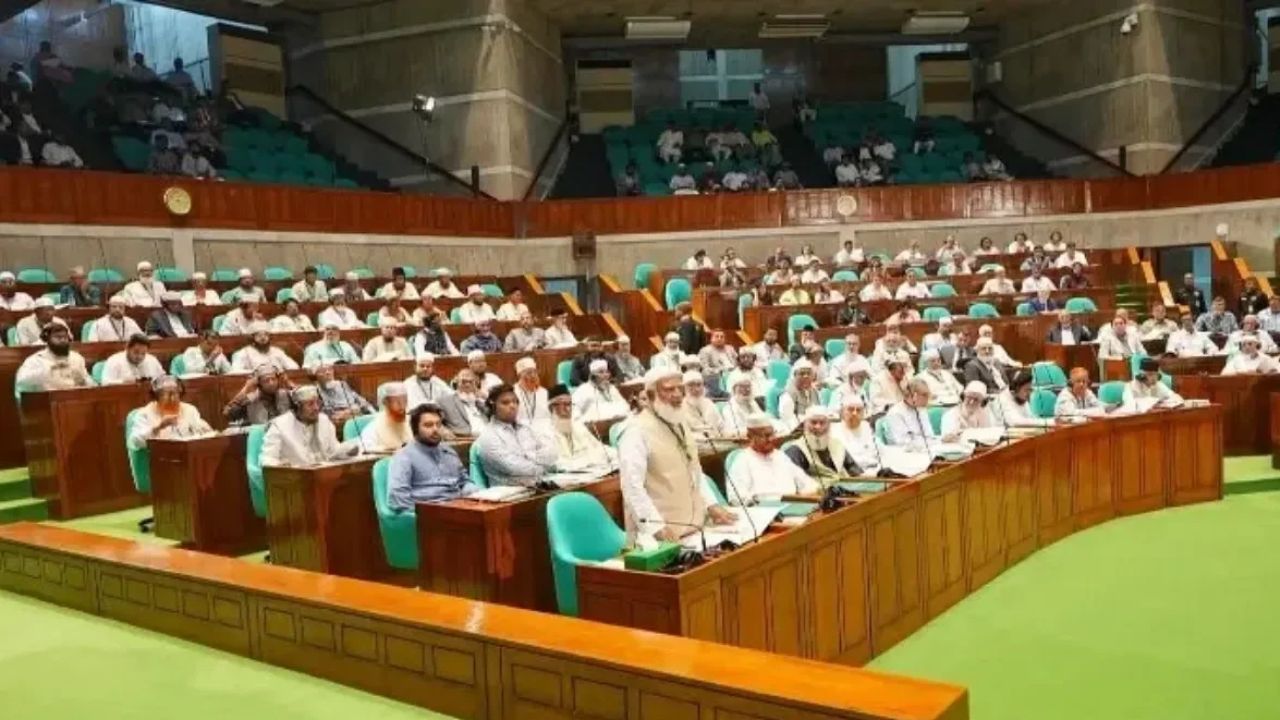
The opposition has taken initiatives to raise several key issues in Parliament, including rising fuel prices, fertiliser shortages, unrest in the ready-made garment (RMG) sector and the Ganges water-sharing treaty. Opposition lawmakers have submitted notices and motions under Rules 68 and 147 of the Rules of Procedure of Parliament, seeking discussions on these matters.
The notices were submitted on Monday (November 9), the first day of the fourth session of the 13th National Parliament.
The opposition has called for parliamentary discussions over allegations that public hearings and legal procedures were not followed in increasing the prices of liquefied petroleum gas (LPG) and other fuel products.
The notice stated that repeated increases in cylinder gas prices were putting financial pressure on low- and middle-income families. Selling gas at prices higher than the officially fixed rates and the lack of effective market monitoring were also increasing consumer hardship.
The opposition demanded that fuel prices be determined through public hearings in accordance with the Bangladesh Energy Regulatory Commission (BERC) Act and relevant regulations. It also called for effective government measures to ensure transparency in the market.
The agricultural sector’s crisis has also been raised for parliamentary discussion. Jamaat-e-Islami lawmaker Shafiqul Islam Masud submitted a notice under Rule 68, citing farmers’ difficulties in obtaining fertiliser in various parts of the country, excessive prices in the black market, irregularities in the distribution system, and allegations of corruption and political favouritism in the appointment of fertiliser dealers.
He called for visible government action to ensure an uninterrupted supply of fertiliser and restore normalcy in the distribution system in the interests of farmers.
Meanwhile, initiatives have also been taken to discuss the crisis in the RMG sector and labour unrest. Jamaat’s parliamentary spokesperson and Pabna-1 MP Mohammad Nazibur Rahman proposed a general discussion on the issue. He called for identifying and addressing labour unrest, energy shortages and structural problems affecting the garment industry.
The future of the Ganges water-sharing treaty has also drawn the opposition’s attention. Bangladesh’s water-sharing treaty with India is scheduled to expire on December 12.
Against this backdrop, Dhaka-14 MP Mir Ahmad Bin Quasem Arman submitted a notice under Rule 147, seeking a parliamentary discussion on the government’s preparations and future course of action to safeguard the country’s water security and national interests.
In addition, initiatives have been taken to raise the issue of Matarbari deep-sea port in Parliament. Opposition spokesperson Nazibur Rahman also said proposals would be submitted for discussions on passenger harassment and mismanagement at Hazrat Shahjalal International Airport and the Rohingya crisis.
Alongside these proposals, the agenda for the first day of the fourth session of the 13th National Parliament included the nomination of the panel of chairpersons, condolence motions, question-and-answer sessions and legislative proceedings.
The agenda also included the presentation of three ordinances and the introduction of the Bogura Development Authority Bill, 2026.