Staff Correspondent
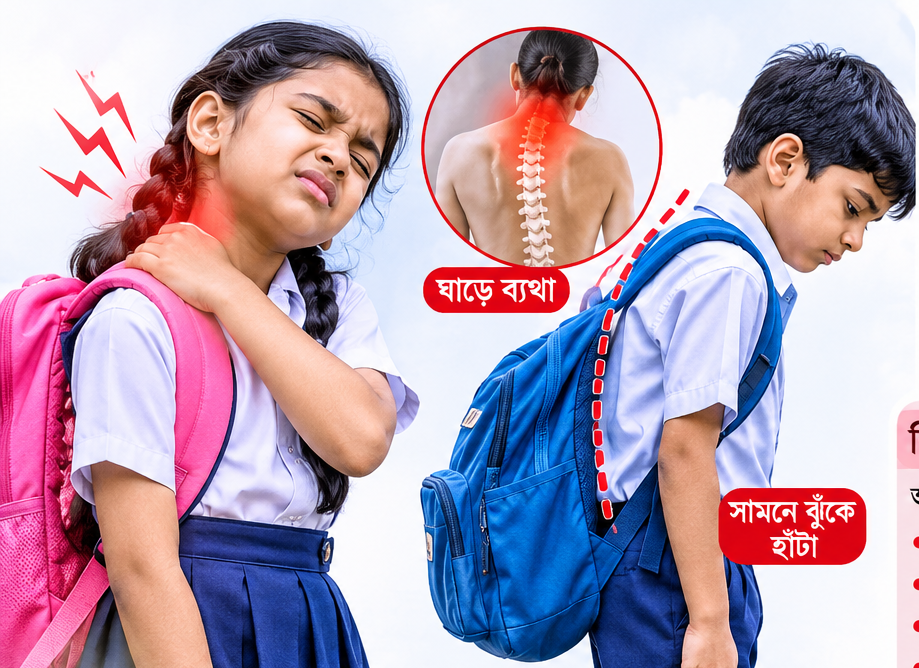
Carrying a bag over the shoulder is part of everyday life for many people, whether they are heading to the office, going shopping or taking their children to school. However, carrying a heavy bag or keeping it on one shoulder for extended periods can put unnecessary strain on the muscles. This is particularly important for children, who may experience discomfort in their neck, shoulders and back from carrying schoolbags filled with books, notebooks, water bottles and lunch boxes.
Children often carry their schoolbags for long periods while travelling to and from school. In many cases, the bag may be too heavy for their body weight. Some children carry their bags over one shoulder, while others wear them with the straps too loose. These habits can make it difficult to maintain proper posture and increase muscle strain.
What Happens When You Carry a Bag on One Shoulder?
When a bag’s weight rests on one shoulder, the body has to adjust its posture to maintain balance. The shoulder may rise to support the load, while the body may lean to one side. Prolonged carrying in this position can lead to muscle fatigue, tightness and pain in the neck, shoulders and upper back.
Children carrying heavy bags may also lean forward while walking, placing additional strain on their neck and back muscles. However, there is no conclusive evidence that carrying a heavy schoolbag inevitably causes permanent spinal damage or reduces a child’s height. The risks depend on the bag’s weight, how long it is carried, posture and the child’s physical condition.
How Heavy Should a Child’s Schoolbag Be?
Keeping a schoolbag light in relation to a child’s body weight is important. A commonly recommended guideline is to keep the bag’s weight within 10–15 per cent of the child’s body weight. However, this is not a precise limit suitable for every child. Age, physical ability and carrying duration should also be considered.
Parents should check the contents of their children’s bags every day and remove unnecessary books, notebooks and other items. Schools can also help reduce the burden by providing storage space for books, using digital learning materials where appropriate, and allowing students to carry only the books they need for each day.
Tips for Carrying Schoolbags Safely
Use both shoulder straps: Encourage children to wear both straps of a backpack instead of hanging it from one shoulder.
Adjust the straps properly: The bag should not hang too low. Adjust the straps so that the backpack sits close to the back without restricting movement.
Keep heavier items close to the back: Placing heavier books and notebooks near the back can make the load easier to manage. Keep the contents organised.
Consider a wheeled bag: A wheeled schoolbag may be useful when children have to carry many books or walk long distances. However, stairs, uneven roads and crowded areas can make wheeled bags difficult to use.
Watch for signs of discomfort: Take complaints of neck or shoulder pain, back strain, tingling in the hands or difficulty lifting the bag seriously.
Adults Should Also Change Their Habits
Similar precautions apply to laptop bags and shopping bags. Keep bags light, switch shoulders when carrying a single-shoulder bag, and avoid carrying it for prolonged periods. When using a backpack, wear both straps. If you work while sitting for long periods, get up and move around occasionally.
When Should You Seek Medical Advice?
If pain develops after carrying a bag, reducing its weight and changing how it is carried may help. However, medical advice is necessary if the pain persists, worsens, or is accompanied by numbness or weakness in the hands or arms. For children, consult a healthcare professional promptly if discomfort interferes with walking, playing or normal school activities.
The weight of a bag is not the only factor that matters. How it is carried, for how long and with what posture are equally important. Families and schools need to work together to keep children’s schoolbags manageable. Small changes in daily habits can help reduce unnecessary physical strain.