IU Correspondent
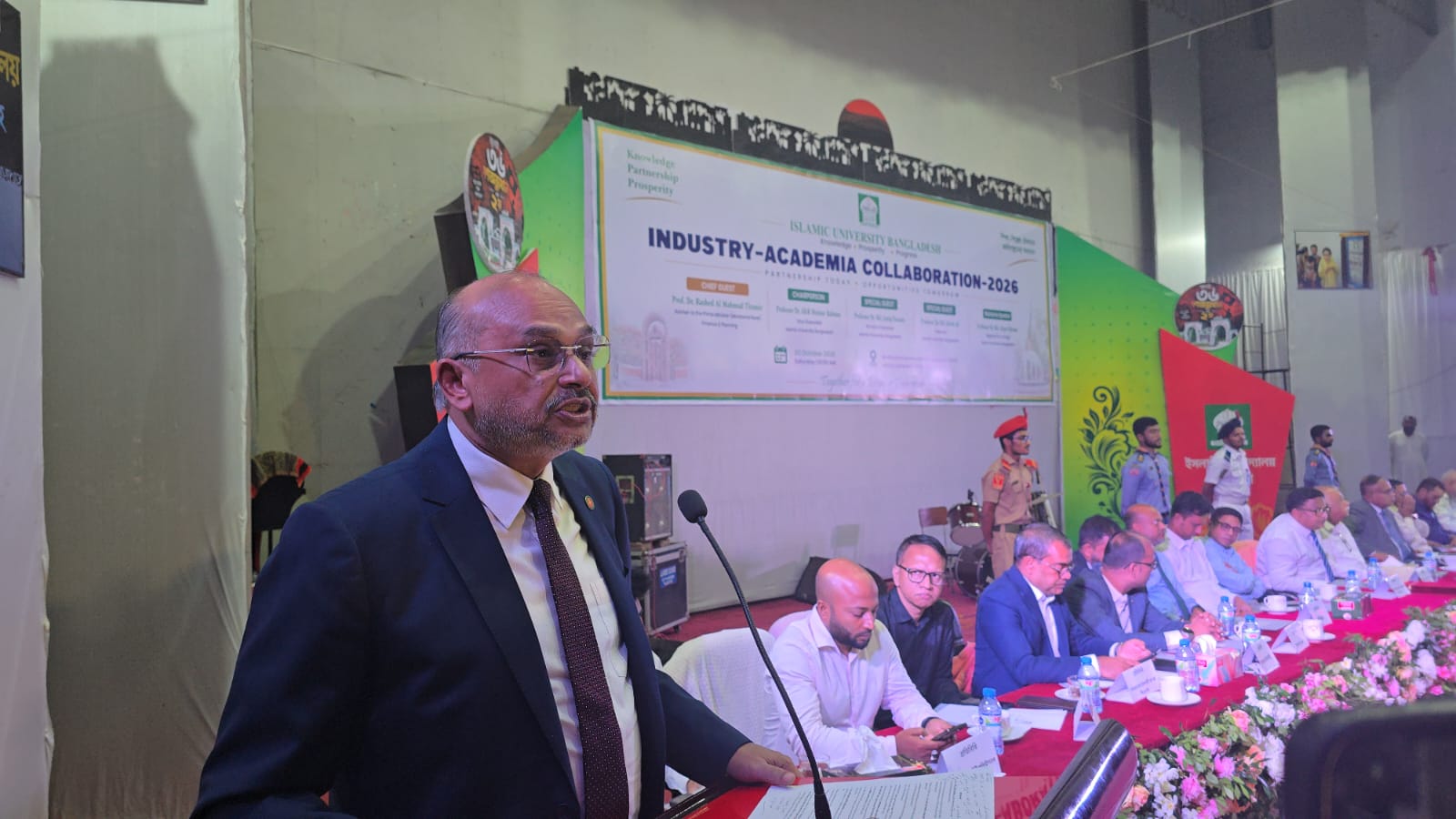
An ‘Industry-Academia Collaboration-2026’ programme was held at Islamic University (IU) with the aim of creating direct links between students and industries, expanding employment opportunities and aligning academic education with the demands of the job market.
The programme was held at the Bir Shreshtha Hamidur Rahman Auditorium of the university’s TSCC at 10am on Saturday (October 3), under the slogan, “Harmony between education and industry, solution to employment.”
Representatives from various industrial and business organisations attended the event. An open question-and-answer session was held after the main programme, giving students an opportunity to directly ask representatives about careers in the industrial sector, required skills and employment opportunities. The event concluded with a cultural programme.
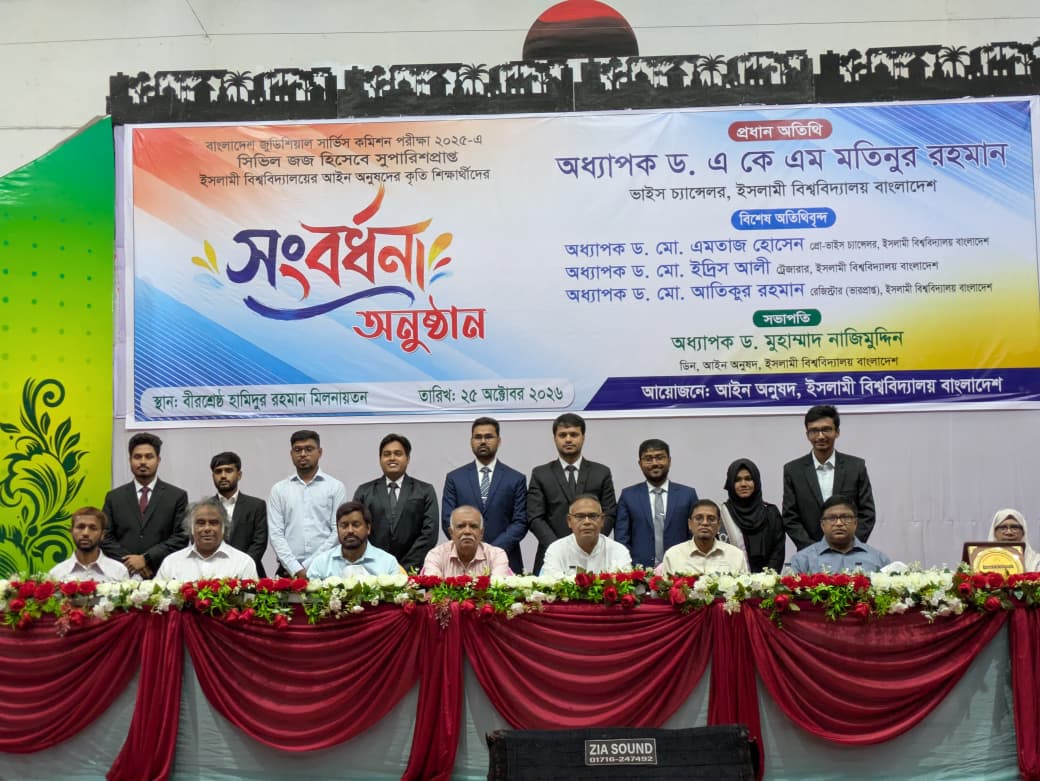
Vice-Chancellor Professor Dr AKM Matinur Rahman chaired the event. Professor Dr Rashid Al Mahmud Titumir, Adviser to the Prime Minister (with the rank of a minister) and Adviser for Finance and Planning, attended as the chief guest. Pro-Vice-Chancellor Professor Dr Emtaz Hossain and Treasurer Professor Dr Idris Ali were present as special guests. Acting Registrar Professor Dr Md Atikur Rahman delivered the welcome address.
Representatives from IFAD Multi Products Limited, Nestlé Bangladesh PLC, PRAN-RFL, Square Food & Beverage, Anwar Group, Shahjalal Islami Bank, Betopia Group, Teletalk, Innovix IT Solutions, BenQ, Technodera, TP-Link Bangladesh, NCINJA, Modern Plywood, BAT Bangladesh, Rajbari Jute Mills, Grameenphone, Akij Resources, Matador Distribution, bKash, DBC News, Abul Khair Group, Walid Lift, Golden Jute and BRAC, among others, attended the programme.
According to the organisers, the programme, held under the theme “Partnership Today, Opportunities Tomorrow,” created opportunities for students to directly interact with representatives from the industrial sector. Students were able to learn about industry requirements, essential skills and potential employment opportunities.
Finance and Planning Adviser Professor Dr Rashid Al Mahmud Titumir said the government’s strategic plan prioritises revitalising the economy, strengthening institutional capacity, restoring economic discipline, expanding investment and employment opportunities, and developing skilled human resources. He said increasing economic growth alone would not be enough; effective coordination among production, investment, employment, skills development and institutional capacity was necessary.
He said, “Our election manifesto and the mandate of the people have been transformed into a specific Five-Year Strategic Framework. It contains the philosophical foundation for building ‘Bangladesh for All’ as well as specific action plans. At the same time, the government has adopted the ‘3R’ strategy to overcome the economic crisis and move towards sustainable prosperity.”
Explaining the government’s ‘3R’ strategy, he said the first ‘R’, Recover, aims to revive fragile economic activities and bring the economy back to normal momentum. The second ‘R’, Restoration, focuses on strengthening the institutional capacity of state institutions, restoring economic discipline and reinforcing the foundations of the economy. The third ‘R’, Reconstruction for Accelerator, aims to accelerate economic growth by completing reconstruction activities quickly.
Speaking about unemployment among educated young people, he said universities should not merely be institutions that award degrees but should also serve as centres for developing skilled human resources, research, innovation and entrepreneurship. He stressed the need to focus on students’ skills development, civic awareness and innovative capabilities. Referring to plans to create new entrepreneurs and startups, he said a special fund of $50 million is planned for the sector.
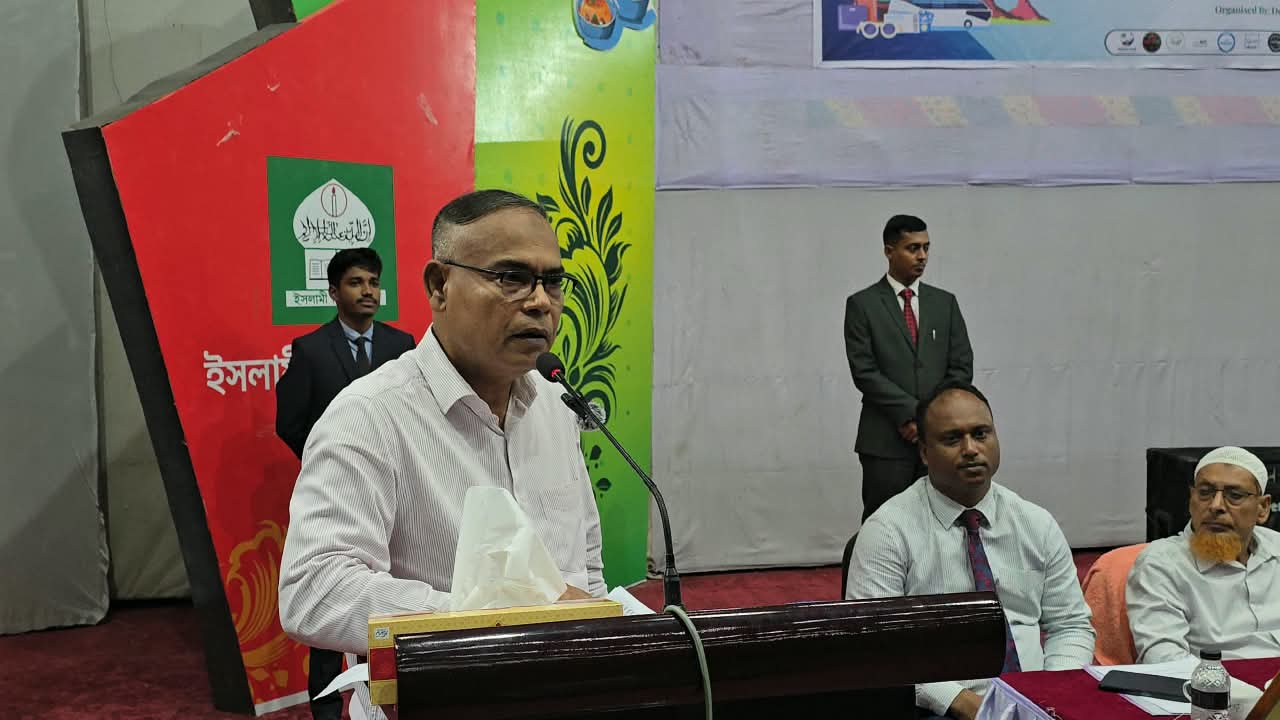
IU Vice-Chancellor Professor Dr AKM Matinur Rahman said it is essential to align education with the needs of industry and the workplace in the current technology-driven era. If necessary subjects are not incorporated into the curriculum in line with changing times, students will not be able to establish themselves at the expected level nationally and internationally.
He said the university’s highest academic authority, the Academic Council, has decided to introduce a three-credit, 100-mark industry-related course in the curriculum of every discipline. Through this initiative, students will have opportunities to engage with industries through internships, research and employment according to their qualifications.
He further said Islamic University is ready to cooperate with industries in research, academic activities and institutional engagement. The university is also open to signing memorandums of understanding (MoUs) with industrial organisations. The university wants to further strengthen the connection between industry and academia under the concept of “Campus to Career, Career to Campus.”