Staff Correspondent
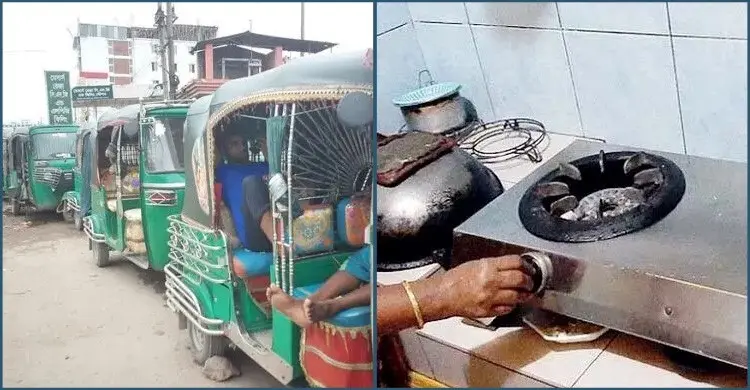
A severe gas crisis continues to affect Dhaka and several other parts of Bangladesh, causing widespread hardship for residential consumers, CNG filling stations, and industrial factories. Low gas pressure throughout most of the day has made cooking difficult for households, while inadequate gas supplies have disrupted transport services and industrial production.
On Saturday (August 1), residents in Mirpur, Mohammadpur, Shyamoli, Rampura, Badda, Khilgaon, Jatrabari, Old Dhaka, Uttara, and other parts of the capital reported that gas pressure was so low it took several hours to cook a single meal.
Many families have been unable to prepare breakfast and are forced to wait until late at night when gas pressure improves. Others have turned to electric heaters, rice cookers, or LPG cylinders, increasing household expenses and placing additional pressure on the electricity grid.
Long Queues at CNG Stations
The gas shortage has also severely affected CNG filling stations across the capital. Many stations have either suspended operations or are supplying gas on a limited basis due to inadequate pressure.
At stations where gas is available, drivers begin queuing from early morning and often wait for hours. Many are unable to refuel even after prolonged waits, reducing the earnings of CNG-powered auto-rickshaw and private vehicle drivers while adding to commuters’ inconvenience.
Naznin, a resident of Badda, said gas pressure in her neighborhood was extremely low.
“The pressure is so weak that cooking has become very difficult. Preparing even one meal takes hours. We’ve been suffering like this for many days.”
Azizur, a CNG-powered auto-rickshaw driver in Lalbagh, said:
“We can’t get gas at the filling stations. We spend hours waiting in line. Most of the day is gone just trying to refuel, and our income has dropped significantly.”
Industries Also Affected
The industrial sector is facing similar challenges. Low gas pressure has prevented many factories from operating their boilers efficiently, forcing some to cut production by half while others continue operating at limited capacity.
Industrial owners warn that if the situation persists, manufacturing output will decline further and exporters may struggle to meet international delivery deadlines.
LNG Terminal Problem Behind the Crisis
According to Titas Gas, the crisis has worsened because of a technical problem at the Maheshkhali LNG terminal, which has reduced the volume of gas being supplied to the national grid.
The utility said gas pressure is unlikely to return to normal until the technical issue is resolved. As a result, residential consumers, transport operators, and industries are expected to continue facing difficulties for at least the next several days.