Dhaka 2:39 pm, Monday, 9 November 2026

Plan to Sell Sunlight at Night, Targeting 50,000 Satellites by 2035

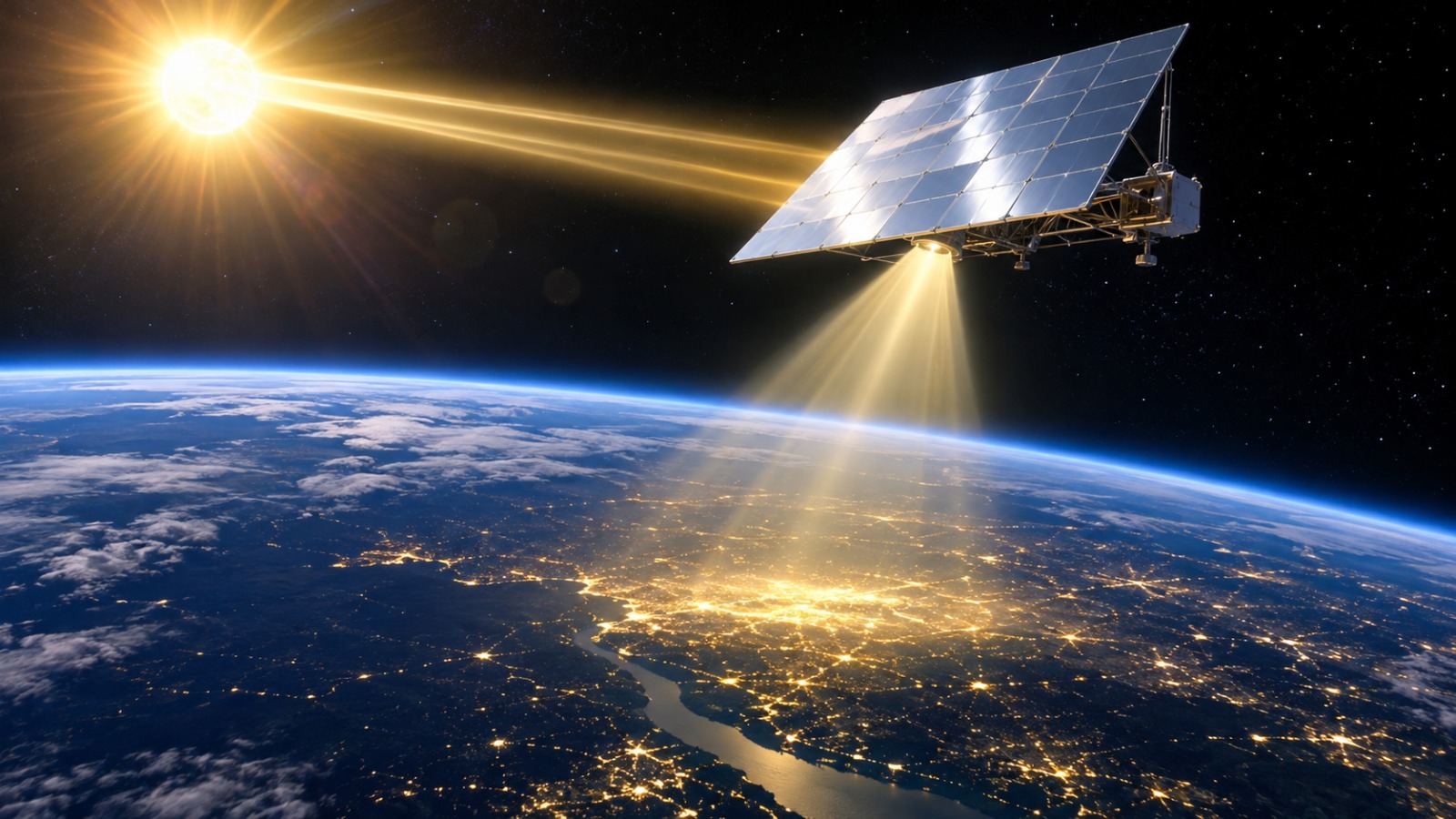
Buying sunlight even at night could soon become a reality under an ambitious plan by US-based space startup Reflect Orbital. The California-based company is working on a project to deploy giant mirrors in space and reflect sunlight onto specific areas of Earth. Its goals include extending solar power generation hours, providing lighting in disaster-hit areas and supporting rescue operations.

To test the technology, Reflect Orbital has signed an agreement with India’s space research company Skyroot Aerospace for two rocket launches. However, the ambitious plan has raised concerns among astronomers and environmentalists, who fear that reflected light from space-based mirrors could have adverse effects on the night sky and the environment.
What is Reflect Orbital planning?
Reflect Orbital plans to deploy giant mirrors measuring 18 metres by 18 metres in low Earth orbit (LEO). By adjusting the direction of these mirrors, the company hopes to direct sunlight towards specific areas of Earth even after sunset.

During the initial tests, the mirrors are expected to reflect sunlight over an area with a diameter of approximately five kilometres. The position and orientation of the mirrors will be adjusted to maintain illumination over locations selected by paying customers.

The company is targeting the second quarter of 2027 for its first test mission.
Target of 50,000 satellites by 2035
According to Reflect Orbital’s plan, it aims to deploy 50,000 satellites in orbit by 2035. The company claims that the reflected light from these satellites will be comparable to the brightness of a full moon. As the number of satellites increases, both the brightness and duration of illumination are expected to increase.

The project will use a test satellite named ‘Yarendil-1’. Customers will be able to select the areas they want illuminated through an app.
Concerns over the atmosphere
One of the biggest challenges facing the project is Earth’s atmosphere. A study published in August 2025 used mathematical modelling to analyse how reflected sunlight could spread through the atmosphere.

The study found that atmospheric molecules and aerosols could scatter some of the light across the surrounding sky. Light reaching the Earth’s surface could also be reflected upwards and scattered for a second time.

As a result, the impact of illumination could extend far beyond the specific areas targeted by the company. According to the study’s model, even 14 kilometres away from a mirror, the resulting glow on Earth’s surface could be brighter than the light of a full moon.

This means that people who do not pay for the service could also be affected. However, these findings are predictions based on mathematical models. The actual impact will become clearer only after the technology is tested in real-world conditions.

The company received approval from a US regulatory authority for the project in July this year. However, several astronomers and environmental organisations have opposed the initiative and urged the US Federal Communications Commission (FCC) to revoke the approval.

Source: NDTV

Plan to Sell Sunlight at Night, Targeting 50,000 Satellites by 2035

Update Time: 07:38:32 pm, Tuesday, 3 November 2026

Buying sunlight even at night could soon become a reality under an ambitious plan by US-based space startup Reflect Orbital. The California-based company is working on a project to deploy giant mirrors in space and reflect sunlight onto specific areas of Earth. Its goals include extending solar power generation hours, providing lighting in disaster-hit areas and supporting rescue operations.

To test the technology, Reflect Orbital has signed an agreement with India’s space research company Skyroot Aerospace for two rocket launches. However, the ambitious plan has raised concerns among astronomers and environmentalists, who fear that reflected light from space-based mirrors could have adverse effects on the night sky and the environment.
What is Reflect Orbital planning?
Reflect Orbital plans to deploy giant mirrors measuring 18 metres by 18 metres in low Earth orbit (LEO). By adjusting the direction of these mirrors, the company hopes to direct sunlight towards specific areas of Earth even after sunset.

During the initial tests, the mirrors are expected to reflect sunlight over an area with a diameter of approximately five kilometres. The position and orientation of the mirrors will be adjusted to maintain illumination over locations selected by paying customers.

The company is targeting the second quarter of 2027 for its first test mission.
Target of 50,000 satellites by 2035
According to Reflect Orbital’s plan, it aims to deploy 50,000 satellites in orbit by 2035. The company claims that the reflected light from these satellites will be comparable to the brightness of a full moon. As the number of satellites increases, both the brightness and duration of illumination are expected to increase.

The project will use a test satellite named ‘Yarendil-1’. Customers will be able to select the areas they want illuminated through an app.
Concerns over the atmosphere
One of the biggest challenges facing the project is Earth’s atmosphere. A study published in August 2025 used mathematical modelling to analyse how reflected sunlight could spread through the atmosphere.

The study found that atmospheric molecules and aerosols could scatter some of the light across the surrounding sky. Light reaching the Earth’s surface could also be reflected upwards and scattered for a second time.

As a result, the impact of illumination could extend far beyond the specific areas targeted by the company. According to the study’s model, even 14 kilometres away from a mirror, the resulting glow on Earth’s surface could be brighter than the light of a full moon.

This means that people who do not pay for the service could also be affected. However, these findings are predictions based on mathematical models. The actual impact will become clearer only after the technology is tested in real-world conditions.

The company received approval from a US regulatory authority for the project in July this year. However, several astronomers and environmental organisations have opposed the initiative and urged the US Federal Communications Commission (FCC) to revoke the approval.

Source: NDTV