Staff Correspondent
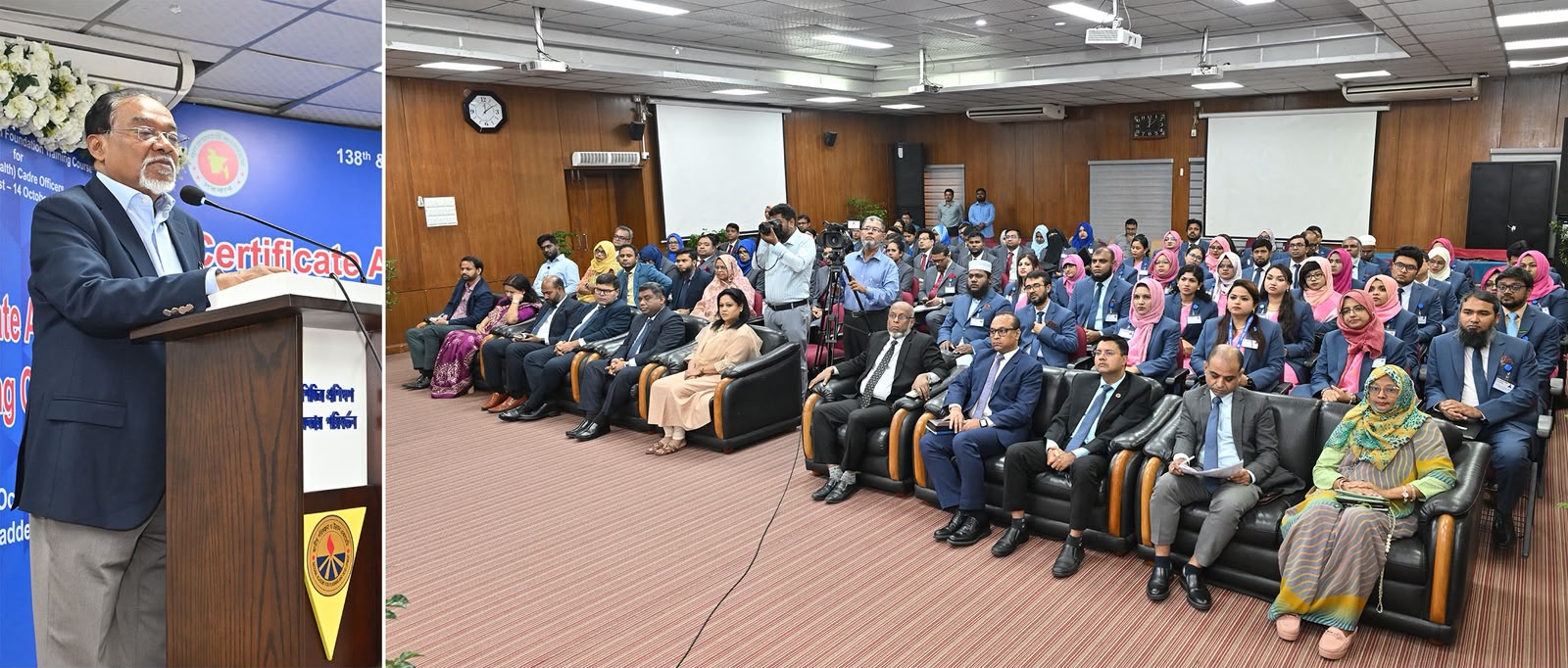
Mohammad Ismail Zabiullah, Adviser to the Prime Minister on Public Administration with the rank of a minister and a member of the BNP Standing Committee, has called for developing a modern healthcare system through the application of artificial intelligence (AI) and advanced technology.
He made the call while addressing the closing ceremony of the 138th and 139th Special Foundation Training Courses for BCS (Health) cadre officers, organised by the National Academy for Planning and Development (NAPD) in Nilkhet, Dhaka, on Monday (October 12). A total of 80 trainees participated in the two courses.
Ismail Zabiullah said the world was advancing rapidly in fields such as artificial intelligence, genomics, robotic surgery, telemedicine, medical devices and biotechnology. Bangladesh must regularly monitor global developments in these sectors while also pursuing its own innovations, he added.
He said that if a government physician introduced a new treatment method, a healthcare service model, a digital solution or an innovative management approach during their career, its positive impact could extend beyond a single hospital and benefit millions of people.
Addressing the trainees, the adviser said healthcare was undergoing rapid transformation worldwide. AI was creating new opportunities in disease diagnosis, treatment management and prescription preparation. Robotic technology was making surgery more precise, while advances in genomics were opening the door to personalised medicine.
He emphasised the importance of fostering a culture of research and innovation among medical professionals. He urged doctors to keep learning, conduct research and use data and evidence in their work. He also advised them to follow international healthcare standards and analyse both successes and failures to improve service delivery.
Ismail Zabiullah said implementing the government’s electoral pledges in the health sector was an ethical responsibility of public officials. Under the leadership of Prime Minister Tarique Rahman, officials must perform their duties with honesty, competence, innovation and dedication to build a prosperous, equitable and modern Bangladesh.
He called for establishing a people-oriented healthcare system in which no one would be deprived of treatment due to financial hardship and technology would be used for public welfare.
The adviser said the government had given special priority to the health sector, allocating the second-highest budgetary share to it. He added that the government was working towards the BNP’s electoral pledge of building a Bangladesh with accessible primary healthcare and improved public health.
He said former president Ziaur Rahman initiated upazila-level healthcare services through 30-bed hospitals, while former prime minister Khaleda Zia later upgraded upazila health complexes to 50 beds. Continuing that process, the government under Prime Minister Tarique Rahman was taking initiatives to upgrade upazila health complexes to 150 beds.
The government aims to gradually increase health sector allocation to 5 per cent of gross domestic product (GDP) over the next few years, he said. The objective is to ensure that people in remote areas have access to quality healthcare without having to travel to cities for primary treatment.
NAPD Additional Director General Saima Afroze delivered the welcome address. The adviser later distributed certificates among the trainees and crests among award winners.
The programme was chaired by NAPD Director General Mohammad Khairul Kabir Menon and attended by faculty members and officials of the academy.