Md Imran Hossen, Staff Reporter
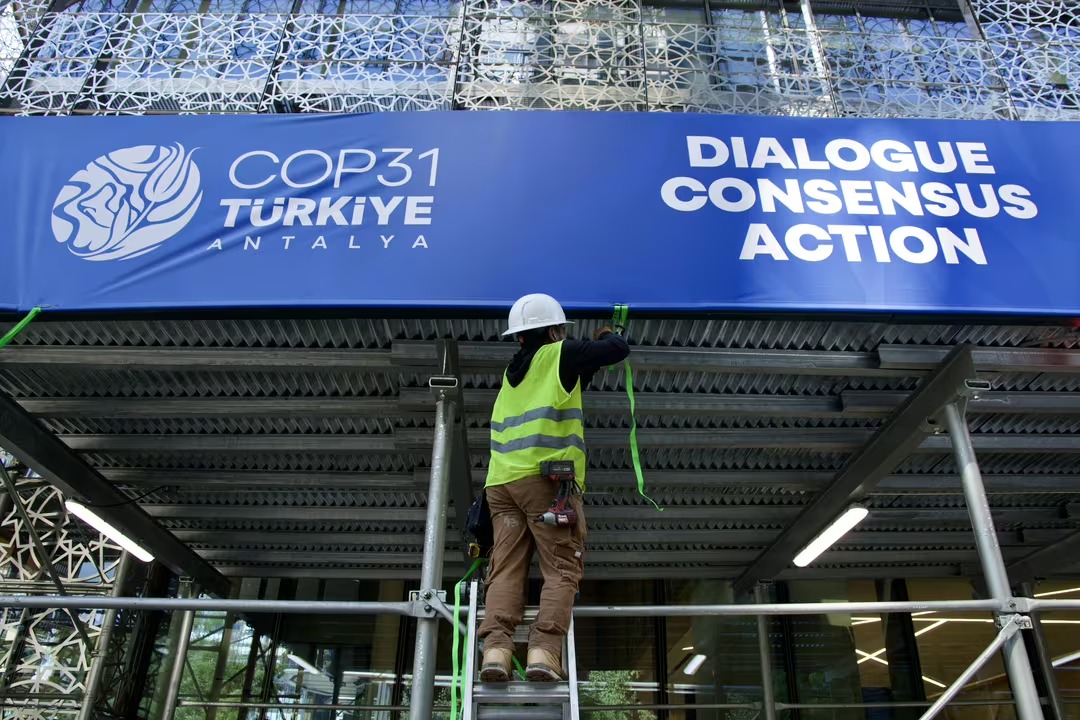
The COP31 climate conference is just a month away. Yet, despite a year marked by increasingly severe climate disasters and a historic legal development, anticipation for the November gathering in Antalya, Türkiye, has been noticeably subdued. Meanwhile, climate action is increasingly advancing beyond the United Nations’ annual climate negotiations.
Extreme heat across Europe, wildfires in Canada, the combined effects of a powerful El Niño and the collapse of glaciers in Nepal have provided stark reminders of a rapidly warming planet. Scientists predict that 2026 could become the hottest year on record. Geopolitical tensions, economic uncertainty and reforms within the United Nations have further fuelled pessimism ahead of COP31, with expectations low for significant progress on climate action.
However, across the broader climate movement, civil society organisations and private-sector actors point to signs of progress—often achieved independently of the slow process of international consensus-building and decision-making.
One newcomer to the annual climate conference circuit is Juma Xipaia, an Indigenous Amazonian leader who has spent years defending her community’s land in Brazil against illegal mining and logging. In September, she travelled to New York for Climate Week NYC, a citywide gathering held alongside the UN General Assembly (UNGA) that brings together climate advocates, government officials, philanthropists and investors.
Xipaia was there to promote her film, Yanuni, which she co-produced with Richard Ladkani, Leonardo DiCaprio and others.
“I never imagined being in a space like this one,” she told Geneva Solutions after speaking at a side event at UN headquarters. She explained that, after facing threats to her life and being forced into silence for four years, she had travelled to New York after listening to her ancestors and recognising the need to speak out.
“It’s absurd to have to talk to human beings about how to be human. We are all paying a price for that social and climate injustice, which is the climate emergency and collapse,” she said.
Asked what the United Nations could achieve in terms of environmental protection and climate action, she replied: “I hope the UN does the job that it is capable of doing, and that what is needed for humanity gets done, but truly, my faith is in the power of the people.”
COP’s unfinished agenda
Not far from where Xipaia spoke, outgoing UN Secretary-General António Guterres addressed the Climate Summit. Climate action had been a central priority throughout his tenure, and he presented an extensive agenda for member states a decade after the Paris Agreement entered into force.
His priorities included tripling renewable energy capacity, electrifying economies, halving deforestation, accelerating the transition away from fossil fuels and increasing climate finance.
Türkiye and Australia, the co-host countries of COP31 and partners in a coal supply chain, have called for the November conference to be an “implementation COP”. The phrase, used at previous gatherings, signals an emphasis on turning existing commitments into practical action. Nevertheless, the two countries have also proposed new targets to expand electrification and achieve zero waste.
The pre-COP meeting, held this year in Tuvalu and Fiji to highlight the vulnerability of Pacific small island states, attracted mainly regional leaders, with only a handful of participants from elsewhere.
Such gatherings traditionally provide an opportunity to resolve outstanding issues before the main conference. However, Vanuatu’s climate minister, Ralph Regenvanu, expressed disappointment over this year’s attendance, arguing that it demonstrated how little attention the wider international community pays to the region’s existential concerns about rising sea levels caused by global warming.
Signs of progress beyond the negotiations
Manuel Pulgar Vidal, president of COP20 and global leader for climate and energy at the World Wide Fund for Nature, argued that the annual UN climate conferences must continue despite what he described as a “kind of pessimism in the atmosphere.”
According to the former Peruvian environment minister, the UN climate process initially sent an important political signal to the global economy by framing climate action as a question of competitiveness and national development.
“Since the beginning, the UN climate process sent a good political signal to the economy, telling countries that the debate was about competitiveness and their own development,” he told Geneva Solutions in New York.
With political support weakening, he said, policymakers must pay greater attention to economic actors that have already incorporated climate considerations into their decisions.
“We have to listen to the economy, which has already adopted dynamic climate considerations, and is moving decisions on the climate,” he added.
Pulgar Vidal highlighted the contrasting climate-policy approaches of the United States and China, arguing that countries investing in clean technologies would be better positioned to succeed.
“The power that will succeed will be the one betting on clean technology, renewable energy, electric vehicles.”
A similar message emerged at the Building Bridges sustainable finance summit in Geneva last week, where government representatives, international organisation leaders and private-sector executives discussed financing the transition to a sustainable economy.
Rising energy prices following the closure of the Strait of Hormuz and disruptions to shipping in the Red Sea have pushed the energy transition back onto government policy agendas and into private investment discussions.
Ma Jun, president of Beijing-based Institute of Finance and Sustainability, told summit participants that government incentives, green lending and the adoption of green finance taxonomies were essential to reducing barriers to climate investment.
However, the flow of climate finance from developed countries to developing nations on the front lines of the crisis continues to fall short of COP commitments.
Private investors have long been expected to help bridge the funding gap. Yet Western investment remains concentrated largely on commercially attractive projects, particularly those focused on reducing carbon emissions rather than adapting to climate impacts.
At the Geneva summit, some finance-sector participants privately expressed concern about funding adaptation projects. They suggested that the personal financial interests of some executives could take precedence over directing investment towards the areas of greatest climate need.
Alternative pathways for climate action
As questions grow over the future direction of UN climate diplomacy amid a leadership transition, momentum has also been building in other international forums.
In May, the UN General Assembly adopted a resolution led by Vanuatu supporting a landmark advisory opinion from the International Court of Justice. The legal initiative originated in a classroom on the Pacific island and ultimately established that states have a legal duty to reduce carbon emissions and take responsibility for historical environmental damage.
Weeks earlier, nearly 60 countries meeting in Santa Marta, Colombia, adopted a declaration on transitioning away from fossil fuels. The move followed frustration over the negotiating deadlock at COP30 in Belém, Brazil.
Tenke Zoltáni, chief executive of the SDG Impact Finance Initiative, a public-private partnership, said the sustainable finance community increasingly viewed the upcoming COP31 summit in Türkiye as a lower priority than previous conferences.
“Could it be a lack of perceived action or results?” she asked.
She added that financing discussions in Sevilla and other Financing for Development events had become more important to some participants because they offered greater opportunities to bring businesses into the conversation.
Pulgar Vidal, however, defended the annual UN climate conferences and stressed the importance of keeping them open to broad participation.
“Can you imagine what could have happened if we had reduced open participation where you can see civil society, indigenous people, pavilion, action agenda, business sector, even the lobbyists, gathered together? It would have led to the cancellation of the climate debate.”
As COP31 approaches, the debate is therefore not simply about whether the UN climate conference circuit is losing momentum. It is also about whether international negotiations can keep pace with climate action increasingly shaped by legal developments, financial decisions, civil society and technological change.