
 By Staff Reporter
The two-day international conference IEEE 3rd International Conference on Computing, Applications and Systems (COMPAS 2026) concluded with a strong emphasis on strengthening collaboration among research institutions, artificial intelligence (AI) researchers and industry.
The closing ceremony was held on Saturday (October 10). Jointly organised by the IEEE Computer Society Bangladesh Chapter and the Department of Computer Science and Engineering (CSE) at the University of Dhaka, the conference began on October 9, with sessions held at Bangla Academy and the university’s CSE department.
On the second day, participants discussed research and practical applications of emerging computing technologies, including artificial intelligence, cybersecurity, high-performance computing, natural language processing (NLP) and computer vision. The programme featured keynote presentations, technical sessions and discussions on technological advancements.
A panel discussion titled “Beyond AI Adoption: Redefining Teaching, Assessment and Research in Higher Education” was held at Bangla Academy from 3:30pm to 5:00pm. The panel included Professor Dr Md Haider Ali of the University of Dhaka’s CSE Department; Dr M Julius Hossain of the University of Southampton, UK; Professor M Sohel Rahman of Bangladesh University of Engineering and Technology (BUET); Mohammad Taurit, chief executive officer of BdREN; and Mohammad Ali, managing director and chief executive officer of Pubali Bank. The discussion was moderated by Professor Dr Md Mamun-or-Rashid of the University of Dhaka’s CSE Department, who also served as the conference’s organising chair.
The discussion focused on the growing use of AI in higher education, student learning methods, the reliability of assessment systems, research integrity and responsible technology use. Participants also highlighted the need for advanced computing infrastructure, expanded research opportunities and stronger partnerships between universities and industry.
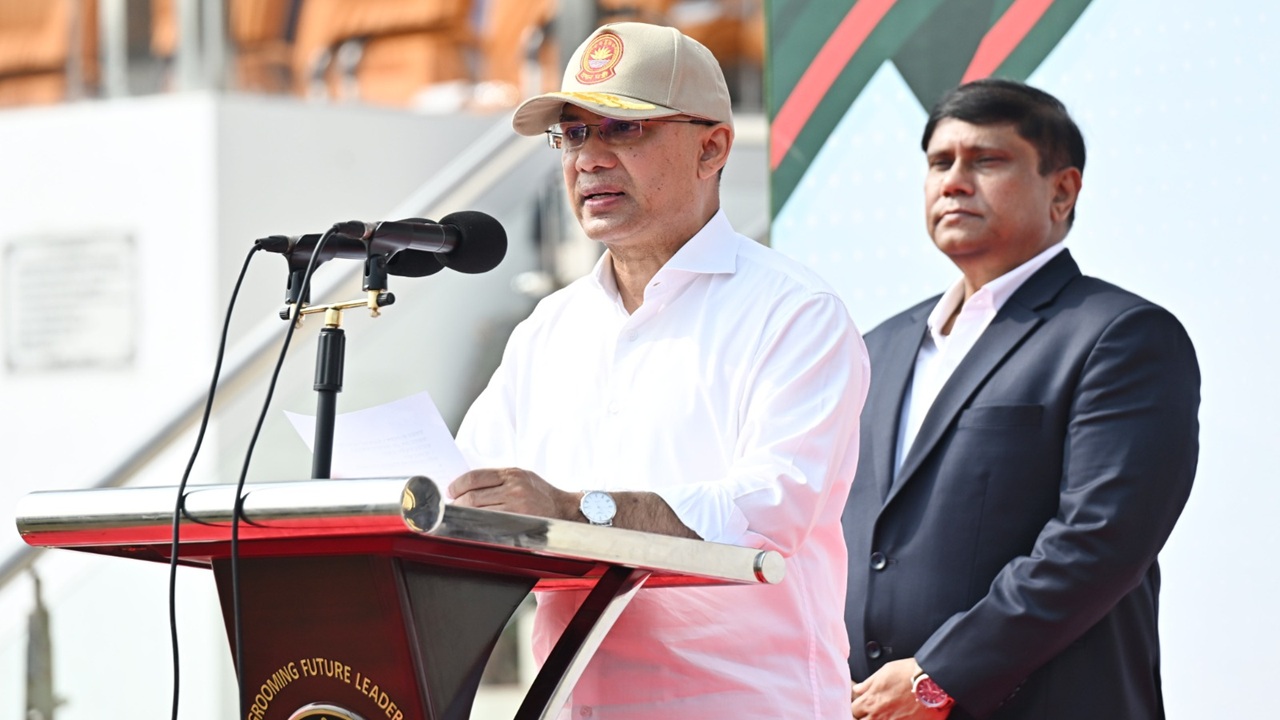
The closing ceremony took place at 6:30pm at the Abdul Karim Sahitya Bisharad Auditorium of Bangla Academy. Attendees included University of Dhaka Vice-Chancellor Professor Dr ABM Obaidul Islam; ICT Division Secretary Md Mamunur Rashid Bhuiyan; IEEE Bangladesh Computer Society Chair Professor Dr Md Obaidur Rahman; and Professor Dr Md Abdur Razzaque, chairman of the university’s CSE Department and general chair of the conference, along with members of the organising committee, teachers, researchers and participants.
Speakers at the closing ceremony underscored the importance of international conferences in strengthening the country’s research capacity and technological capabilities. They stressed that universities, industries and policymakers need to work together to apply modern computing and AI-based research to real-world problems. They also called for greater opportunities for young researchers to participate in international research initiatives and contribute to technological innovation.
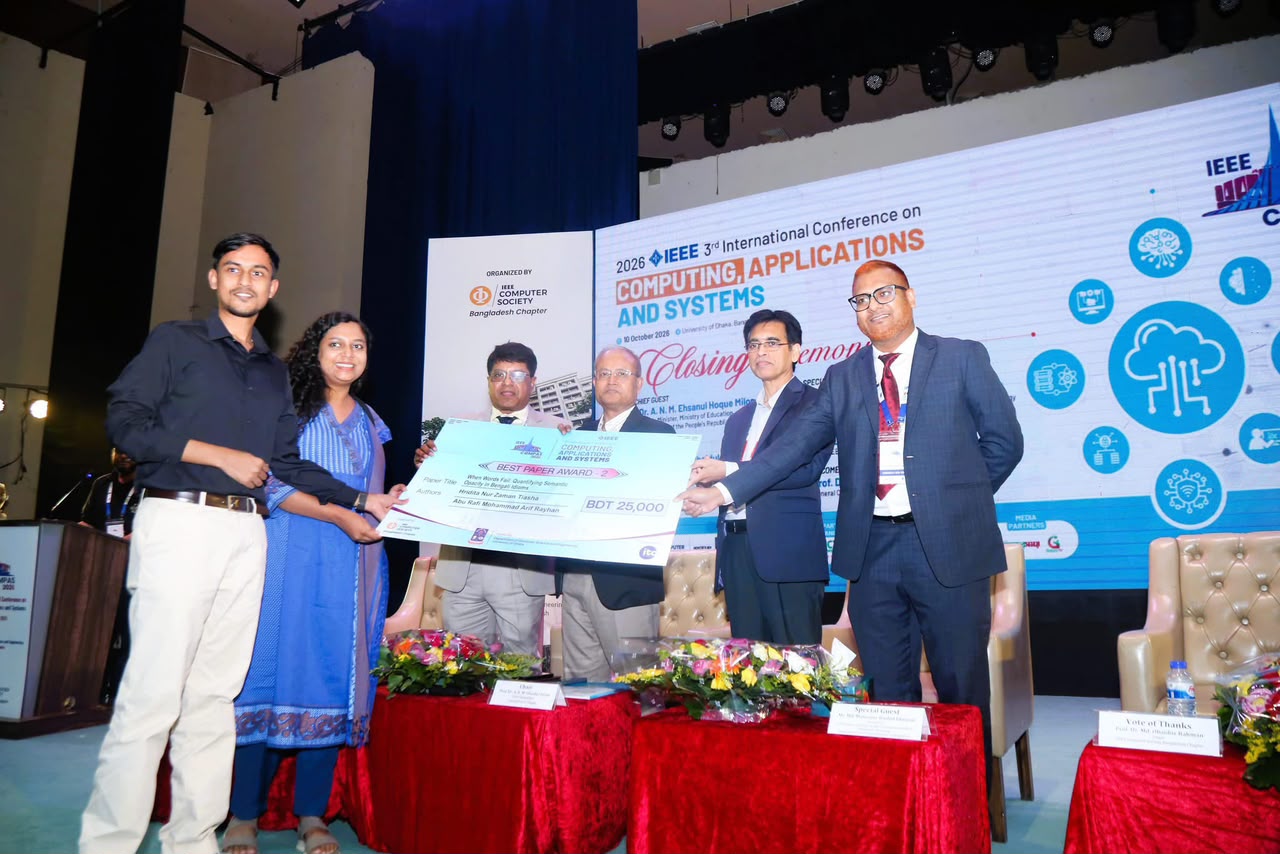
Three research papers received the Best Paper Award in recognition of their quality and contributions. The first prize went to a joint research paper on graph neural networks conducted by BUET and Varendra University. The second prize was awarded to an East West University research paper on Bengali proverbs and idioms. The third prize went to a Rajshahi University of Engineering and Technology (RUET) research paper on low-cost underwater technology.
The first, second and third prize winners received Tk 35,000, Tk 25,000 and Tk 20,000, respectively, bringing the total prize money to Tk 80,000.
According to the organisers, the conference received 616 research paper submissions, of which 212 were accepted, representing an acceptance rate of approximately 34.4 per cent. Research presentations covered a wide range of advanced computing fields, including intelligent systems, natural language processing, visual computing, data analysis, cyber-physical and edge systems, distributed systems, networks and security, and quantum computing.
Researchers, academics, students and technology professionals from Bangladesh and abroad attended the two-day event. Keynote sessions, technical sessions, industry talks and plenary discussions provided opportunities to exchange ideas on emerging research, technological challenges and prospects for future collaboration.
Following the 2024 and 2025 editions, COMPAS 2026 was held for the third time. The conference continues to serve as a platform for showcasing Bangladesh’s computing research internationally and strengthening links between academic research and practical applications. Organisers expressed hope that the research partnerships and knowledge exchange fostered through the event would contribute to technological innovation, higher education and the country’s digital advancement.