Dhaka 2:56 pm, Monday, 9 November 2026

Livelihood Opportunities Grow for Coastal Families Through Duck, Chicken and Pigeon Rearing

Bangladesh’s coastal areas are among the most climate-vulnerable regions of the country. Frequent cyclones, tidal surges, salinity intrusion and river erosion continue to threaten the lives and livelihoods of people living in these areas. Against this backdrop, government initiatives aimed at helping communities adapt to climate change are playing an important role in strengthening their resilience.

With support from the Adaptation Fund through the United Nations Development Programme (UNDP), the project titled “Adaptation Initiative for Climate Vulnerable Offshore Small Islands and Riverine Charland in Bangladesh” is being implemented as a significant step towards climate-resilient development.

Under the project, various income-generating activities (IGAs) are being implemented for a total of 2,925 beneficiaries in Mujibnagar Union of Char Fasson Upazila in Bhola.

The project’s Alternative Livelihood Support component is being implemented by NGO Forum for Public Health during the 2025–2027 period. Through field-level activities, the organisation is working to improve the livelihoods and living standards of the beneficiaries.

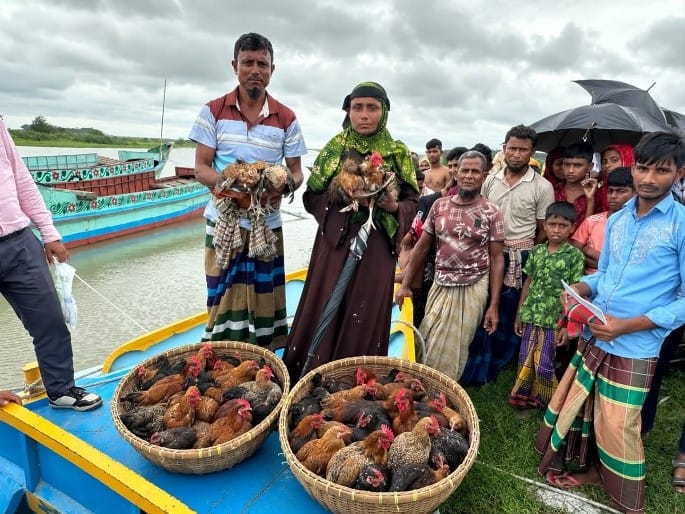
As part of the initiative, ducks, indigenous chickens and pigeons were distributed among 108 beneficiaries between July and September. Alongside the distribution of livelihood-support materials, business-related training was provided to 1,801 beneficiaries.

The training is expected to help beneficiaries develop business plans using the resources they receive and maintain accurate records of their daily income and expenses. This, in turn, will enable them to make better plans for their future.

Project officials believe that the initiative will gradually help families become self-reliant while creating more sustainable livelihood opportunities for vulnerable communities. They are hopeful that the programme will serve as an effective model for sustainable development in climate-vulnerable areas.


Livelihood Opportunities Grow for Coastal Families Through Duck, Chicken and Pigeon Rearing

Update Time: 07:58:48 pm, Wednesday, 23 September 2026

Bangladesh’s coastal areas are among the most climate-vulnerable regions of the country. Frequent cyclones, tidal surges, salinity intrusion and river erosion continue to threaten the lives and livelihoods of people living in these areas. Against this backdrop, government initiatives aimed at helping communities adapt to climate change are playing an important role in strengthening their resilience.

With support from the Adaptation Fund through the United Nations Development Programme (UNDP), the project titled “Adaptation Initiative for Climate Vulnerable Offshore Small Islands and Riverine Charland in Bangladesh” is being implemented as a significant step towards climate-resilient development.

Under the project, various income-generating activities (IGAs) are being implemented for a total of 2,925 beneficiaries in Mujibnagar Union of Char Fasson Upazila in Bhola.

The project’s Alternative Livelihood Support component is being implemented by NGO Forum for Public Health during the 2025–2027 period. Through field-level activities, the organisation is working to improve the livelihoods and living standards of the beneficiaries.

As part of the initiative, ducks, indigenous chickens and pigeons were distributed among 108 beneficiaries between July and September. Alongside the distribution of livelihood-support materials, business-related training was provided to 1,801 beneficiaries.

The training is expected to help beneficiaries develop business plans using the resources they receive and maintain accurate records of their daily income and expenses. This, in turn, will enable them to make better plans for their future.

Project officials believe that the initiative will gradually help families become self-reliant while creating more sustainable livelihood opportunities for vulnerable communities. They are hopeful that the programme will serve as an effective model for sustainable development in climate-vulnerable areas.