Dhaka 2:56 pm, Monday, 9 November 2026

Pakistani Teenager Targeted in Online Sexual Exploitation Scheme

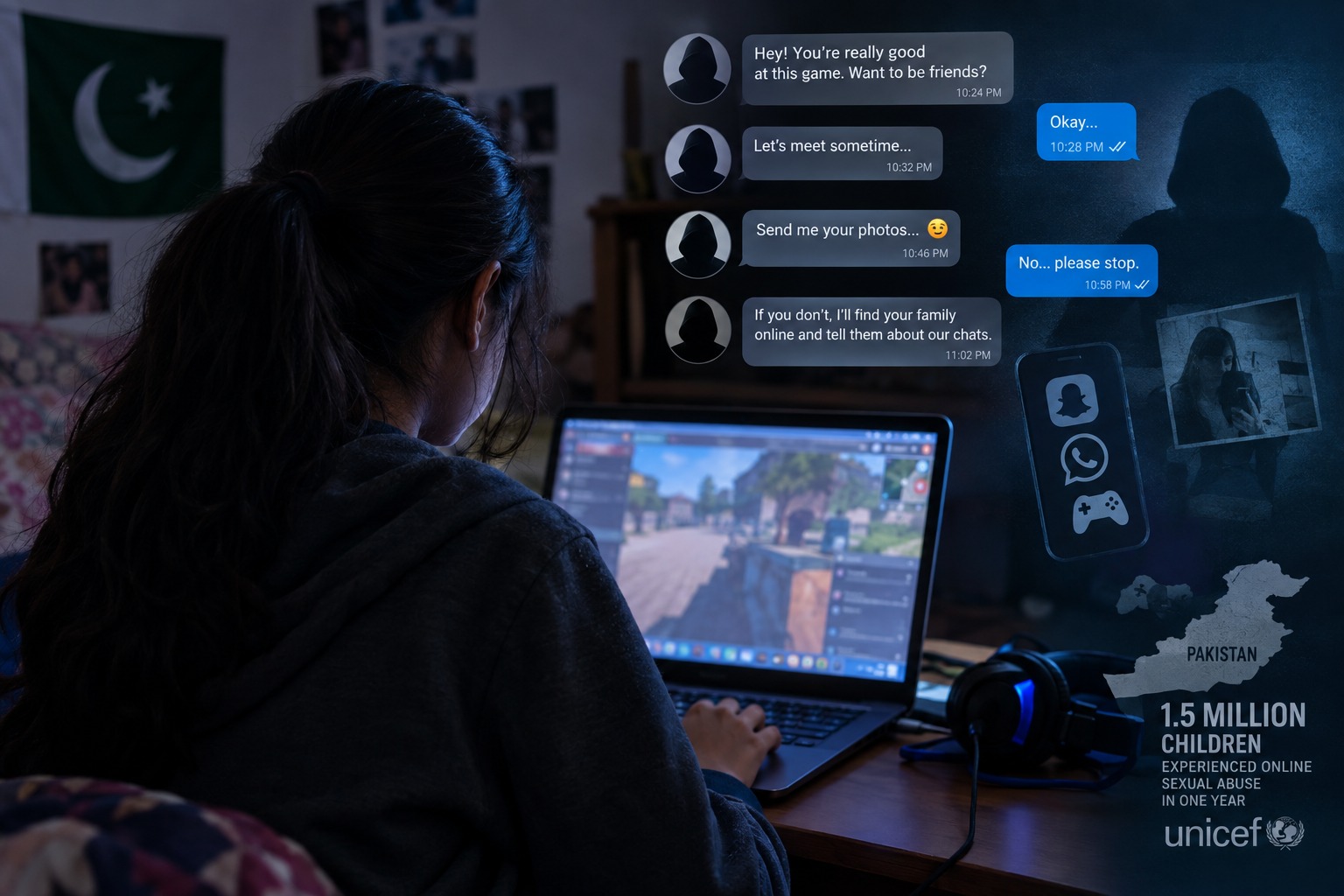
A Pakistani teenager was drawn into a frightening case of online sexual exploitation after a stranger approached her while she was playing a computer game.

The teenager, identified by AFP under the pseudonym Zara Shah to protect her safety, is among an estimated 1.5 million children in Pakistan who experienced online sexual abuse over a one-year period, according to a report released this month by UNICEF.

“We started chatting while playing an online game, and he began acting like a friend. Later, he wanted to meet and started asking me for nudes,” said 17-year-old Shah.

When she refused, the person threatened to locate her family online and reveal their conversations, she said.

According to the UNICEF report, about 85 percent of perpetrators were known to their victims, who were aged between 12 and 17.

Daniel Kardefelt, lead author of the global UNICEF report, told AFP that abuse can begin with seemingly harmless interactions, such as friendly conversations, gaming, promises of gifts or money, or romantic attention.

He said perpetrators can spend months building trust with children by using information gathered from their social media accounts.

Stigma Keeps Many Victims Silent

In Pakistan, a Muslim-majority country, 71 percent of victims did not disclose their abuse to anyone, according to the UNICEF findings. None of the children surveyed reported their experiences through formal channels such as police, helplines or social workers.

Stigma, shame and fear of how their families or communities might respond were among the main reasons for remaining silent.

Mehek Naeem, director of Lahore-based children’s rights organisation Pahchaan, said around 44 percent of reported abuse occurred entirely online, with platforms including Snapchat and WhatsApp frequently involved.

Girls may face additional risks from sexual extortion, which can result in restrictions on their movement or being forced to leave school.

For Shah, the threat of her family discovering the conversations was enough to prevent her from seeking help.

“I could have been stopped from going to school or leaving the house altogether,” she said.

“Staying quiet felt like the better option than speaking up. But anxiety kills me every day.”

Concerns Over Laws and Enforcement

UNICEF estimates that around 74 percent of Pakistani children aged 12 to 17 use the internet, increasing concerns about their safety as access to digital platforms expands.

Earlier this month, Pakistan’s Punjab provincial government passed a resolution seeking to prevent children under 16 from using social media. The move, however, has drawn criticism from digital rights advocates.

“I disagree with the ban,” said digital rights activist Usama Khilji, arguing that it would be difficult to enforce because children could use VPNs to bypass restrictions.

He also said children have a right to freedom of expression and that a blanket ban could infringe on that right.

Pakistan already has laws addressing technology-facilitated offences against children. However, Tahira Afrasiyab, a spokesperson for nonprofit organisation Muslim Hands, said enforcement remains a major problem.

Experts have also pointed to gaps in the existing legal framework.

Human rights lawyer Salman Afridi said the cases demonstrate how economic vulnerability can be exploited, with perpetrators sometimes offering amounts as low as Rs10,000 in exchange for sexual content.

“What we are seeing is the use of technology to facilitate an entire chain of grooming, inducement, coercion, blackmail, production, distribution and commercialisation,” he said.

Afridi described the pattern as having strong characteristics of a commercial ecosystem of exploitation.

For Shah and many other young victims, the consequences of an interaction that began with an online game can persist long after the conversation ends.

“I was, and am, scared,” she said. “I live in fear.”

Pakistani Teenager Targeted in Online Sexual Exploitation Scheme

Update Time: 09:34:30 pm, Monday, 21 September 2026

A Pakistani teenager was drawn into a frightening case of online sexual exploitation after a stranger approached her while she was playing a computer game.

The teenager, identified by AFP under the pseudonym Zara Shah to protect her safety, is among an estimated 1.5 million children in Pakistan who experienced online sexual abuse over a one-year period, according to a report released this month by UNICEF.

“We started chatting while playing an online game, and he began acting like a friend. Later, he wanted to meet and started asking me for nudes,” said 17-year-old Shah.

When she refused, the person threatened to locate her family online and reveal their conversations, she said.

According to the UNICEF report, about 85 percent of perpetrators were known to their victims, who were aged between 12 and 17.

Daniel Kardefelt, lead author of the global UNICEF report, told AFP that abuse can begin with seemingly harmless interactions, such as friendly conversations, gaming, promises of gifts or money, or romantic attention.

He said perpetrators can spend months building trust with children by using information gathered from their social media accounts.

Stigma Keeps Many Victims Silent

In Pakistan, a Muslim-majority country, 71 percent of victims did not disclose their abuse to anyone, according to the UNICEF findings. None of the children surveyed reported their experiences through formal channels such as police, helplines or social workers.

Stigma, shame and fear of how their families or communities might respond were among the main reasons for remaining silent.

Mehek Naeem, director of Lahore-based children’s rights organisation Pahchaan, said around 44 percent of reported abuse occurred entirely online, with platforms including Snapchat and WhatsApp frequently involved.

Girls may face additional risks from sexual extortion, which can result in restrictions on their movement or being forced to leave school.

For Shah, the threat of her family discovering the conversations was enough to prevent her from seeking help.

“I could have been stopped from going to school or leaving the house altogether,” she said.

“Staying quiet felt like the better option than speaking up. But anxiety kills me every day.”

Concerns Over Laws and Enforcement

UNICEF estimates that around 74 percent of Pakistani children aged 12 to 17 use the internet, increasing concerns about their safety as access to digital platforms expands.

Earlier this month, Pakistan’s Punjab provincial government passed a resolution seeking to prevent children under 16 from using social media. The move, however, has drawn criticism from digital rights advocates.

“I disagree with the ban,” said digital rights activist Usama Khilji, arguing that it would be difficult to enforce because children could use VPNs to bypass restrictions.

He also said children have a right to freedom of expression and that a blanket ban could infringe on that right.

Pakistan already has laws addressing technology-facilitated offences against children. However, Tahira Afrasiyab, a spokesperson for nonprofit organisation Muslim Hands, said enforcement remains a major problem.

Experts have also pointed to gaps in the existing legal framework.

Human rights lawyer Salman Afridi said the cases demonstrate how economic vulnerability can be exploited, with perpetrators sometimes offering amounts as low as Rs10,000 in exchange for sexual content.

“What we are seeing is the use of technology to facilitate an entire chain of grooming, inducement, coercion, blackmail, production, distribution and commercialisation,” he said.

Afridi described the pattern as having strong characteristics of a commercial ecosystem of exploitation.

For Shah and many other young victims, the consequences of an interaction that began with an online game can persist long after the conversation ends.

“I was, and am, scared,” she said. “I live in fear.”