

Dhaka 3:14 pm, Monday, 9 November 2026

Skills Development and Employment at the Heart of Government’s Higher Education Plan: UGC Member Dr Mamun

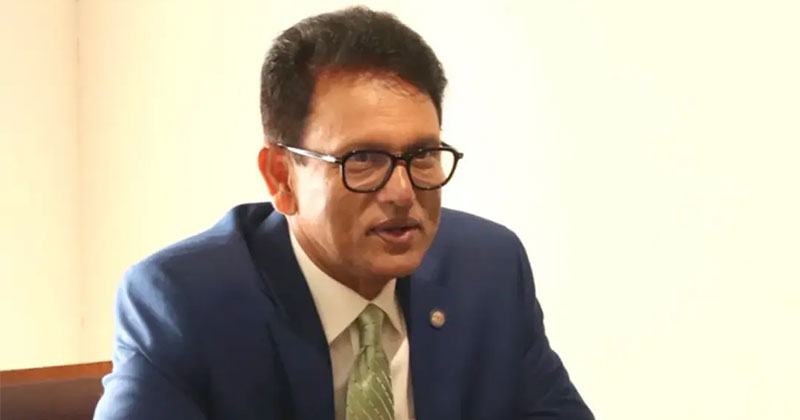
Improving students’ skills and creating employment opportunities are at the heart of the government’s higher education plan, said Professor Dr Abdullah-Al-Mamun, a member of the University Grants Commission (UGC) of Bangladesh.

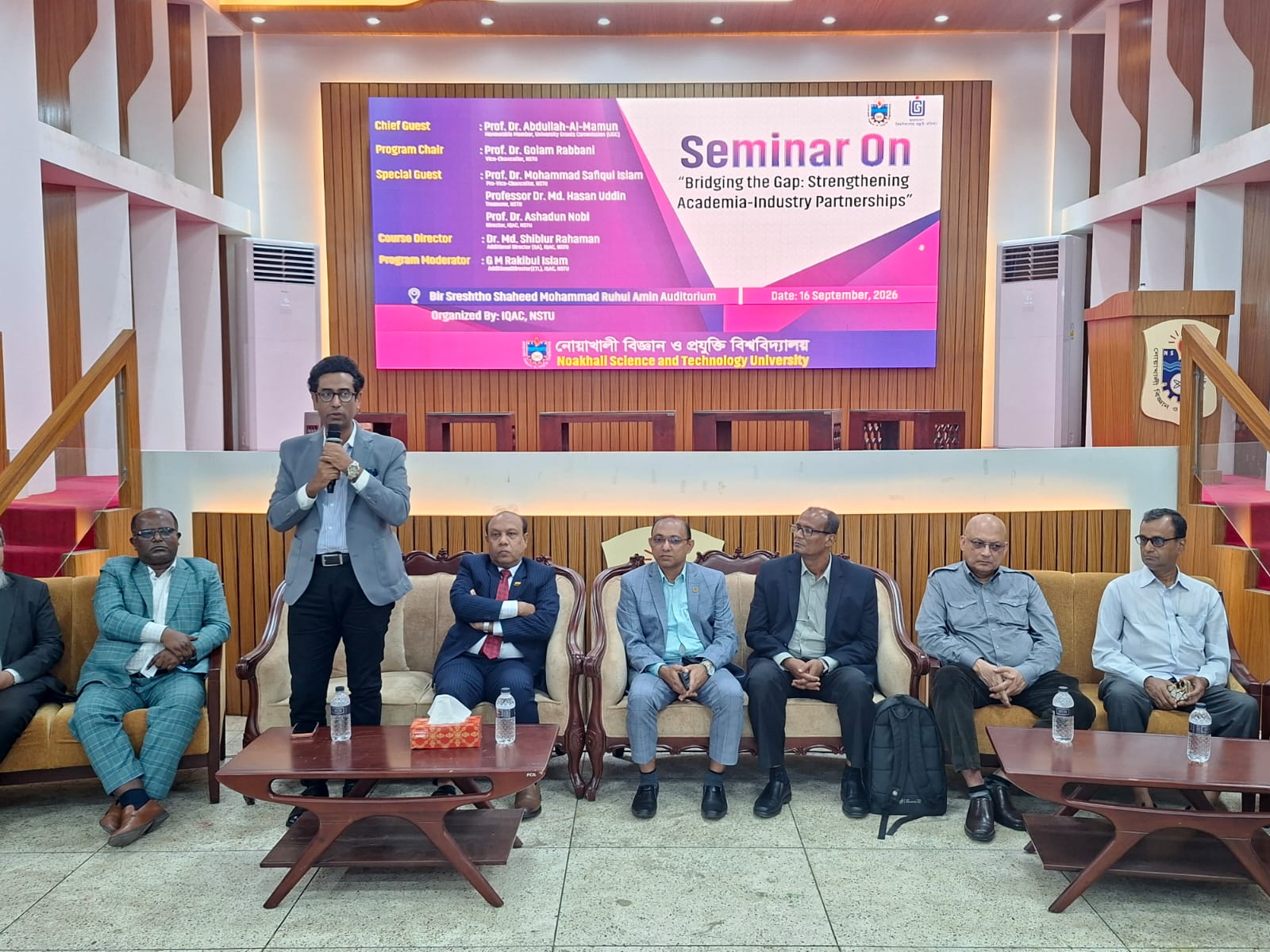
He made the remarks as the chief guest at a seminar on education-industry collaboration held at Noakhali Science and Technology University (NSTU) on Wednesday (September 16). The university’s Institutional Quality Assurance Cell (IQAC) organised the seminar.

Professor Abdullah-Al-Mamun said effective and institutionalised ties between universities and industries are being developed to achieve this goal. With UGC support, around 250 memoranda of understanding (MoUs) have already been signed between the education and industrial sectors involving 15 universities. The target is to establish education-industry collaboration units at every university in the country within the next six months and build systematic and effective relations with industries.

The UGC member from its Public University Management Division said the government has four major objectives behind promoting collaboration between the education and industrial sectors.

First, to create internship and employment opportunities for students. Second, to involve industry experts in university teaching as guest lecturers. Third, to incorporate the views of industry representatives when designing curricula in line with labour market demands. Fourth, to create opportunities for industrialisation by connecting knowledge and technologies generated through university research and innovation with industries.

Dr Mamun said students should not only be prepared to secure jobs but also be equipped with the ability to create employment opportunities. New employment opportunities should be created by applying ideas and technologies developed at universities in the industrial sector.

Highlighting various government initiatives to engage young people in skills development and innovation, he said an initiative has been taken to establish a Tk 5 billion fund to support students’ innovative ideas. Another initiative involves an Tk 8 billion fund to promote the creative economy. Training programmes for skills development will also be launched under the supervision of the UGC.

He also said NSTU has been included among the universities selected for an initiative to teach a third language. As part of the digital transformation of universities, work is underway to expand Wi-Fi facilities and online-based services, he added.

Emphasising the importance of involving students in research, Professor Abdullah-Al-Mamun said the UGC has taken initiatives to engage students in research projects. There is also an initiative to distribute research allocations from development funds competitively based on the merit of research proposals.

Stressing the importance of making the best use of the country’s demographic dividend, he said young people and students constitute a major portion of this dividend. Their potential must be harnessed by equipping them with skills and creating employment opportunities. Initiatives are also being taken at various levels, including the ministries of Education, ICT, Youth and Sports, to develop young people’s skills and create employment opportunities.

Earlier in the morning, Professor Abdullah-Al-Mamun addressed the reception programme for newly admitted students of NSTU for the 2025-26 academic year as a special guest. He said the government is focusing not only on infrastructure development but also on human resource development. Efforts are underway to expand opportunities for students in skills development, entrepreneurship, research and employment alongside their academic education.

Public Administration Ministry Adviser Md Ismail Jabiullah attended the fresher reception as the chief guest. NSTU Vice-Chancellor Professor Dr Golam Rabbani presided over the programme.

NSTU Pro-Vice-Chancellor Professor Dr Mohammad Shafiqul Islam, Treasurer Professor Dr Md Hasan Uddin, and Director of the Institutional Quality Assurance Cell Professor Dr Ashadun Nabi were present at the discussion.


Skills Development and Employment at the Heart of Government’s Higher Education Plan: UGC Member Dr Mamun

Update Time: 05:57:55 pm, Wednesday, 16 September 2026

Improving students’ skills and creating employment opportunities are at the heart of the government’s higher education plan, said Professor Dr Abdullah-Al-Mamun, a member of the University Grants Commission (UGC) of Bangladesh.

He made the remarks as the chief guest at a seminar on education-industry collaboration held at Noakhali Science and Technology University (NSTU) on Wednesday (September 16). The university’s Institutional Quality Assurance Cell (IQAC) organised the seminar.

Professor Abdullah-Al-Mamun said effective and institutionalised ties between universities and industries are being developed to achieve this goal. With UGC support, around 250 memoranda of understanding (MoUs) have already been signed between the education and industrial sectors involving 15 universities. The target is to establish education-industry collaboration units at every university in the country within the next six months and build systematic and effective relations with industries.

The UGC member from its Public University Management Division said the government has four major objectives behind promoting collaboration between the education and industrial sectors.

First, to create internship and employment opportunities for students. Second, to involve industry experts in university teaching as guest lecturers. Third, to incorporate the views of industry representatives when designing curricula in line with labour market demands. Fourth, to create opportunities for industrialisation by connecting knowledge and technologies generated through university research and innovation with industries.

Dr Mamun said students should not only be prepared to secure jobs but also be equipped with the ability to create employment opportunities. New employment opportunities should be created by applying ideas and technologies developed at universities in the industrial sector.

Highlighting various government initiatives to engage young people in skills development and innovation, he said an initiative has been taken to establish a Tk 5 billion fund to support students’ innovative ideas. Another initiative involves an Tk 8 billion fund to promote the creative economy. Training programmes for skills development will also be launched under the supervision of the UGC.

He also said NSTU has been included among the universities selected for an initiative to teach a third language. As part of the digital transformation of universities, work is underway to expand Wi-Fi facilities and online-based services, he added.

Emphasising the importance of involving students in research, Professor Abdullah-Al-Mamun said the UGC has taken initiatives to engage students in research projects. There is also an initiative to distribute research allocations from development funds competitively based on the merit of research proposals.

Stressing the importance of making the best use of the country’s demographic dividend, he said young people and students constitute a major portion of this dividend. Their potential must be harnessed by equipping them with skills and creating employment opportunities. Initiatives are also being taken at various levels, including the ministries of Education, ICT, Youth and Sports, to develop young people’s skills and create employment opportunities.

Earlier in the morning, Professor Abdullah-Al-Mamun addressed the reception programme for newly admitted students of NSTU for the 2025-26 academic year as a special guest. He said the government is focusing not only on infrastructure development but also on human resource development. Efforts are underway to expand opportunities for students in skills development, entrepreneurship, research and employment alongside their academic education.

Public Administration Ministry Adviser Md Ismail Jabiullah attended the fresher reception as the chief guest. NSTU Vice-Chancellor Professor Dr Golam Rabbani presided over the programme.

NSTU Pro-Vice-Chancellor Professor Dr Mohammad Shafiqul Islam, Treasurer Professor Dr Md Hasan Uddin, and Director of the Institutional Quality Assurance Cell Professor Dr Ashadun Nabi were present at the discussion.