Staff Correspondent
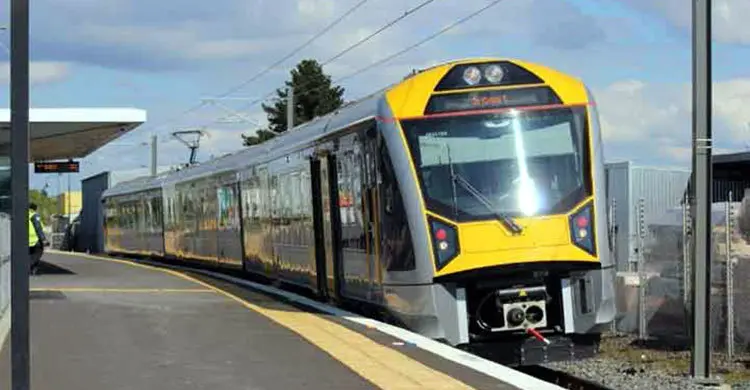
The government has taken an initiative to introduce electric trains on the Narayanganj-Dhaka-Joydebpur railway corridor, one of the country’s busiest rail routes. A project costing Tk 38.2251 billion has been proposed to replace the existing diesel-electric traction system with electric traction.
The project, titled “Implementation of Electric Traction on the Narayanganj-Dhaka-Joydebpur Section of Bangladesh Railway,”has been placed for approval by the Executive Committee of the National Economic Council (ECNEC). Bangladesh Railway will implement the project under the Ministry of Railways.
The project is scheduled to run from July 2026 to June 2031. Of the total cost, Tk 9.4209 billion will come from the government’s own funds, while Tk 28.8042 billion is proposed as project loans from the Asian Development Bank (ADB) and the European Investment Bank (EIB).
80 coaches to be procured
Under the project, an overhead catenary system will be installed along 52.32 kilometres of railway track to supply electricity to trains. The government also plans to procure 16 sets of electric multiple units (EMUs), each consisting of five coaches. This means a total of 80 coaches will be purchased.
A separate maintenance workshop will also be constructed for servicing the EMU trains.
According to the Planning Commission, the Narayanganj-Dhaka-Joydebpur corridor is highly congested, with large numbers of passengers travelling daily. Narayanganj and Gazipur also have extensive industrial zones, creating significant pressure on both road and rail transport.
The government expects electric traction to increase train speeds and passenger-carrying capacity while reducing travel time. Operating, repair and maintenance costs are also expected to fall.
Project documents state that electric traction could save around 40 percent in fuel compared with the existing diesel-electric system. Maintenance costs for electric rolling stock could also be 35-40 percent lower. The average speed of electric rolling stock could be around 18-20 percent higher because of its faster acceleration and braking capabilities.
Environmental benefits
The Planning Commission has also highlighted the environmental benefits of electric traction. As Bangladesh is highly vulnerable to climate change, shifting railway operations to electric traction could help reduce carbon emissions.
The project will cover areas in Dhaka, Narayanganj and Gazipur, including Narayanganj Sadar, Dhaka South City Corporation, Dhaka North City Corporation and Gazipur Sadar.
Project cost reduced
The initial proposal estimated the project cost at Tk 42.8286 billion, with a 10-year implementation period from July 2026 to June 2036. Following restructuring, the cost has been reduced by Tk 4.6035 billion, or 12.04 percent, while the implementation period has been cut to five years.
The project’s feasibility study was conducted by Turkey-based Tumas Turkish Engineering Consulting and Contracting Company.
A Project Evaluation Committee (PEC) meeting was held on April 20, 2026, where the project was recommended for approval subject to compliance with several conditions. After the revised Development Project Proposal (DPP) was submitted to the Planning Commission, the project was placed before the ECNEC for approval.
Officials from Bangladesh Railway and the Planning Ministry said trains are planned to operate every 30 minutes from both ends of the electric railway corridor. Initially, the project aims to transport around 200,000 passengers a day. The EMU trains will have features similar to those of metro rail trains.
Experts call for accountability
Economist Dr Mostafa K Mujeri said the project should be completed successfully through quality work and strict financial discipline to prevent wastage of public funds.
He also questioned why Chinese contractors involved with the project had left the work in 2022 and called for an investigation to identify those responsible and take appropriate action.
Experts say weak planning and implementation remain major challenges. They argue that inadequate feasibility studies and planning at the initial stage have resulted in repeated revisions to the project’s cost, duration and components, increasing pressure on project management and raising concerns about accountability.
The government plans to implement the project as part of a broader initiative to introduce electric railway services from Narayanganj through Dhaka to Chattogram.
If implemented successfully, the project is expected to increase railway capacity, reduce travel time and operating costs, and provide faster, more efficient and environmentally friendly public transport for passengers travelling between Narayanganj, Dhaka and Joydebpur.