Dhaka 3:14 pm, Monday, 9 November 2026

UGC Chairman Urges Universities to Promote Responsible Free Thought

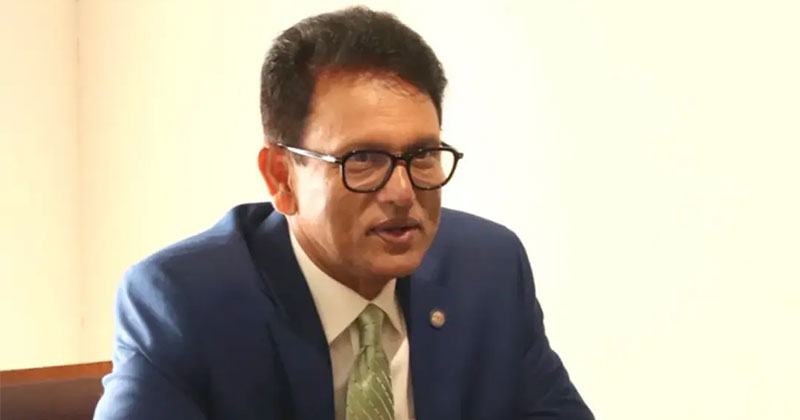
University Grants Commission (UGC) Chairman Professor Dr Mamun Ahmed has urged teachers and students to engage in free thinking and express their opinions alongside acquiring knowledge and skills at universities. However, he stressed that freedom of expression and intellectual practice must be exercised responsibly.

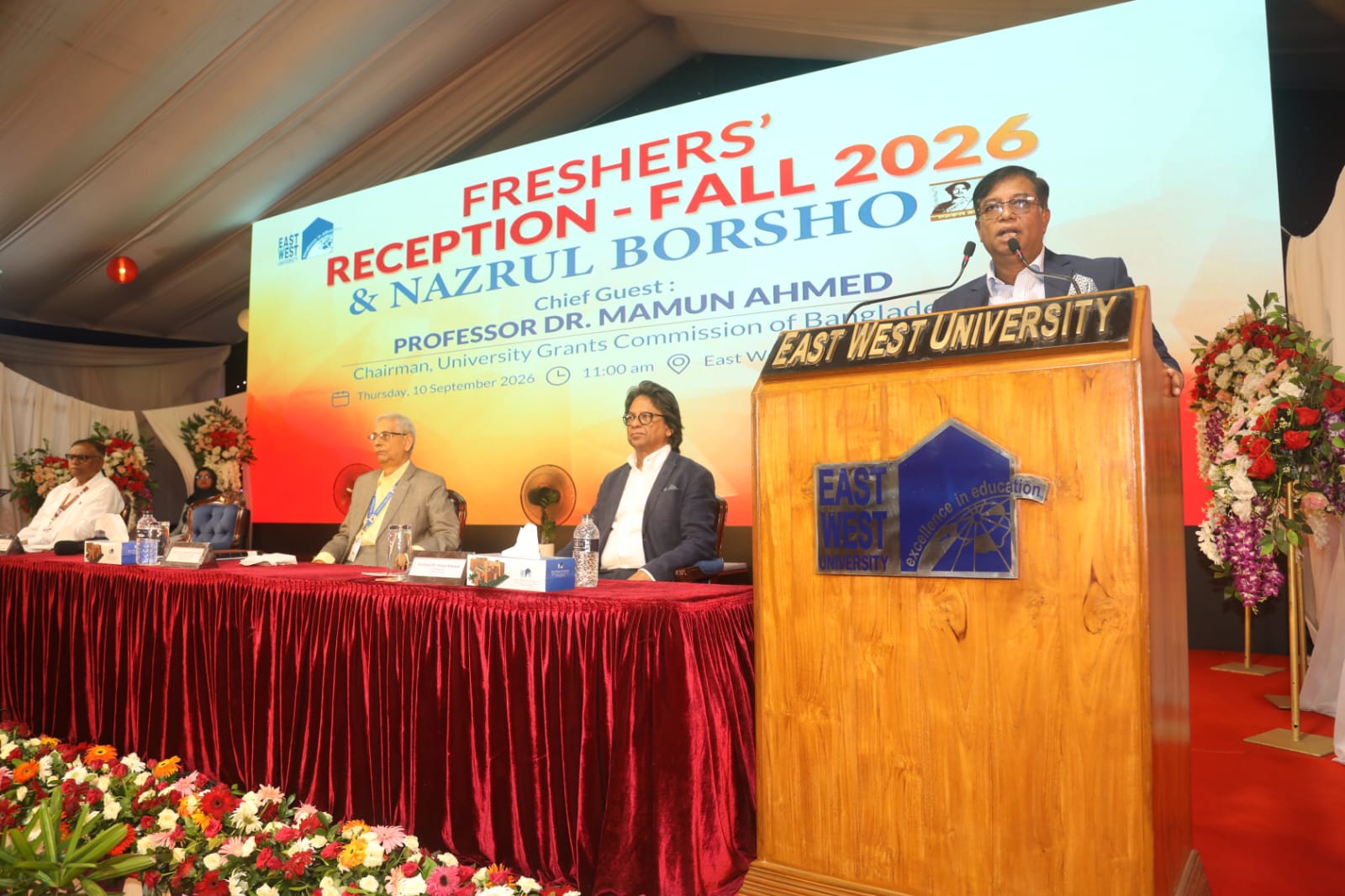
He made the remarks as the chief guest at the Freshers’ Reception 2026 and a programme marking Nazrul Year at East West University on Thursday (September 10).

The UGC chairman said universities must provide opportunities for students and teachers to speak freely, pursue knowledge and express their views. However, he noted that freedom has its limits. Alongside independent thinking, a sense of responsibility must also be developed. Teachers and students should build an academic culture where free thought is practised responsibly.

Addressing the new students, Professor Mamun Ahmed said academic excellence alone is not enough to achieve success. Hard work, perseverance and commitment are equally important. Students should also participate in extracurricular activities alongside their studies. A university graduate should leave with more than academic knowledge; they must develop the skills needed for professional and practical life, as well as social, mental and psychological resilience.

Highlighting challenges in the country’s higher education sector, he said that although higher education has expanded significantly, producing quality graduates remains a challenge. In many cases, university education is not sufficiently aligned with the job market and real-life needs. Education must therefore be connected more closely with life and the workplace.

He said Bangladesh’s greatest resource is its human capital. Investing in quality education and skills development for students will create employment opportunities both at home and abroad. Even when conventional job opportunities are limited, skilled individuals can create their own employment opportunities by putting their abilities to use.

Speaking about the UGC’s role in improving the quality of higher education, Professor Mamun Ahmed said the commission does not want merely to regulate universities but also wants to support and assist them. The UGC makes no distinction between public and private universities. Institutions that are performing well and making efforts to improve will be supported in moving forward.

Regarding the responsibilities of the boards of trustees (BoTs) and academic administrations of private universities, he said their duties and jurisdictions are clearly defined by law. All concerned must work within their respective responsibilities and authorities. As nonprofit institutions, private universities should spend their resources on faculty development, research and student welfare. They should also expand scholarship opportunities for financially disadvantaged students.

On reducing VAT on private universities, the UGC chairman said the government had reduced VAT by 5 percentage points following a recommendation from the commission. The UGC is working to secure another 5-percentage-point reduction next year. He expressed the expectation that the financial benefit from the VAT reduction would be spent on faculty development, research and student welfare.

Emphasising equal opportunities for public and private universities in research, he said whether a university is public or private, old or new, would not be considered when evaluating research proposals. The merit and quality of the proposals would be the primary criteria. The UGC will support innovative research aimed at addressing real-world problems and social challenges in Bangladesh.

He also said initiatives were being taken to use digital technology for sharing human resources and knowledge among universities. There are plans to digitally connect classrooms in urban and rural universities to reduce disparities in higher education. He also mentioned plans to connect Bangladeshi teachers and researchers working abroad with universities in the country and increase the number of PhD fellowships.

Referring to the literature and philosophy of Kazi Nazrul Islam, Professor Mamun Ahmed said Nazrul’s ideas remain relevant in the fight against inequality and in building a secular society and state. His thoughts also continue to inspire people to overcome adversity.

The event was attended by East West University Board of Trustees Chairman Professor Dr Mohammad Farashuddin, Vice-Chancellor Professor Dr Shams Rahman, Dean Professor Dr Anup Chowdhury, along with university teachers, BoT members and students.


UGC Chairman Urges Universities to Promote Responsible Free Thought

Update Time: 05:50:30 pm, Thursday, 10 September 2026

University Grants Commission (UGC) Chairman Professor Dr Mamun Ahmed has urged teachers and students to engage in free thinking and express their opinions alongside acquiring knowledge and skills at universities. However, he stressed that freedom of expression and intellectual practice must be exercised responsibly.

He made the remarks as the chief guest at the Freshers’ Reception 2026 and a programme marking Nazrul Year at East West University on Thursday (September 10).

The UGC chairman said universities must provide opportunities for students and teachers to speak freely, pursue knowledge and express their views. However, he noted that freedom has its limits. Alongside independent thinking, a sense of responsibility must also be developed. Teachers and students should build an academic culture where free thought is practised responsibly.

Addressing the new students, Professor Mamun Ahmed said academic excellence alone is not enough to achieve success. Hard work, perseverance and commitment are equally important. Students should also participate in extracurricular activities alongside their studies. A university graduate should leave with more than academic knowledge; they must develop the skills needed for professional and practical life, as well as social, mental and psychological resilience.

Highlighting challenges in the country’s higher education sector, he said that although higher education has expanded significantly, producing quality graduates remains a challenge. In many cases, university education is not sufficiently aligned with the job market and real-life needs. Education must therefore be connected more closely with life and the workplace.

He said Bangladesh’s greatest resource is its human capital. Investing in quality education and skills development for students will create employment opportunities both at home and abroad. Even when conventional job opportunities are limited, skilled individuals can create their own employment opportunities by putting their abilities to use.

Speaking about the UGC’s role in improving the quality of higher education, Professor Mamun Ahmed said the commission does not want merely to regulate universities but also wants to support and assist them. The UGC makes no distinction between public and private universities. Institutions that are performing well and making efforts to improve will be supported in moving forward.

Regarding the responsibilities of the boards of trustees (BoTs) and academic administrations of private universities, he said their duties and jurisdictions are clearly defined by law. All concerned must work within their respective responsibilities and authorities. As nonprofit institutions, private universities should spend their resources on faculty development, research and student welfare. They should also expand scholarship opportunities for financially disadvantaged students.

On reducing VAT on private universities, the UGC chairman said the government had reduced VAT by 5 percentage points following a recommendation from the commission. The UGC is working to secure another 5-percentage-point reduction next year. He expressed the expectation that the financial benefit from the VAT reduction would be spent on faculty development, research and student welfare.

Emphasising equal opportunities for public and private universities in research, he said whether a university is public or private, old or new, would not be considered when evaluating research proposals. The merit and quality of the proposals would be the primary criteria. The UGC will support innovative research aimed at addressing real-world problems and social challenges in Bangladesh.

He also said initiatives were being taken to use digital technology for sharing human resources and knowledge among universities. There are plans to digitally connect classrooms in urban and rural universities to reduce disparities in higher education. He also mentioned plans to connect Bangladeshi teachers and researchers working abroad with universities in the country and increase the number of PhD fellowships.

Referring to the literature and philosophy of Kazi Nazrul Islam, Professor Mamun Ahmed said Nazrul’s ideas remain relevant in the fight against inequality and in building a secular society and state. His thoughts also continue to inspire people to overcome adversity.

The event was attended by East West University Board of Trustees Chairman Professor Dr Mohammad Farashuddin, Vice-Chancellor Professor Dr Shams Rahman, Dean Professor Dr Anup Chowdhury, along with university teachers, BoT members and students.