Dhaka 3:33 pm, Monday, 9 November 2026

PM Outlines Comprehensive Plan to Overcome Energy Crisis

Prime Minister Tarique Rahman has said the country’s prolonged energy crisis and growing dependence on imports were largely the result of the previous government’s failure to develop the state-owned Bangladesh Petroleum Exploration and Production Company (BAPEX).

He said the current government is implementing a multifaceted and coordinated plan to overcome the crisis and move Bangladesh towards an energy-secure, self-reliant and sustainable system.

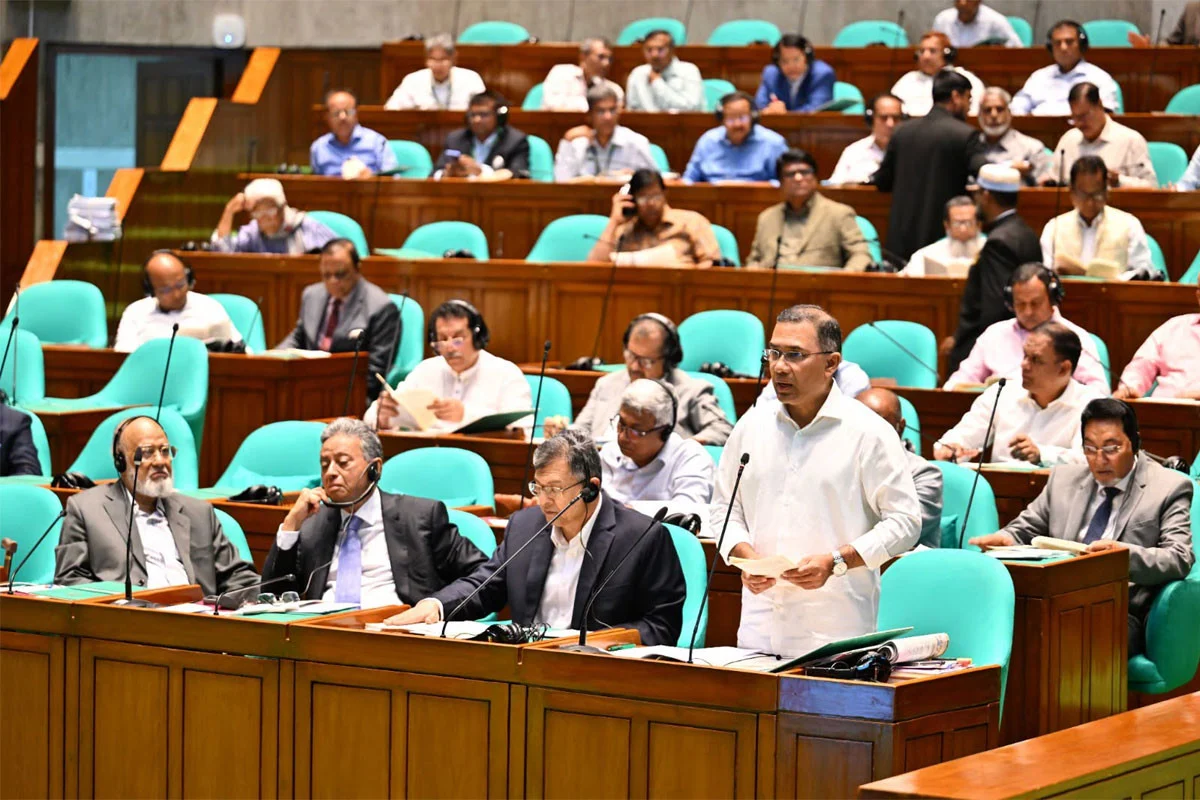
The prime minister disclosed the government’s plan while answering questions from lawmakers during the oral question-and-answer session of Parliament on Wednesday afternoon.

He outlined a roadmap aimed at strengthening the country’s energy security, expanding renewable energy and transforming Bangladesh into a trillion-dollar economy by 2034. He said a number of transformative measures are being implemented to permanently address the energy crisis created by years of inadequate exploration and excessive dependence on imports.

Responding to a question from lawmaker Selina Sultana, the prime minister said increasing domestic gas production has been given the highest priority to meet the country’s energy demand.

Under a programme involving the drilling and workover of 150 wells, drilling of 30 wells has already been successfully completed, adding 140 million cubic feet per day (MMCFD) of new gas to the national grid.

Work on seven more wells is currently underway. Once completed, these wells are expected to supply an additional 85 MMCFD of gas to the national grid. New projects are also being undertaken to gradually drill the remaining wells.

To intensify exploration for new gas reserves, the government is implementing a major programme involving 4,500 line kilometres of 2D seismic surveys and 4,200 square kilometres of 3D seismic surveys.

At the same time, the government is taking steps to strengthen BAPEX and enhance its operational capacity. The procurement process for two new modern drilling rigs is now at the final stage.

Prime Minister Tarique Rahman further said extensive exploration activities are being conducted under both offshore and onshore model Production Sharing Contracts (PSCs) to ensure long-term energy security.

Following the approval of PSC 2026, an international bidding round has been invited, while the approval process for the onshore model PSC is also nearing completion. The discovery of new gas fields through these initiatives would significantly strengthen the country’s economic stability, he said.

As part of efforts to expand maritime LNG infrastructure, discussions are underway with international companies interested in establishing a new floating LNG terminal at Kutubjom in Maheshkhali, Cox’s Bazar. The terminal could begin supplying regasified LNG by December 2028.

The initiative is expected to increase the country’s LNG import capacity by another 600 MMCFD within the next two years.

In addition, feasibility studies are being conducted on an urgent basis for establishing one or two more floating LNG terminals in the country’s southwestern region or around the Payra and Mongla port areas.

Details of the government’s major initiatives to expand renewable energy emerged in response to a question from lawmaker Nilofer Chowdhury Moni.

The prime minister said the government has taken significant measures to encourage public interest and accelerate the growth of the renewable energy sector. Through a notification issued on June 8, 2026, all types of duties on solar panels, inverters, batteries and other necessary components—including customs duty, regulatory duty, supplementary duty, advance tax and additional advance income tax—have been fully waived.

The government has also announced an attractive financial model for rooftop solar panel users. Under the scheme, the government will purchase surplus electricity generated by households and institutions that install rooftop solar systems within the next six months at Tk 10.15 per unit.

Against the current average generation cost of Tk 6 to Tk 7 per unit, the bulk rate and government incentives will provide entrepreneurs with an opportunity to earn up to 45 percent in net profit, comprising 40 percent profit and a 5 percent premium. The incentive will remain effective for the next three years.

As part of its renewable energy expansion strategy, the government has launched a National Rooftop Solar Programme to install solar panels on government buildings, educational institutions and hospitals.

Rooftop solar systems have already been successfully installed at the offices of all deputy commissioners and divisional commissioners across the country. Special allocations have also been made to implement the programme at other government offices.

Alongside solar power, the government is also advancing an integrated plan to generate electricity from wind, hydropower and waste as part of its broader renewable energy strategy.


PM Outlines Comprehensive Plan to Overcome Energy Crisis

Update Time: 07:01:30 pm, Wednesday, 2 September 2026

Prime Minister Tarique Rahman has said the country’s prolonged energy crisis and growing dependence on imports were largely the result of the previous government’s failure to develop the state-owned Bangladesh Petroleum Exploration and Production Company (BAPEX).

He said the current government is implementing a multifaceted and coordinated plan to overcome the crisis and move Bangladesh towards an energy-secure, self-reliant and sustainable system.

The prime minister disclosed the government’s plan while answering questions from lawmakers during the oral question-and-answer session of Parliament on Wednesday afternoon.

He outlined a roadmap aimed at strengthening the country’s energy security, expanding renewable energy and transforming Bangladesh into a trillion-dollar economy by 2034. He said a number of transformative measures are being implemented to permanently address the energy crisis created by years of inadequate exploration and excessive dependence on imports.

Responding to a question from lawmaker Selina Sultana, the prime minister said increasing domestic gas production has been given the highest priority to meet the country’s energy demand.

Under a programme involving the drilling and workover of 150 wells, drilling of 30 wells has already been successfully completed, adding 140 million cubic feet per day (MMCFD) of new gas to the national grid.

Work on seven more wells is currently underway. Once completed, these wells are expected to supply an additional 85 MMCFD of gas to the national grid. New projects are also being undertaken to gradually drill the remaining wells.

To intensify exploration for new gas reserves, the government is implementing a major programme involving 4,500 line kilometres of 2D seismic surveys and 4,200 square kilometres of 3D seismic surveys.

At the same time, the government is taking steps to strengthen BAPEX and enhance its operational capacity. The procurement process for two new modern drilling rigs is now at the final stage.

Prime Minister Tarique Rahman further said extensive exploration activities are being conducted under both offshore and onshore model Production Sharing Contracts (PSCs) to ensure long-term energy security.

Following the approval of PSC 2026, an international bidding round has been invited, while the approval process for the onshore model PSC is also nearing completion. The discovery of new gas fields through these initiatives would significantly strengthen the country’s economic stability, he said.

As part of efforts to expand maritime LNG infrastructure, discussions are underway with international companies interested in establishing a new floating LNG terminal at Kutubjom in Maheshkhali, Cox’s Bazar. The terminal could begin supplying regasified LNG by December 2028.

The initiative is expected to increase the country’s LNG import capacity by another 600 MMCFD within the next two years.

In addition, feasibility studies are being conducted on an urgent basis for establishing one or two more floating LNG terminals in the country’s southwestern region or around the Payra and Mongla port areas.

Details of the government’s major initiatives to expand renewable energy emerged in response to a question from lawmaker Nilofer Chowdhury Moni.

The prime minister said the government has taken significant measures to encourage public interest and accelerate the growth of the renewable energy sector. Through a notification issued on June 8, 2026, all types of duties on solar panels, inverters, batteries and other necessary components—including customs duty, regulatory duty, supplementary duty, advance tax and additional advance income tax—have been fully waived.

The government has also announced an attractive financial model for rooftop solar panel users. Under the scheme, the government will purchase surplus electricity generated by households and institutions that install rooftop solar systems within the next six months at Tk 10.15 per unit.

Against the current average generation cost of Tk 6 to Tk 7 per unit, the bulk rate and government incentives will provide entrepreneurs with an opportunity to earn up to 45 percent in net profit, comprising 40 percent profit and a 5 percent premium. The incentive will remain effective for the next three years.

As part of its renewable energy expansion strategy, the government has launched a National Rooftop Solar Programme to install solar panels on government buildings, educational institutions and hospitals.

Rooftop solar systems have already been successfully installed at the offices of all deputy commissioners and divisional commissioners across the country. Special allocations have also been made to implement the programme at other government offices.

Alongside solar power, the government is also advancing an integrated plan to generate electricity from wind, hydropower and waste as part of its broader renewable energy strategy.