Dhaka 3:07 pm, Monday, 9 November 2026

Eight Priority Projects to Boost Blue Economy Investment

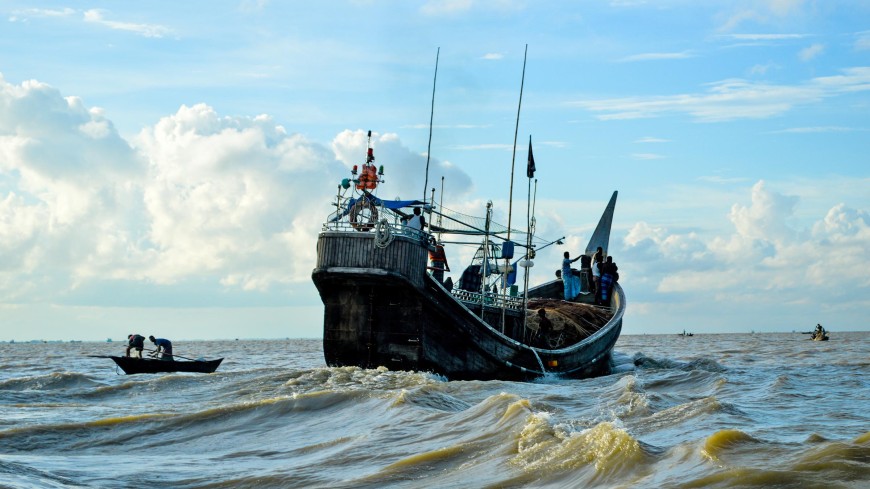
Bangladesh is shifting its focus from inland fisheries to marine-based production, seafood processing, and exports as part of its strategy to strengthen the blue economy. The government is preparing a series of initiatives to attract both local and foreign investment in mariculture, seafood processing, and technology-driven production systems.

According to officials, investment across the entire seafood value chain—from production to exports—could significantly boost the country’s economy. The fisheries sector currently contributes around 3.4 percent to Bangladesh’s Gross Domestic Product (GDP) and nearly 22 percent to agricultural GDP. While Bangladesh is already one of the world’s leading producers of inland fisheries and aquaculture, the country’s new goal is to develop high-value marine species, adopt advanced technologies, and expand export-oriented seafood industries.

To achieve this objective, the government has identified eight priority investment projects under its blue economy initiative:

Marine fish hatcheries
Offshore cage farming
Commercial seaweed farming
Modern fish landing centers
Seafood processing parks
Cold-chain and refrigerated logistics
Digital traceability systems
Aquaculture technology and automation

Dr. Muhammad Tanvir Hossain Chowdhury, Deputy Director of the Blue Economy Division at the Department of Fisheries, said the eight projects are designed to complement one another. Marine hatcheries will produce high-quality fish fry, offshore cage farming will enable commercial marine fish production, while seaweed and other marine resources will be cultivated on a larger scale. Modern landing centers will help maintain product quality, and seafood processing parks together with cold-chain facilities will ensure export-quality processing and storage. Digital traceability and automation will further improve production efficiency and international market acceptance.

He added that investment opportunities extend beyond production to include commercial aquaculture, hatcheries, fish feed manufacturing, farming equipment, cold-chain infrastructure, seafood processing, packaging, logistics, smart monitoring, digital traceability, and environmental monitoring across the entire value chain.

The government has identified Cox’s Bazar–Teknaf, Saint Martin’s Island, Maheshkhali–Sonadia, Kutubdia, Sandwip–Noakhali, and the Khulna–Satkhira coastal region as the most promising locations for mariculture. These areas offer significant potential for farming marine fish, seaweed, oysters, shellfish, and crabs.

Pilot projects involving marine fish, seaweed, shellfish, and crab farming have already produced encouraging results. Research is also progressing on new species selection, hatchery development, smart aquaculture, and Internet of Things (IoT)-based farm management, creating further opportunities for private-sector investment.

The European Union, Japan, China, the Middle East, and the United States have been identified as key export markets for Bangladeshi seafood. Bangladesh has already developed seafood processing facilities, cold storage infrastructure, ports, transport networks, quality control systems, and internationally recognized export certification capabilities, providing a favorable environment for investors.

To accelerate the sector’s growth, the government is emphasizing the National Fisheries Policy 2026, the Marine Fisheries Act 2020, the Marine Fisheries Rules 2023, the 2026–2035 Strategic Plan, Marine Spatial Planning (MSP), public-private partnerships (PPP), and climate-resilient blue economy initiatives. These measures are expected to strengthen Bangladesh’s position as a competitive player in the global seafood market.


Eight Priority Projects to Boost Blue Economy Investment

Update Time: 01:38:25 am, Thursday, 6 August 2026

Bangladesh is shifting its focus from inland fisheries to marine-based production, seafood processing, and exports as part of its strategy to strengthen the blue economy. The government is preparing a series of initiatives to attract both local and foreign investment in mariculture, seafood processing, and technology-driven production systems.

According to officials, investment across the entire seafood value chain—from production to exports—could significantly boost the country’s economy. The fisheries sector currently contributes around 3.4 percent to Bangladesh’s Gross Domestic Product (GDP) and nearly 22 percent to agricultural GDP. While Bangladesh is already one of the world’s leading producers of inland fisheries and aquaculture, the country’s new goal is to develop high-value marine species, adopt advanced technologies, and expand export-oriented seafood industries.

To achieve this objective, the government has identified eight priority investment projects under its blue economy initiative:

Marine fish hatcheries
Offshore cage farming
Commercial seaweed farming
Modern fish landing centers
Seafood processing parks
Cold-chain and refrigerated logistics
Digital traceability systems
Aquaculture technology and automation

Dr. Muhammad Tanvir Hossain Chowdhury, Deputy Director of the Blue Economy Division at the Department of Fisheries, said the eight projects are designed to complement one another. Marine hatcheries will produce high-quality fish fry, offshore cage farming will enable commercial marine fish production, while seaweed and other marine resources will be cultivated on a larger scale. Modern landing centers will help maintain product quality, and seafood processing parks together with cold-chain facilities will ensure export-quality processing and storage. Digital traceability and automation will further improve production efficiency and international market acceptance.

He added that investment opportunities extend beyond production to include commercial aquaculture, hatcheries, fish feed manufacturing, farming equipment, cold-chain infrastructure, seafood processing, packaging, logistics, smart monitoring, digital traceability, and environmental monitoring across the entire value chain.

The government has identified Cox’s Bazar–Teknaf, Saint Martin’s Island, Maheshkhali–Sonadia, Kutubdia, Sandwip–Noakhali, and the Khulna–Satkhira coastal region as the most promising locations for mariculture. These areas offer significant potential for farming marine fish, seaweed, oysters, shellfish, and crabs.

Pilot projects involving marine fish, seaweed, shellfish, and crab farming have already produced encouraging results. Research is also progressing on new species selection, hatchery development, smart aquaculture, and Internet of Things (IoT)-based farm management, creating further opportunities for private-sector investment.

The European Union, Japan, China, the Middle East, and the United States have been identified as key export markets for Bangladeshi seafood. Bangladesh has already developed seafood processing facilities, cold storage infrastructure, ports, transport networks, quality control systems, and internationally recognized export certification capabilities, providing a favorable environment for investors.

To accelerate the sector’s growth, the government is emphasizing the National Fisheries Policy 2026, the Marine Fisheries Act 2020, the Marine Fisheries Rules 2023, the 2026–2035 Strategic Plan, Marine Spatial Planning (MSP), public-private partnerships (PPP), and climate-resilient blue economy initiatives. These measures are expected to strengthen Bangladesh’s position as a competitive player in the global seafood market.