Staff Correspondent
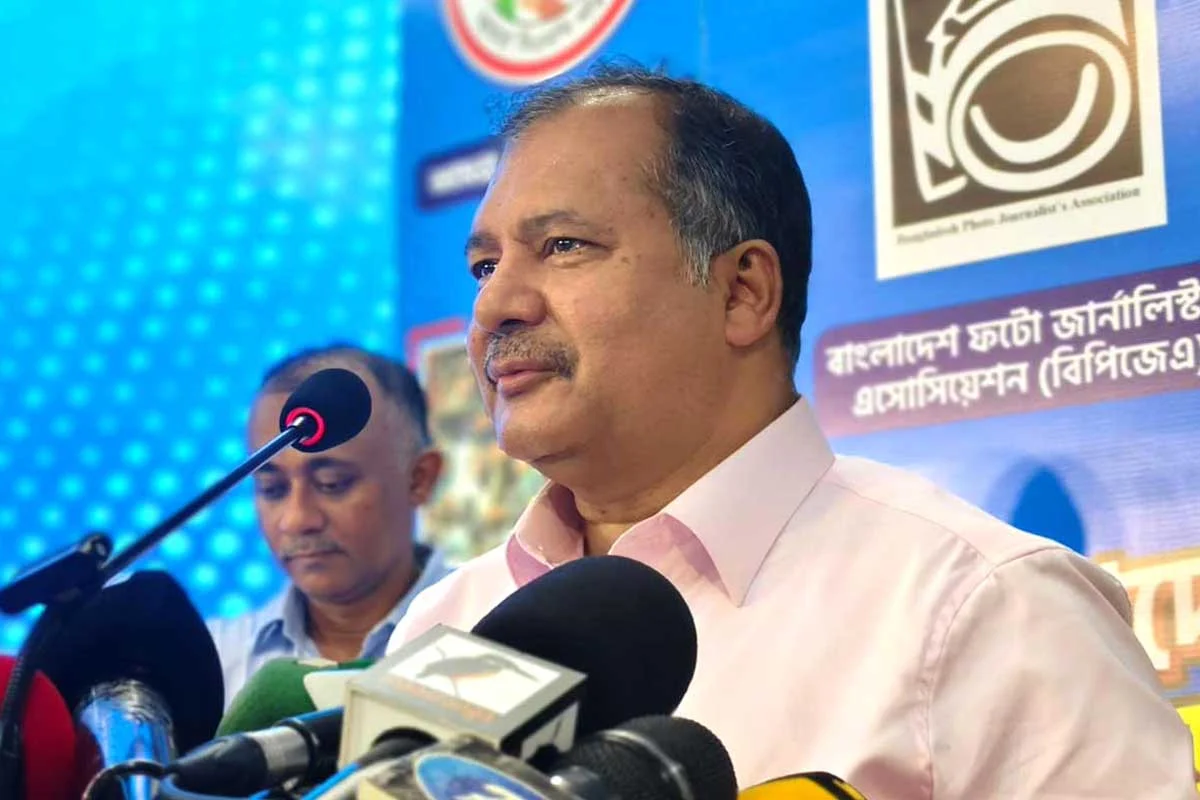
Information and Broadcasting Minister Zahir Uddin Swapan has said that in a democratic system, the Jatiya Sangsad (National Parliament) is the highest forum for political debate, dialogue, and resolving national issues, warning that giving greater importance to street protests than Parliament is not conducive to democracy.
Speaking at the unveiling of a photo album titled “15 Years of Fascism and the 2024 Mass Uprising” and the inauguration of a special photography exhibition at the National Press Club on Saturday, the minister said the government is committed to addressing national issues through Parliament.
“Some people are trying to portray street protests as more important than Parliament. However, the government is working to resolve national issues through parliamentary processes,” he said.
Swapan added that while Bangladesh is striving to strengthen democratic culture and establish an effective parliamentary system after the end of authoritarian rule, some groups continue to prioritize street politics over parliamentary debate.
“Minor parliamentary issues are being taken to the streets, and attempts are being made to create instability and confusion through social media,” he said.
The minister said the government is aware of various conspiracies but, as a responsible administration, believes in constructive solutions rather than confrontation.
“We understand the depth of these challenges, which is why we act responsibly and speak as guardians of the nation. A country cannot be governed through provocative rhetoric or by creating a toxic atmosphere on social media,” he said.
Swapan noted that the anti-authoritarian movement was aimed at restoring voting rights, democratic freedoms, and establishing an independent, self-reliant, and sovereign Bangladesh.
“That phase of the struggle is over. Now it is time to build the country,” he said.
He added that while the government would first seek constructive solutions to emerging problems, it would not hesitate to take necessary measures to protect the interests of the state and its citizens if required.
The information minister also highlighted the importance of documentary photography in preserving the history of Bangladesh’s democratic movements, saying such initiatives would help future generations understand the country’s political struggles.
The exhibition was inaugurated by Liberation War Affairs Minister Ahmed Azam Khan, who described the 17-year movement against authoritarianism as a “bloody struggle” to restore democracy in Bangladesh.
He said the three-day exhibition captures the sacrifices, repression, and resilience of those involved in the movement and serves as a reminder to prevent the return of authoritarian rule. He also reaffirmed the commitment to building a “New Bangladesh” based on democracy, development, and prosperity under Prime Minister Tarique Rahman’s leadership.
Speaking at the event, Bangladesh Federal Union of Journalists (BFUJ) Secretary General Kader Gani Chowdhury said the July uprising was the culmination of 16 years of public resistance against oppression, repression, and the denial of voting rights.
Paying tribute to those killed and injured, he said the movement’s greatest lesson was the power of public unity. He also condemned mob violence, communal attacks, and other forms of violence, urging the government to take effective measures to prevent them while calling on journalists and cultural activists to stand for humanity and democracy.
Chairing the event, Prime Minister’s Additional Press Secretary and convener of Amra BNP Poribar, Atikur Rahman Ruman, said the July movement was not the achievement of any individual or single group but the result of a collective struggle by people from all walks of life.
He alleged that some individuals are now trying to claim sole credit for the movement, creating unnecessary divisions contrary to its spirit.
Ruman also said that although Begum Khaleda Zia and Prime Minister Tarique Rahman had faced political persecution, they never used their suffering as a tool for political publicity.
Among others present at the event were Chief Information Officer Syed Abdal Ahmed, Deputy Press Secretary to the Prime Minister Zahidul Islam Rony, National Press Club President Kobi Hasan Hafiz, Press Institute of Bangladesh (PIB) Managing Director Basir Jamal, Bangladesh Photo Journalists Association General Secretary Babul Talukdar, Vice-President Mashiyur Rahman Sumon, and members of the association.