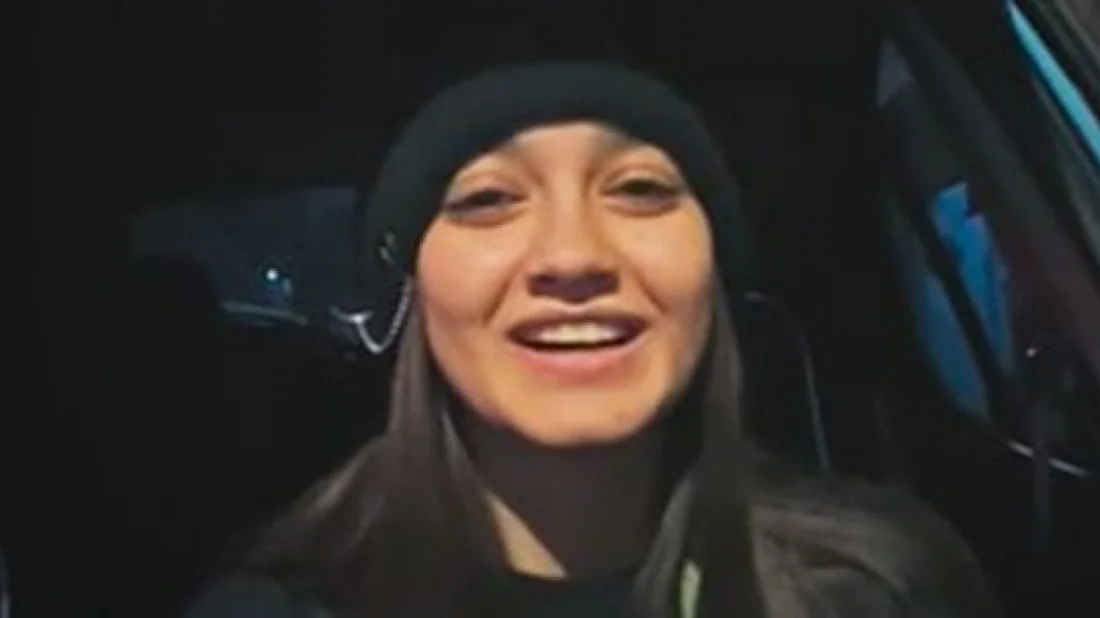
Samira lost her only daughter, 16-year-old Sevda, after security forces opened fire on anti-government protesters in Iran. Following her daughter’s death, she allegedly faced harassment at every stage, from searching for her body to securing permission for burial. Eventually, she was forced to flee the country at the risk of her life. Now living in exile, Samira is continuing her fight to expose those responsible for her daughter’s death and bring them to justice.
Speaking to BBC Panorama, Samira said she had previously shown little interest in politics and earned her living by selling cosmetics in Iran. However, her life changed completely after Sevda was killed during anti-government protests in January this year. She received no meaningful assistance from the authorities in locating her daughter’s body. Instead, she faced repeated harassment. According to Samira, finding Sevda was not the end of her struggle; it marked the beginning of a new chapter of intimidation.
On January 9, Sevda joined her mother at a major protest on the outskirts of Tehran. The demonstrations, which began the previous month over economic grievances, eventually turned into a movement demanding an end to the Islamic Republic. Although Samira was not politically active, her daughter was deeply interested in the anti-government movement. Sevda admired Mahsa Amini and Nika Shakarami. Their deaths had deeply affected her.
Samira said she and her daughter had taken to the streets on January 8 in response to a call by Reza Pahlavi, the exiled son of Iran’s former Shah, urging people to join the protests. They also attended demonstrations the following day. At the protest site, Sevda stood on a rubbish bin and began chanting slogans. According to Samira, members of the Basij militia and the Islamic Revolutionary Guard Corps (IRGC) were present in large numbers.
Samira alleged that a sniper opened fire from the roof of a nearby building. The bullet pierced Sevda’s heart. She saw her daughter lying motionless on the ground, covered in blood. When Sevda was taken to hospital, doctors initially told her that surgery was underway. However, a short while later, Samira found her daughter’s body inside a bag.
For several days, she searched hospitals and different morgues for Sevda’s body. Eventually, she found her at a large morgue in Tehran. According to Samira, three other bodies had been piled on top of her daughter’s. She was devastated by the sight of numerous bodies of teenagers and young people at the morgue.
Iranian authorities have acknowledged that more than 3,000 people were killed during the protests, claiming that security personnel were also among the dead. However, according to the human rights organisation HRANA, the death toll is estimated to exceed 7,000, with most of the victims believed to be protesters.
Even after finding her daughter’s body, Samira said she continued to face harassment. She alleged that authorities pressured her to say that Sevda had been killed by terrorists rather than security forces in order to obtain permission for the burial. According to her, officials sought to silence grieving families by making them claim that their relatives had been killed by Israeli or American terrorists. She was also denied permission to visit her daughter’s grave or install a gravestone.
A few days before the 40th-day memorial for Sevda, Samira was summoned to a local office of Iran’s Intelligence Ministry. She alleged that officials asked her to give an interview portraying Sevda as a member of the Basij militia and claiming that protesters had killed her. In return, they reportedly offered to declare her daughter a martyr and provide a house and other benefits.
Samira subsequently decided to leave Iran. With the help of smugglers, she fled on foot, crossing rivers and mountains. After reaching safety abroad, she began speaking to international media outlets. She claims that several charges were subsequently brought against her in absentia, including Moharebeh, or waging war against God, an offence that can carry the death penalty.
On the occasion of Sevda’s 17th birthday, relatives and friends organised a memorial gathering in Iran. Samira was watching the event through a live broadcast from abroad when the transmission suddenly stopped. She later learned that the IRGC had raided the gathering and detained several of her relatives and friends. Her family was also allegedly threatened that Sevda’s body would be exhumed and moved elsewhere if any further gatherings were held around her grave.
Samira is now publishing the names of Iranian security personnel and officials online. Her goal is to identify those she believes were responsible for the deadly shootings during the January 8 and 9 protests and ensure they face justice. She says she wants every individual whose name she publishes to be held accountable.
According to the BBC report, after one of the individuals named by Samira was later killed, a supporter of the Iranian government offered a $5,000 reward for information about her whereabouts. The supporter reportedly suspected Samira of being responsible for the individual’s death. However, Iranian state media later reported that nine people had been arrested in connection with the killing.
The grief of losing her daughter continues to haunt Samira every day. Nevertheless, she says she has no intention of giving up. Every moment without Sevda is unbearable, she says, but her daughter’s death has also given her the strength to stand against injustice. The scenes she witnessed while searching through body bags at the morgue continue to inspire her to fight against the Islamic Republic for the rest of her life.
Iranian Government’s Response: In a statement to BBC Panorama, the Iranian Embassy in London said foreign powers, including the United States, had turned peaceful and lawful protests into violent unrest. It alleged that foreign forces had incited violence, supplied weapons and equipment, and disrupted public security.
Source: BBC