
 Staff Correspondent
The government has taken an initiative to register battery-powered three-wheeled rickshaws (e-rickshaws) in 13 city corporation areas across the country, including Dhaka. The city corporations will be able to begin the registration process from Monday (November 2).
To regulate e-rickshaw movement in Dhaka, the areas under Dhaka North and Dhaka South City Corporations will be divided into eight zones. Each zone will have a separate colour for its rickshaws, with eight different colours in total.
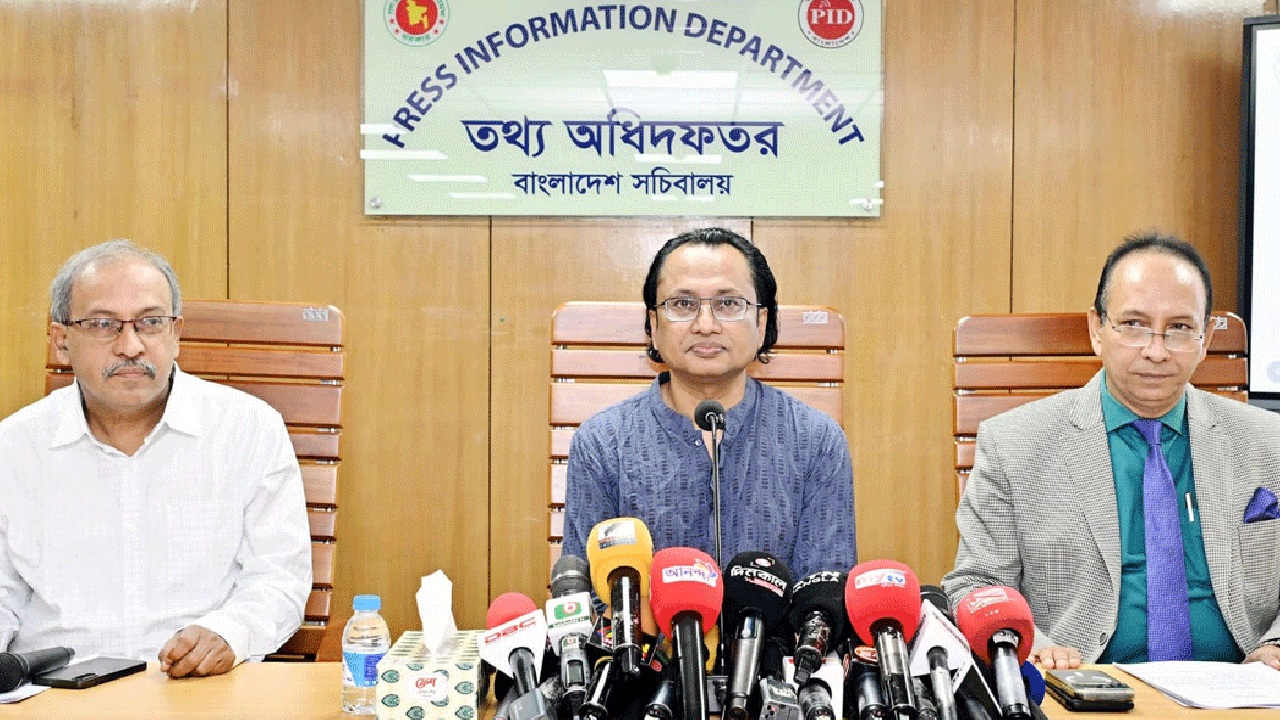
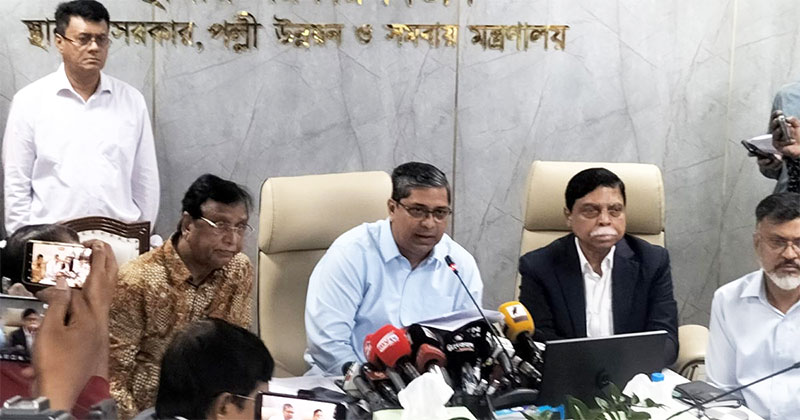
State Minister for Local Government Mir Shah Alam disclosed the information at a press conference on Sunday (November 1) at the conference room of the Local Government Division at the Secretariat. The press conference focused on the newly issued Three-Wheeler Low-Speed Battery-Powered Rickshaw (E-Rickshaw) Operation Rules, 2026 for city corporation areas.
Urging e-rickshaw drivers not to panic following the publication of the new rules, the state minister said registration would be provided in phases and illegal e-rickshaws would gradually be removed. He called for patience and urged drivers to continue operating their vehicles in accordance with existing instructions during the transition.
He also cautioned against attempts to create panic and exploit the situation for political gain.
Dhaka’s E-Rickshaws to Operate in Eight Zones
Eight zones will be established to regulate e-rickshaw movement in Dhaka North and Dhaka South City Corporation areas. Four zones will be under Dhaka North and four under Dhaka South. Separate colours will be assigned to rickshaws in each zone to prevent them from operating in other areas.
Mir Shah Alam said the number of rickshaws permitted in each zone would be determined jointly by the traffic authorities and the respective city corporations to prevent traffic congestion.
E-rickshaw movement will also be restricted on roads where buses operate. A detailed implementation plan will be developed gradually.
Registration Fee Tk 8,000
The registration fee for each e-rickshaw has been fixed at Tk 8,000, while an additional Tk 1,000 will be charged for the registration plate. Registration must be renewed annually, although the renewal fee has not yet been specified.
The QR code will contain the registration number, owner’s information, relevant city corporation and the zone in which the rickshaw is authorised to operate. Identity cards will initially be issued to drivers to verify their identities.
The state minister said driving licences would not be mandatory for e-rickshaw drivers at this stage. A separate notification would be issued once the registration process had progressed, bringing drivers under the driving licence system in phases.
BUET-Approved Design Made Mandatory
Existing e-rickshaws must be modified in accordance with the design approved by Bangladesh University of Engineering and Technology (BUET) before receiving registration. New e-rickshaws must also be manufactured following the approved design.
The state minister said registration would be granted only after existing vehicles were modified to comply with the approved specifications. Manufacturers would also have to follow the same design standards.
The new rules also include provisions for establishing e-rickshaw charging stations. Approval will be granted for charging stations at designated locations. Institutions capable of arranging solar-powered charging facilities will receive priority.
Legal action will be taken against illegal use of electricity for charging vehicles. City corporation magistrates will regularly monitor these activities.
Government to Review Progress After One Month
The state minister did not specify a deadline for completing the e-rickshaw registration process. However, he said the government would hold another briefing with journalists after one month to report on progress, including the number of registered rickshaws and measures taken to control illegal vehicles.
Mir Shah Alam said battery-powered rickshaws had been operating in various cities across the country without legal registration for a long time. The legal basis for registering e-rickshaws was established through amendments to the Local Government (City Corporation) Act, 2009. The new rules were formulated under Section 120 of the Act.
He said the rules would initially apply to 13 city corporations across the country. Separate regulations for e-rickshaws in municipal areas would be introduced later following amendments to the relevant laws.
Regarding fares, the state minister said per-kilometre rates would be determined through discussions among vehicle owners’ representatives, traffic authorities and city corporations. The government would try to keep fares affordable for ordinary passengers.