International Desk
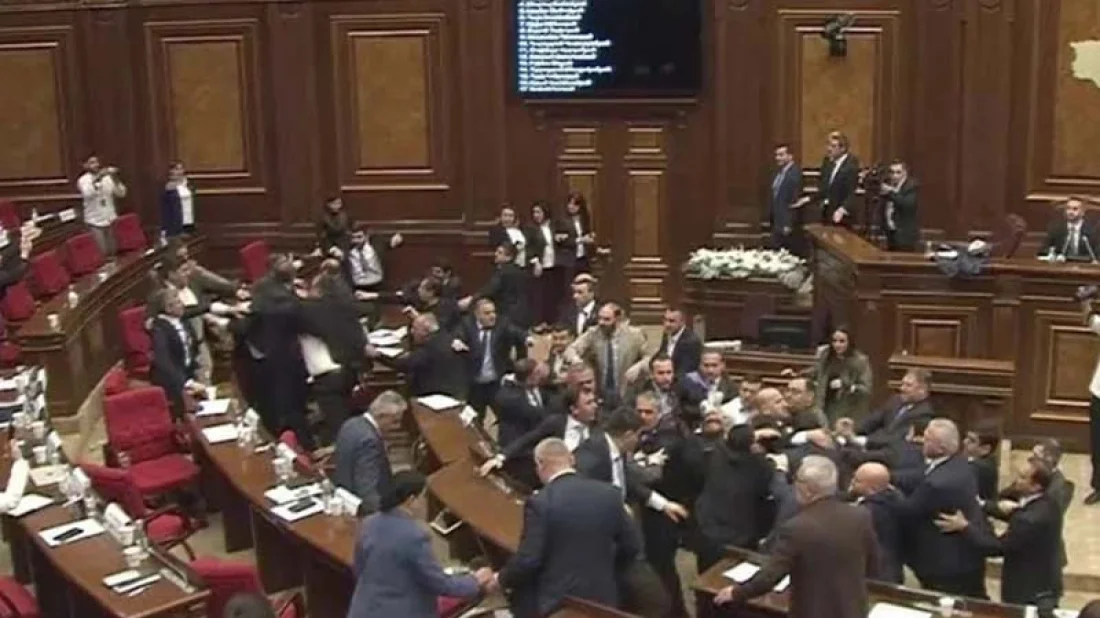
A heated debate over a proposal to establish a ‘Ministry of Sex’ has triggered a violent brawl among lawmakers in Armenia’s parliament. Members of parliament were seen punching, kicking and throwing chairs at one another. The clashes spread beyond the assembly hall into the corridors of the parliamentary building.
Earlier this year, opposition party Strong Armenia pledged that if it won the election and formed the government, there would be ‘no dissatisfied women’ in the country. To fulfil this promise, the party proposed establishing a ‘Ministry of Sex’.
The party reportedly argued that sexual dissatisfaction was fuelling political activism among middle-aged white women and that a dedicated ministry was needed to address the issue.
The confrontation began on Thursday (October 29) during a parliamentary debate on the proposal. Taron Chakhoyan, a lawmaker from the ruling Civil Contract Party, accused the opposition of being deeply involved in corruption. He also demanded that opposition leader Narek Rapetyan apologise to women over the controversial proposal.
Tensions escalated when Chakhoyan described Rapetyan as a ‘problem from head to toe’. An angry exchange of words followed, with opposition lawmakers leaving their seats and approaching the podium where Chakhoyan was speaking. The verbal confrontation soon turned into a physical fight.
During the clashes, lawmakers were seen punching and kicking one another. Deputy Speaker and ruling party member Vahagn Aleksanyan threw a chair towards opposition lawmakers. Chakhoyan, meanwhile, splashed water on opposition MP Garnik Davtyan.
Several lawmakers also threw water bottles, while a number of tables inside the parliament were damaged.
Initially, the Speaker announced that the session would not be suspended, saying everyone should be able to witness the incident. However, as the violence intensified, a recess was eventually declared.
The fighting continued even after the break, spreading into the parliamentary corridors. Security personnel later formed a human barrier between the two groups. Several lawmakers were seen leaving the chamber with injuries and torn clothing.
Following the incident, Prime Minister Nikol Pashinyan condemned the violence at a press conference. However, he also expressed support for the actions of lawmakers from his ruling party.
“I condemn violence, but I support the measures taken by the Civil Contract faction today. Being in the opposition does not mean that anyone can behave arrogantly. Whether throwing chairs or doing something else, it was appropriate and correct,” Pashinyan said.
In a subsequent Facebook post, the prime minister jokingly remarked that lawmakers from the Strong Armenia party were ‘not particularly physically strong’.
Commenting on the post, Chakhoyan wrote, “I feel a little sorry. They (Strong Armenia) start a fight and then run away.”
Chakhoyan later described the opposition’s behaviour as ‘hooliganism’ and apologised to the public. He said, “You cannot provoke a confrontation in the National Assembly chamber and then run away without taking a beating.”
Meanwhile, opposition leader Karapetyan defended the clash, describing it as a ‘genuine Armenian-style, man-to-man ordinary fight’. He claimed that people who had been irritating them for a long time had finally received a direct response.
When asked whether criminal proceedings had been initiated over the incident, Armenia’s Prosecutor General’s Office told local media that it had no information on the matter.
Meanwhile, a similar scene of political unrest unfolded in Albania’s parliament on the same day. Opposition lawmakers set off smoke bombs and blocked the parliamentary podium.
A protest movement known as the ‘Flamingo Movement’, which began over a controversial resort project, has gradually evolved into a broader campaign against corruption and the country’s political system.
During a vote on amendments to a law concerning the Central Bank of Albania, opposition lawmakers protested against the ruling Socialist Party and demanded the resignation of Prime Minister Edi Rama.