Dhaka 3:19 pm, Monday, 9 November 2026

Family Card Data Collection Begins, Target Set at 44.5 Million Families by December

The government has launched nationwide data collection under its Family Card programme, aiming to collect and include information on approximately 44.5 million families in a central database by December. The government has set a target of providing Family Cards and allowances to an additional 4 million female heads of households in the current fiscal year.

Social Welfare Minister Professor Dr. A. Z. M. Zahid Hossain disclosed the information at a press conference held at the Press Information Department (PID) conference room on Monday (October 12). State Minister for Social Welfare Farzana Sharmin was also present.

The minister said empowering women and ensuring their rights, dignity and economic independence are among the government’s key commitments to national development and social justice. The Family Card programme is being implemented to advance these goals, with cards issued in the names of female heads of households.

He said the Prime Minister inaugurated the pilot phase of the programme on March 10. By June 2026, data had been collected from 112,094 families across 57 units in 55 upazilas and city corporation areas in 44 districts across the country’s eight divisions. Based on Proxy Means Test (PMT) scores, 71,831 eligible beneficiaries were selected to receive Family Cards and allowances.

Of the Tk 866 million allocated for the pilot programme, Tk 657.3 million was spent, including Tk 572 million in allowances, the minister said.

For the 2026–27 fiscal year, the government has allocated Tk 145 billion for implementing the programme, including Tk 123 billion for allowances.

Families to Be Classified into Five Groups
The minister said the government had formulated the Family Card Implementation Policy 2026 to ensure effective implementation of the programme.

Under the updated Proxy Means Test method developed by the Bangladesh Bureau of Statistics (BBS), families will be classified into five socioeconomic groups: extremely poor, poor, vulnerable lower-income, middle-income and affluent.

Female heads of households with a PMT score of 860 or below will be considered eligible for allowances. All female heads of households will receive Family Cards, but allowances will be provided to those in the first, second and third groups, which comprise families with relatively lower PMT scores.

More Than 73,000 Personnel Deployed for Data Collection
The minister said nationwide household data collection began simultaneously on Monday. A total of 66,815 data collectors and 6,681 supervisors have been assigned to the task. The first phase of training for the personnel has also been completed.

Data collectors will visit households and gather information in person using specialized tablets connected to mobile networks. The collected information will be uploaded directly to an online database.

Preparations for the operation include collecting mobile SIM cards, ensuring network-based cybersecurity, managing field personnel and establishing a Network Operations Centre (NOC).

The government aims to collect and include information on approximately 44.5 million families in the database by December. The estimate is based on counting every five people as one family. Eligible beneficiaries will subsequently be selected from the database using the PMT method.

The minister added that the government aims to bring an additional 4 million female heads of households under the Family Card and allowance programme in the current fiscal year. The plan is to gradually include all eligible female heads of households over the following three fiscal years.

Cards to Feature Dual Chips and QR Codes
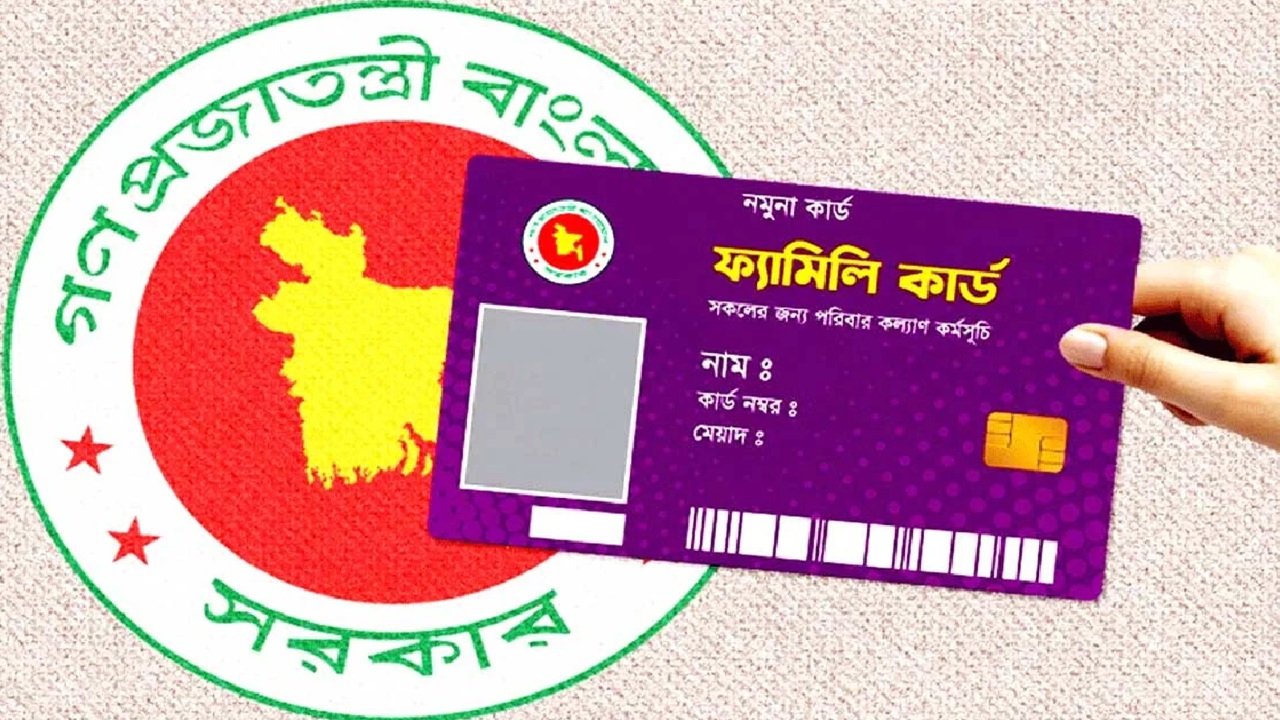
Family Cards issued to beneficiaries will feature dual chips, QR codes and Near Field Communication (NFC) technology. The cards will be connected to the government’s TakaPay payment system.

According to the minister, beneficiaries will be able to withdraw their allowance money through bank ATMs, point-of-sale (POS) terminals at commercial outlets and mobile financial services (MFS).


Family Card Data Collection Begins, Target Set at 44.5 Million Families by December

Update Time: 06:14:10 pm, Monday, 12 October 2026

The government has launched nationwide data collection under its Family Card programme, aiming to collect and include information on approximately 44.5 million families in a central database by December. The government has set a target of providing Family Cards and allowances to an additional 4 million female heads of households in the current fiscal year.

Social Welfare Minister Professor Dr. A. Z. M. Zahid Hossain disclosed the information at a press conference held at the Press Information Department (PID) conference room on Monday (October 12). State Minister for Social Welfare Farzana Sharmin was also present.

The minister said empowering women and ensuring their rights, dignity and economic independence are among the government’s key commitments to national development and social justice. The Family Card programme is being implemented to advance these goals, with cards issued in the names of female heads of households.

He said the Prime Minister inaugurated the pilot phase of the programme on March 10. By June 2026, data had been collected from 112,094 families across 57 units in 55 upazilas and city corporation areas in 44 districts across the country’s eight divisions. Based on Proxy Means Test (PMT) scores, 71,831 eligible beneficiaries were selected to receive Family Cards and allowances.

Of the Tk 866 million allocated for the pilot programme, Tk 657.3 million was spent, including Tk 572 million in allowances, the minister said.

For the 2026–27 fiscal year, the government has allocated Tk 145 billion for implementing the programme, including Tk 123 billion for allowances.

Families to Be Classified into Five Groups
The minister said the government had formulated the Family Card Implementation Policy 2026 to ensure effective implementation of the programme.

Under the updated Proxy Means Test method developed by the Bangladesh Bureau of Statistics (BBS), families will be classified into five socioeconomic groups: extremely poor, poor, vulnerable lower-income, middle-income and affluent.

Female heads of households with a PMT score of 860 or below will be considered eligible for allowances. All female heads of households will receive Family Cards, but allowances will be provided to those in the first, second and third groups, which comprise families with relatively lower PMT scores.

More Than 73,000 Personnel Deployed for Data Collection
The minister said nationwide household data collection began simultaneously on Monday. A total of 66,815 data collectors and 6,681 supervisors have been assigned to the task. The first phase of training for the personnel has also been completed.

Data collectors will visit households and gather information in person using specialized tablets connected to mobile networks. The collected information will be uploaded directly to an online database.

Preparations for the operation include collecting mobile SIM cards, ensuring network-based cybersecurity, managing field personnel and establishing a Network Operations Centre (NOC).

The government aims to collect and include information on approximately 44.5 million families in the database by December. The estimate is based on counting every five people as one family. Eligible beneficiaries will subsequently be selected from the database using the PMT method.

The minister added that the government aims to bring an additional 4 million female heads of households under the Family Card and allowance programme in the current fiscal year. The plan is to gradually include all eligible female heads of households over the following three fiscal years.

Cards to Feature Dual Chips and QR Codes
Family Cards issued to beneficiaries will feature dual chips, QR codes and Near Field Communication (NFC) technology. The cards will be connected to the government’s TakaPay payment system.

According to the minister, beneficiaries will be able to withdraw their allowance money through bank ATMs, point-of-sale (POS) terminals at commercial outlets and mobile financial services (MFS).