

Dhaka 3:05 pm, Monday, 9 November 2026
IMF–World Bank Meetings in Thailand

Global Economy Under Strain from War, Energy Crisis and Mounting Debt

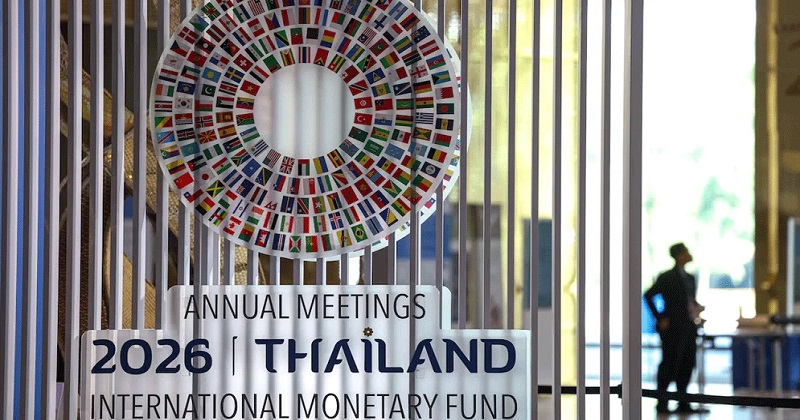
The global economic outlook has come under renewed pressure from the war in the Middle East, an unprecedented energy crisis and rising interest rates. Against this backdrop, finance ministers and officials from various countries are gathering in Thailand this week to discuss ways to address the impact of these mounting challenges.

Inflation and human suffering triggered by the war involving Iran, the United States and Israel are expected to dominate the annual meetings of the International Monetary Fund (IMF) and the World Bank. The meetings are being held outside Washington for the first time in nearly three years, Reuters reported.

A US official said Treasury Secretary Scott Bessent would not attend this year’s meetings. Citing domestic commitments, he is sending two senior officials in his place.

The absence of the US Treasury secretary from the major international gathering could disappoint delegates from other countries. His decision comes amid heightened international tensions over the war involving Iran, the Russia-Ukraine conflict and US sanctions targeting the International Criminal Court (ICC).

World Bank President Ajay Banga told Reuters that global economic growth had held up better than expected when Iran shut the Strait of Hormuz, a vital shipping route through which about 20 per cent of the world’s oil passes. However, the global economy is now facing renewed pressure from soaring diesel prices, rising fertiliser costs and the potential impact of a super El Niño.

Under pressure from US President Donald Trump, G7 countries have agreed to release 100 million barrels of diesel and crude oil from their emergency reserves. Trump is keen to bring down energy prices ahead of the US midterm elections in November, when his Republican Party faces the risk of losing control of Congress.

On Friday, Trump announced a deal with Russia that would allow more diesel to reach global markets while temporarily easing US sanctions on Moscow’s revenues linked to the war in Ukraine. Ukrainian President Volodymyr Zelensky has strongly criticised the move.

Since the war began on February 28, more than one billion barrels of oil have been released from commercial storage facilities on land. However, industry executives say stocks of oil suitable for immediate use in the global market are dwindling, increasing market volatility and putting upward pressure on prices.

Banga said the World Bank was not revising its global growth forecast for now but was closely monitoring developments. He stressed that the challenge was not simply the potential impact of El Niño but the combined effects of several pressures, including fertiliser prices, energy costs and debt conditions.

He added that countries needed to be more vigilant about the range of scenarios they might face in the coming months.

Mounting Debt Burdens

IMF Managing Director Kristalina Georgieva issued a similar warning in remarks ahead of the meetings, saying, “Winter is coming.”

The IMF has not signalled a major change to its forecast of 3 per cent global economic growth in 2026. Its growth projection for next year could be revised slightly upward, although forecasts for some regions, including Ukraine and Gulf countries, may be lowered.

An IMF study published last Tuesday found that sudden and sharp increases in food and energy prices are increasingly becoming common triggers of crises. Such shocks prolong the risk of high inflation, deepen poverty and threaten economic stability.

One of the biggest concerns for policymakers is the growing burden of government debt. Rising debt can constrain economic growth while adding to inflationary pressures. According to the IMF, global public debt has reached its highest level since the Second World War and could exceed 100 per cent of gross domestic product (GDP) before 2030.

Advanced economies, led by the United States, have the highest debt-to-GDP ratios. However, emerging markets and low-income countries also face significant risks. Higher US interest rates could trigger capital outflows from these countries, while El Niño-related disruptions and insufficient investment in artificial intelligence (AI) could further complicate their economic outlook.

Emerging Markets Face Growing Concerns

Developing countries are particularly vulnerable because of their high levels of public debt. A substantial portion of their debt may have to be refinanced in the future at even higher interest rates. Across developing economies, interest payments already account for more than 10 per cent of government revenue on average.

At the beginning of the COVID-19 crisis, G20 leaders announced a temporary suspension of debt repayments for the poorest countries. However, there appears to be little appetite for a similar initiative this time. According to G20 diplomats, high debt levels and political pressures are major obstacles to fresh action.

Many low-income countries are also concerned about the IMF’s revised recommendations for lending programmes. The proposed approach places greater emphasis on a smaller number of deeper and more stringent reforms as conditions for loan approval. Officials fear that this could ultimately require painful measures, including spending cuts and austerity.

Yolanda Fresnillo, a debt justice advocate at Eurodad, said countries were already cutting expenditure because of rising debt-servicing costs and IMF conditions. She warned that the review of conditionality policies could make the situation worse.

She cited Kenya as an example. The country managed to avoid a debt restructuring scenario through measures to reduce public spending and increase taxes. However, these steps triggered widespread protests, particularly among young people.

The IMF risks damaging its credibility if it fails to adequately acknowledge the severe crises confronting many developing countries.

Security and Financing Concerns

Flights to Bangkok frequently use Middle Eastern airspace. Following recent attacks on airports in Saudi Arabia, concerns have also emerged over the safety of more than 10,000 travellers arriving in the Thai capital.

The most recent annual meetings of the IMF and World Bank were held in Morocco before the Hamas attacks in Israel. Israel subsequently launched extensive bombardments in Gaza, killing more than 74,000 people and causing widespread destruction across the Palestinian territory.

Josh Lipsky, vice-president of international economics at the Atlantic Council, said the relationship between national security and the international financial system had become much clearer over the past three years. At the time, however, economic policymakers had not viewed the Hamas attacks as an economic issue.

“The global implications have naturally been extensive,” Lipsky said, adding that the events of three years ago were directly connected to the current situation involving Iran and the closure of the Strait of Hormuz.

IMF–World Bank Meetings in Thailand

Global Economy Under Strain from War, Energy Crisis and Mounting Debt

Update Time: 10:13:06 pm, Sunday, 11 October 2026

The global economic outlook has come under renewed pressure from the war in the Middle East, an unprecedented energy crisis and rising interest rates. Against this backdrop, finance ministers and officials from various countries are gathering in Thailand this week to discuss ways to address the impact of these mounting challenges.

Inflation and human suffering triggered by the war involving Iran, the United States and Israel are expected to dominate the annual meetings of the International Monetary Fund (IMF) and the World Bank. The meetings are being held outside Washington for the first time in nearly three years, Reuters reported.

A US official said Treasury Secretary Scott Bessent would not attend this year’s meetings. Citing domestic commitments, he is sending two senior officials in his place.

The absence of the US Treasury secretary from the major international gathering could disappoint delegates from other countries. His decision comes amid heightened international tensions over the war involving Iran, the Russia-Ukraine conflict and US sanctions targeting the International Criminal Court (ICC).

World Bank President Ajay Banga told Reuters that global economic growth had held up better than expected when Iran shut the Strait of Hormuz, a vital shipping route through which about 20 per cent of the world’s oil passes. However, the global economy is now facing renewed pressure from soaring diesel prices, rising fertiliser costs and the potential impact of a super El Niño.

Under pressure from US President Donald Trump, G7 countries have agreed to release 100 million barrels of diesel and crude oil from their emergency reserves. Trump is keen to bring down energy prices ahead of the US midterm elections in November, when his Republican Party faces the risk of losing control of Congress.

On Friday, Trump announced a deal with Russia that would allow more diesel to reach global markets while temporarily easing US sanctions on Moscow’s revenues linked to the war in Ukraine. Ukrainian President Volodymyr Zelensky has strongly criticised the move.

Since the war began on February 28, more than one billion barrels of oil have been released from commercial storage facilities on land. However, industry executives say stocks of oil suitable for immediate use in the global market are dwindling, increasing market volatility and putting upward pressure on prices.

Banga said the World Bank was not revising its global growth forecast for now but was closely monitoring developments. He stressed that the challenge was not simply the potential impact of El Niño but the combined effects of several pressures, including fertiliser prices, energy costs and debt conditions.

He added that countries needed to be more vigilant about the range of scenarios they might face in the coming months.

Mounting Debt Burdens

IMF Managing Director Kristalina Georgieva issued a similar warning in remarks ahead of the meetings, saying, “Winter is coming.”

The IMF has not signalled a major change to its forecast of 3 per cent global economic growth in 2026. Its growth projection for next year could be revised slightly upward, although forecasts for some regions, including Ukraine and Gulf countries, may be lowered.

An IMF study published last Tuesday found that sudden and sharp increases in food and energy prices are increasingly becoming common triggers of crises. Such shocks prolong the risk of high inflation, deepen poverty and threaten economic stability.

One of the biggest concerns for policymakers is the growing burden of government debt. Rising debt can constrain economic growth while adding to inflationary pressures. According to the IMF, global public debt has reached its highest level since the Second World War and could exceed 100 per cent of gross domestic product (GDP) before 2030.

Advanced economies, led by the United States, have the highest debt-to-GDP ratios. However, emerging markets and low-income countries also face significant risks. Higher US interest rates could trigger capital outflows from these countries, while El Niño-related disruptions and insufficient investment in artificial intelligence (AI) could further complicate their economic outlook.

Emerging Markets Face Growing Concerns

Developing countries are particularly vulnerable because of their high levels of public debt. A substantial portion of their debt may have to be refinanced in the future at even higher interest rates. Across developing economies, interest payments already account for more than 10 per cent of government revenue on average.

At the beginning of the COVID-19 crisis, G20 leaders announced a temporary suspension of debt repayments for the poorest countries. However, there appears to be little appetite for a similar initiative this time. According to G20 diplomats, high debt levels and political pressures are major obstacles to fresh action.

Many low-income countries are also concerned about the IMF’s revised recommendations for lending programmes. The proposed approach places greater emphasis on a smaller number of deeper and more stringent reforms as conditions for loan approval. Officials fear that this could ultimately require painful measures, including spending cuts and austerity.

Yolanda Fresnillo, a debt justice advocate at Eurodad, said countries were already cutting expenditure because of rising debt-servicing costs and IMF conditions. She warned that the review of conditionality policies could make the situation worse.

She cited Kenya as an example. The country managed to avoid a debt restructuring scenario through measures to reduce public spending and increase taxes. However, these steps triggered widespread protests, particularly among young people.

The IMF risks damaging its credibility if it fails to adequately acknowledge the severe crises confronting many developing countries.

Security and Financing Concerns

Flights to Bangkok frequently use Middle Eastern airspace. Following recent attacks on airports in Saudi Arabia, concerns have also emerged over the safety of more than 10,000 travellers arriving in the Thai capital.

The most recent annual meetings of the IMF and World Bank were held in Morocco before the Hamas attacks in Israel. Israel subsequently launched extensive bombardments in Gaza, killing more than 74,000 people and causing widespread destruction across the Palestinian territory.

Josh Lipsky, vice-president of international economics at the Atlantic Council, said the relationship between national security and the international financial system had become much clearer over the past three years. At the time, however, economic policymakers had not viewed the Hamas attacks as an economic issue.

“The global implications have naturally been extensive,” Lipsky said, adding that the events of three years ago were directly connected to the current situation involving Iran and the closure of the Strait of Hormuz.