Staff Correspondent
The caretaker government system and mandatory referendum provisions are being restored to the Constitution, Home Minister and chairman of the Special Committee on Constitutional Reform Salahuddin Ahmed has said. At the same time, steps have been taken to ensure historical recognition of the July mass uprising and provide legal and constitutional protection to its political and ordinary participants as “July fighters” through a specific constitutional schedule.
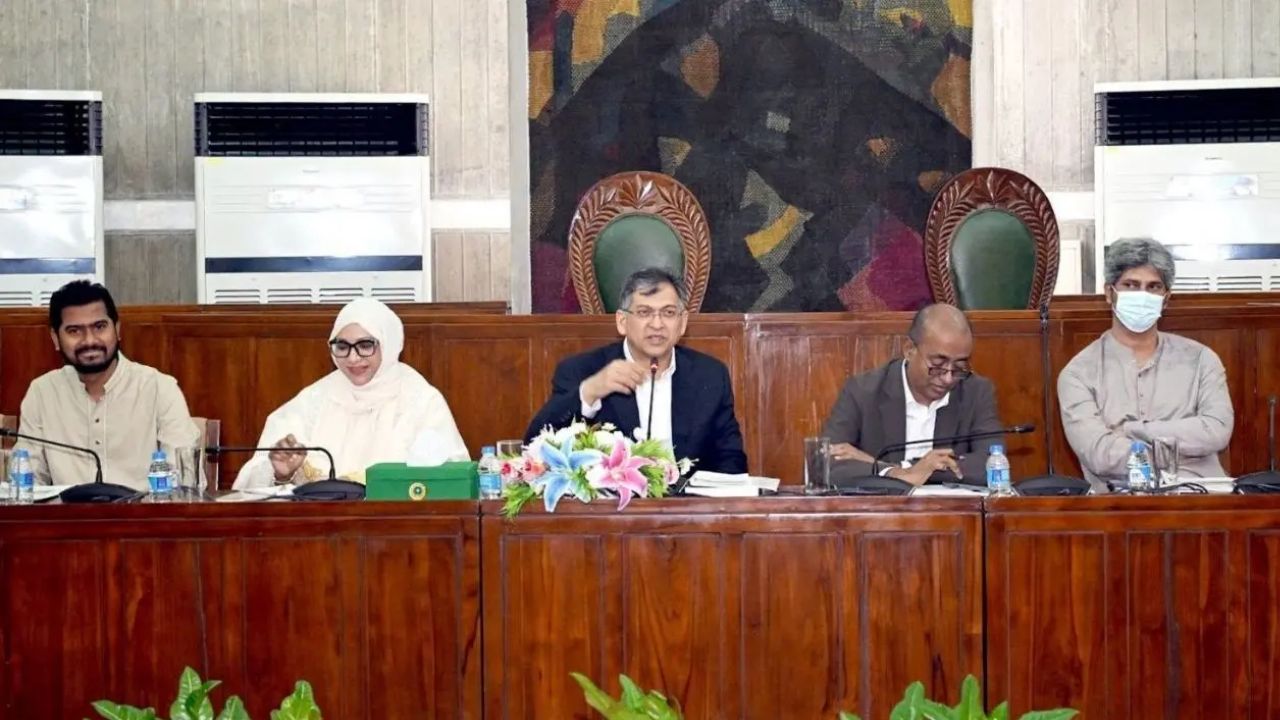
He made the remarks at a press conference on Tuesday (October 6) following the sixth meeting of the Special Committee on Constitutional Reform. The committee said a new constitutional amendment bill would be placed before parliament based on the July National Charter signed by the political parties.
Salahuddin Ahmed said the government is committed to implementing the July National Charter exactly as it was signed by the political parties, including their notes of dissent. At the same time, provisions will be restored to re-establish the caretaker government system and ensure the people’s decision through a mandatory referendum on constitutional amendments.
He said 63 representatives attended the sixth meeting. Due to time constraints, parents and siblings of those killed in the July uprising, as well as representatives of various organizations of injured July fighters, were invited as representatives of the July fighters. They demanded constitutional recognition of the July mass uprising and the inclusion of relevant provisions of the July Declaration at appropriate places in the Constitution. Some also proposed incorporating the provisions into the Constitution’s preamble.
Regarding legal and constitutional protection for the July fighters, the home minister said the law enacted through an ordinance remains in force. However, to avoid judicial obligations and legal complications, a specific provision will be incorporated into the Constitution’s schedule to ensure amnesty and constitutional protection for the July fighters.
He also said demands had been raised to expedite the trials of crimes against humanity, genocide and the killings committed during the July mass uprising, including the cases against Sheikh Hasina and her associates. He said the government is committed to speeding up trial-supporting processes such as investigations, prosecution and framing of charges.
Explaining the process for restoring the referendum provision, Salahuddin Ahmed said the referendum previously referred to was a statutory referendum. Under the proposed changes, there will be a mandatory constitutional referendum. Any fundamental changes to the Constitution’s preamble, the principles outlined in Article 8, Articles 48 and 56, and the restoration of the caretaker government system will require a referendum before the president signs the amendment.
Regarding the structure of the caretaker government, he said the models used in 1996 or 2006 would not be followed exactly. No final decision has yet been made on who will head the caretaker government or how the interim government will be formed.
The government is currently seeking opinions from people from various sections of society, the Supreme Court Bar Association, judges, former judges, constitutional experts and academics. The home minister said the government is in favour of excluding the option of appointing the president as the head of the caretaker government, as the arrangement had been controversial in the past.
He said long marches or other programmes organized by groups outside political parties would be considered a democratic right. However, the final constitutional decisions will be taken through parliamentary deliberations, Salahuddin Ahmed said.