International Desk
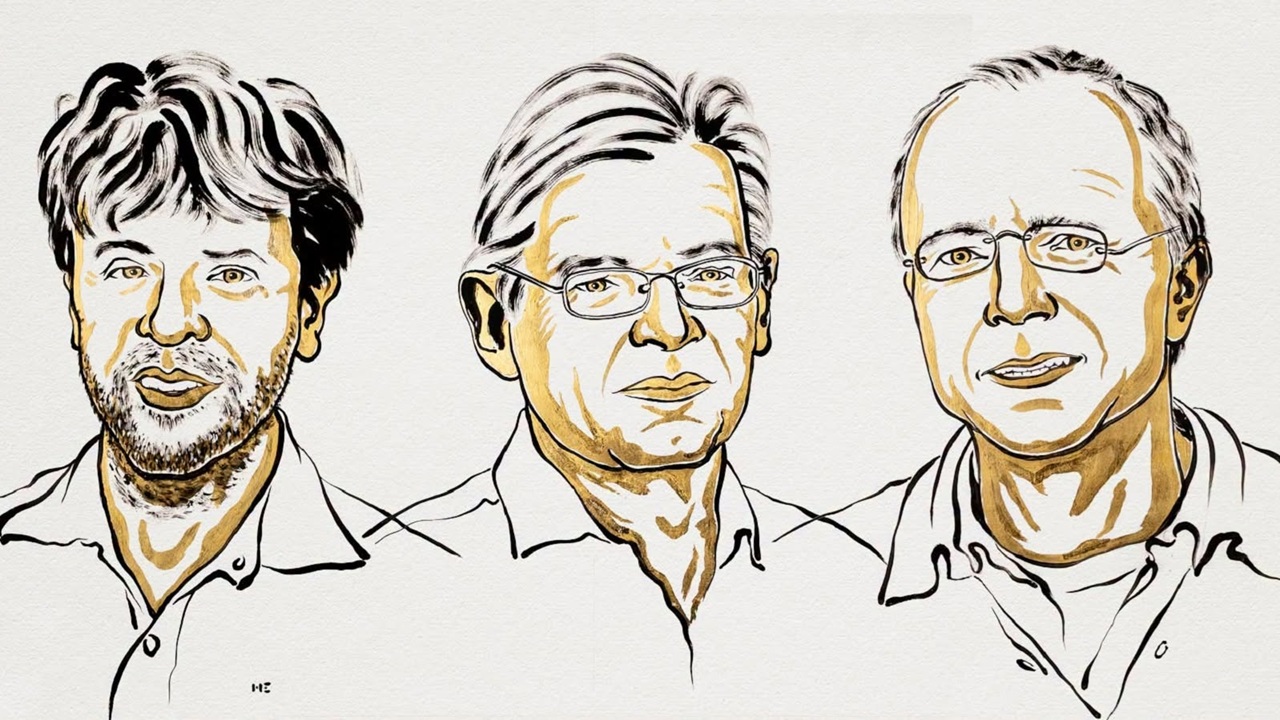
US scientist Karl Deisseroth and German scientists Peter Hegemann and Georg Nagel have won the 2026 Nobel Prize in Physiology or Medicine for their discoveries related to light-controlled ion channels and optogenetics.
The Nobel Prize announcements for this year began on Monday, with the medicine laureates announced from Stockholm, Sweden, at around 3:30pm Bangladesh time.
According to the Nobel Committee, the three scientists were honoured for discoveries that made it possible to control nerve-cell activity using light, laying the foundation for the development of optogenetics.
Hegemann and Nagel discovered channelrhodopsins, proteins that respond to light. They found that introducing these proteins into cells could make the cells sensitive to light.
Deisseroth later introduced the channelrhodopsin gene into nerve cells in mice. By exposing the cells to blue light, he was able to activate nerve signals. He subsequently demonstrated that the light-controlled switch could also be used to control nerve cells in the brains of living mice.
The technique of controlling neural activity with light is now known as optogenetics and has become an important tool in neuroscience research.
According to Nobel Prize records, 232 people had received the Nobel Prize in Physiology or Medicine through 2025. The youngest recipient was Canadian scientist Frederick G. Banting, who was 31 when he received the award in 1923 for the discovery of insulin. US scientist Peyton Rous received the prize at the age of 87.
2025 Laureates
In 2025, the Nobel Prize in Physiology or Medicine was awarded to US scientists Mary E. Brunkow and Fred Ramsdell and Japanese scientist Shimon Sakaguchi for discoveries concerning peripheral immune tolerance.
The Nobel Committee said their work helped explain how the immune system is regulated to prevent it from attacking the body’s own tissues. Their discoveries have opened new possibilities for developing treatments for autoimmune diseases and cancer.
Nobel Prize Schedule
The Nobel Prize in Physics will be announced on Tuesday, followed by the Chemistry Prize on Wednesday. The Literature and Peace prizes will be announced on Thursday and Friday, respectively. The Sveriges Riksbank Prize in Economic Sciences will be announced on October 12.
Each Nobel Prize includes a diploma, a gold medal and a cash award of approximately $1.2 million. When a prize is shared by more than one laureate, the prize money is divided among them.
The Nobel Prizes have been awarded since 1901 to individuals and organisations whose work has made significant contributions to humanity, in accordance with the wishes of the prize’s founder, Swedish inventor and industrialist Alfred Nobel.