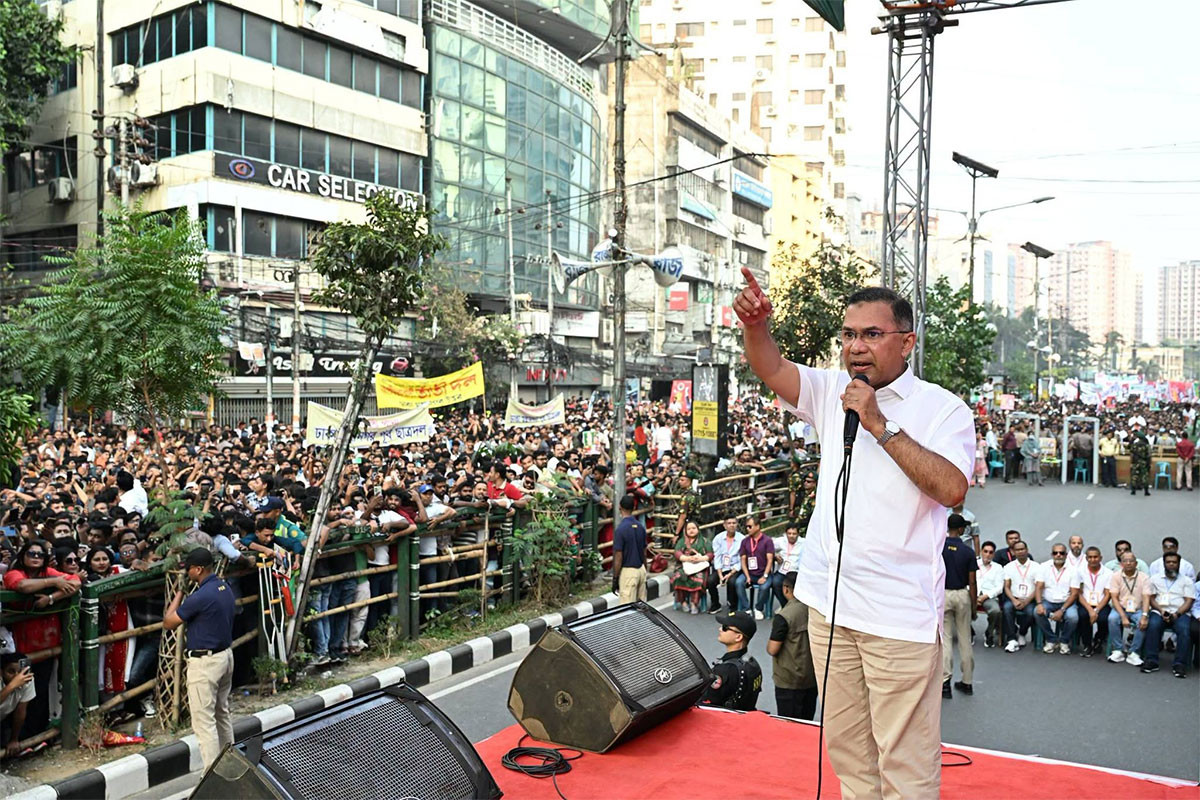
Staff Correspondent
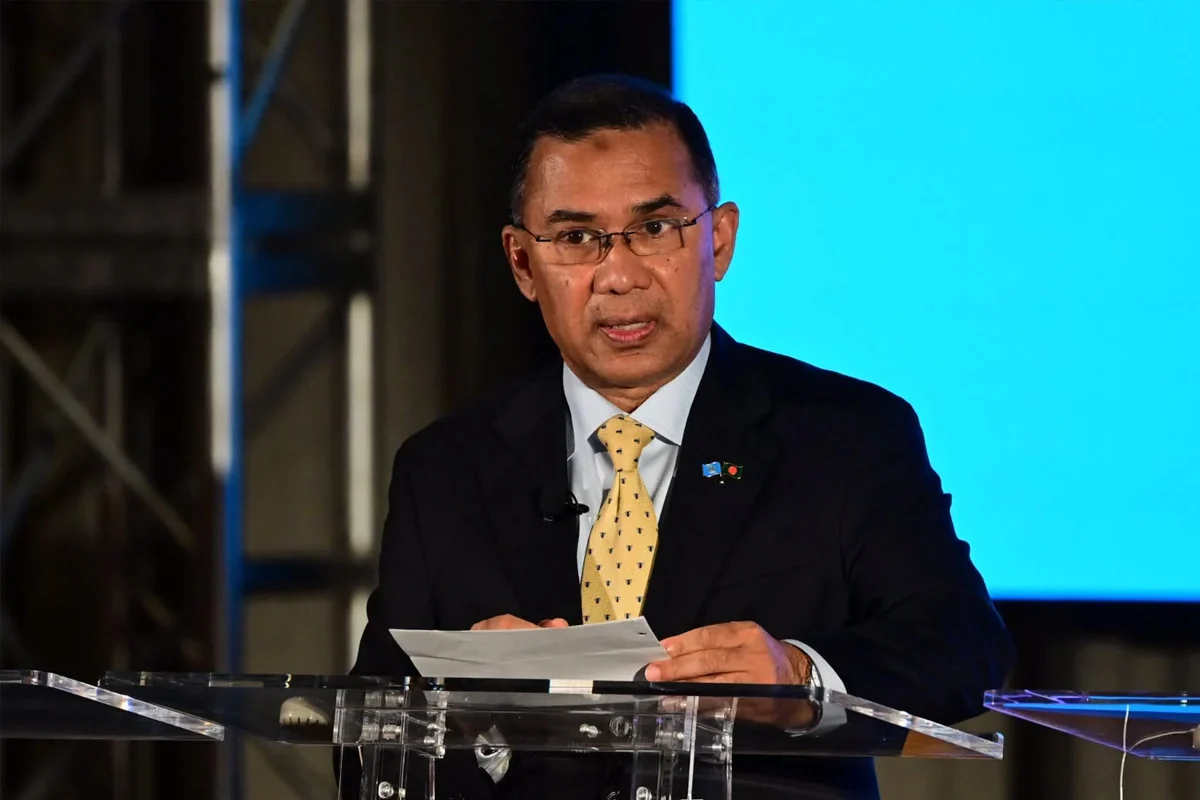
Prime Minister Tarique Rahman has called on world leaders to work together to build a safer and more sustainable world for future generations.
“Let us work together and build a safer and more sustainable future for generations to come,” the prime minister said.
He also stressed the need to keep global warming within 1.5 degrees Celsius, ensure affordable financing for climate-vulnerable countries, expand access to climate-smart technologies, promote renewable energy and fully implement the Loss and Damage Fund to address the risks posed by climate change.
The prime minister made the remarks while addressing a high-level meeting titled “Climate Action and the Just Transition” at the Trusteeship Council Chamber of the United Nations Headquarters in New York on Wednesday afternoon local time. The meeting was convened at the initiative of UN Secretary-General António Guterres.
Tarique Rahman said Bangladesh contributes less than 0.5 percent of global greenhouse gas emissions, yet it is among the countries most vulnerable to climate change.
He said rising sea levels could submerge 12 to 18 percent of Bangladesh’s coastal areas by the end of this century, threatening the livelihoods of millions of people and putting the country’s food security at serious risk.
Referring to climate-related losses and damages equivalent to around 1 percent of Bangladesh’s GDP, the prime minister said approximately $3.19 billion had been allocated in the current budget for climate adaptation. However, he noted that Bangladesh would not be able to avoid major climate risks without international support.
The prime minister said Bangladesh plans to plant 250 million trees over the next five years. Work is also underway to excavate around 20,000 kilometres of rivers and canals to conserve water, reduce flood risks, restore wetlands and recharge groundwater. Efforts to implement the master plans for the Padma Barrage and Teesta Barrage are also progressing.
He said Bangladesh has set a target of meeting 20 percent of its electricity demand from renewable energy by 2030. The government is also working to promote green industries through jute-based products, environmentally friendly transport, waste-to-energy initiatives and the circular economy, while taking steps to establish a national carbon market.
The prime minister said Bangladesh could not achieve these goals alone. Collective action based on the principle of “common but differentiated responsibilities and respective capabilities” is now essential, he said.
Calling for five urgent measures to address climate change, he said, first, global greenhouse gas emissions must be reduced to keep the Paris Agreement’s 1.5-degree Celsius temperature limit within reach.
Second, predictable and affordable adaptation financing must be ensured for climate-vulnerable countries.
Third, greater access to climate-smart technologies must be secured to create a fair and equitable pathway for the climate transition.
Fourth, the use of renewable energy must be expanded through affordable financing, capacity building and technology transfer.
Finally, he called for the full implementation of the Loss and Damage Fund and its regular replenishment.
The prime minister said Bangladesh expects partnerships that will support the implementation of its climate plans.
Prime Minister Tarique Rahman is currently in New York to attend the 81st session of the United Nations General Assembly. He is scheduled to address the general debate on behalf of Bangladesh on September 24.