Dhaka 3:39 pm, Monday, 9 November 2026

Environment and Public Health Cannot Be Treated Separately: Environment Minister

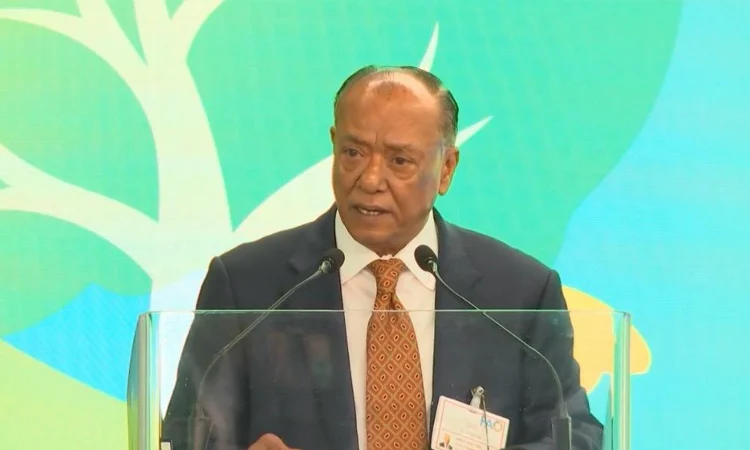
Environment, animal and public health cannot be treated as separate issues, said Environment, Forest and Climate Change Minister Abdul Awal Mintoo. He stressed the need to take an integrated approach that considers people, animals, plants and ecosystems together when formulating and implementing policies.

He made the remarks on Monday while addressing the opening session of the global conference on “One Health Action in Agrifood Systems” at the headquarters of the Food and Agriculture Organization (FAO) in Rome, Italy. The conference is being held from September 21 to 23.

The minister said the resilience of agrifood systems depends on the collective well-being of these interconnected sectors.

Highlighting Bangladesh’s environmental challenges, Mintoo said the country, located in the densely populated and low-lying Ganges Delta, faces significant risks from climate change, biodiversity loss and environmental degradation.

“People, ecosystems and agrifood systems are closely interconnected within the same landscape. Pressure on one sector quickly affects the others,” he said, stressing that effective solutions cannot be achieved by addressing environmental, animal and public health separately.

The minister said Bangladesh has been working for nearly two decades to establish the One Health approach not merely as a concept but as a principle of governance based on institutional partnerships.

He said Bangladesh is prioritising stronger coordination and information sharing among relevant ministries, greater accountability, the central inclusion of the environment and ecosystems in the One Health framework, and capacity building at district and grassroots levels.

Mintoo also emphasised the need for institutional mechanisms to ensure sustainable coordination among ministries. He described the formal recognition of the environment sector as a key stakeholder in the national One Health framework as an important step forward.

He called for stronger partnerships through joint planning and resource mobilisation and expressed hope that the proposed One Health information hub would facilitate the exchange of experiences among countries.

The environment minister said Bangladesh would seek to incorporate lessons from the Rome conference into discussions at COP31 and work towards a more integrated global approach to climate and environmental health.

He also reiterated Bangladesh’s willingness to share its experiences and challenges while learning from other countries. He stressed that the outcomes of the conference should translate into concrete programmes, adequate financing and stronger local-level capacity.

FAO Director-General Qu Dongyu, Swiss President Guy Parmelin, Tanzanian Prime Minister Dr Mwigulu Nchemba, Serbian Prime Minister Đuro Macut, Mozambique’s Health Minister Ussene Hilario, Cape Verde’s Agriculture Minister Evelin Nair Monteiro Ramos, French Agriculture Minister Annie Genevard and Ireland’s Agriculture Minister T.D. Martin Heydon, along with ministers, senior representatives, heads of organisations and experts from various countries, attended the opening session.


Environment and Public Health Cannot Be Treated Separately: Environment Minister

Update Time: 12:12:31 am, Tuesday, 22 September 2026

Environment, animal and public health cannot be treated as separate issues, said Environment, Forest and Climate Change Minister Abdul Awal Mintoo. He stressed the need to take an integrated approach that considers people, animals, plants and ecosystems together when formulating and implementing policies.

He made the remarks on Monday while addressing the opening session of the global conference on “One Health Action in Agrifood Systems” at the headquarters of the Food and Agriculture Organization (FAO) in Rome, Italy. The conference is being held from September 21 to 23.

The minister said the resilience of agrifood systems depends on the collective well-being of these interconnected sectors.

Highlighting Bangladesh’s environmental challenges, Mintoo said the country, located in the densely populated and low-lying Ganges Delta, faces significant risks from climate change, biodiversity loss and environmental degradation.

“People, ecosystems and agrifood systems are closely interconnected within the same landscape. Pressure on one sector quickly affects the others,” he said, stressing that effective solutions cannot be achieved by addressing environmental, animal and public health separately.

The minister said Bangladesh has been working for nearly two decades to establish the One Health approach not merely as a concept but as a principle of governance based on institutional partnerships.

He said Bangladesh is prioritising stronger coordination and information sharing among relevant ministries, greater accountability, the central inclusion of the environment and ecosystems in the One Health framework, and capacity building at district and grassroots levels.

Mintoo also emphasised the need for institutional mechanisms to ensure sustainable coordination among ministries. He described the formal recognition of the environment sector as a key stakeholder in the national One Health framework as an important step forward.

He called for stronger partnerships through joint planning and resource mobilisation and expressed hope that the proposed One Health information hub would facilitate the exchange of experiences among countries.

The environment minister said Bangladesh would seek to incorporate lessons from the Rome conference into discussions at COP31 and work towards a more integrated global approach to climate and environmental health.

He also reiterated Bangladesh’s willingness to share its experiences and challenges while learning from other countries. He stressed that the outcomes of the conference should translate into concrete programmes, adequate financing and stronger local-level capacity.

FAO Director-General Qu Dongyu, Swiss President Guy Parmelin, Tanzanian Prime Minister Dr Mwigulu Nchemba, Serbian Prime Minister Đuro Macut, Mozambique’s Health Minister Ussene Hilario, Cape Verde’s Agriculture Minister Evelin Nair Monteiro Ramos, French Agriculture Minister Annie Genevard and Ireland’s Agriculture Minister T.D. Martin Heydon, along with ministers, senior representatives, heads of organisations and experts from various countries, attended the opening session.