Staff Correspondent
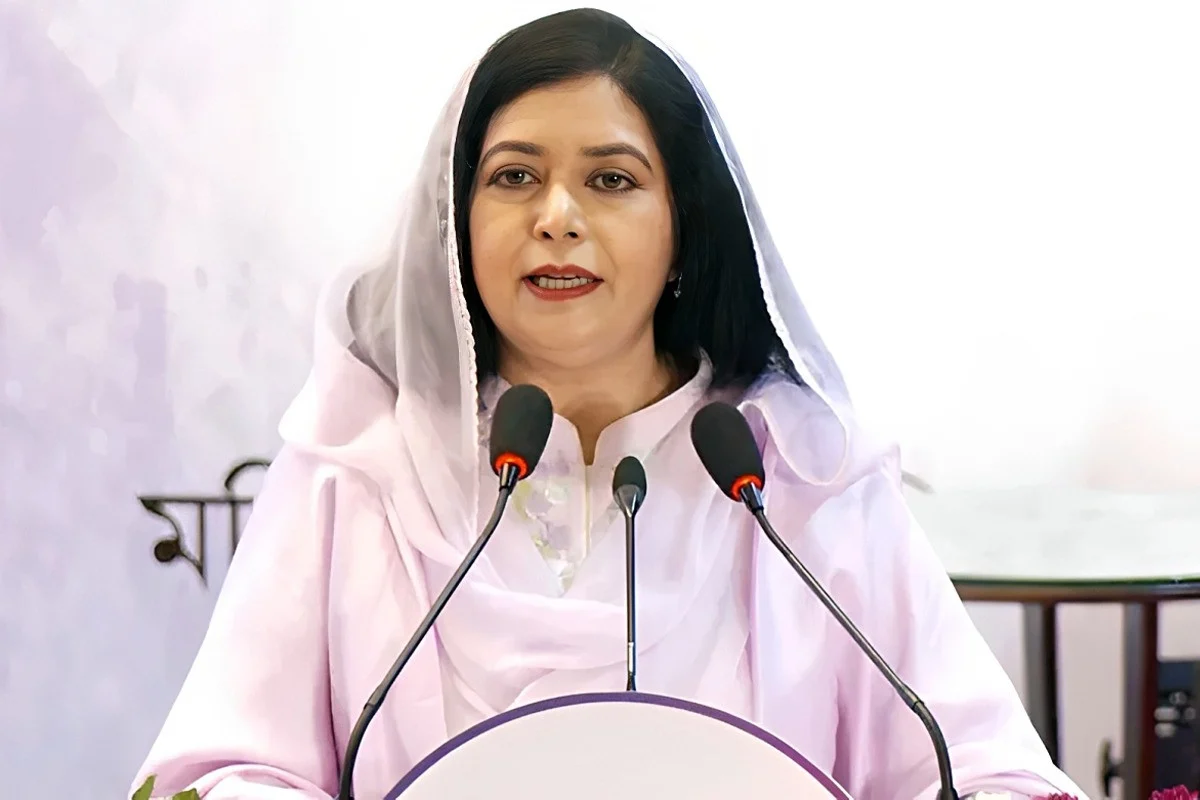
Dr. Zubaida Rahman, Vice President of the Ziaur Rahman Foundation, has said that healthcare innovation must be brought to people’s doorsteps to ensure affordable, quality and accessible healthcare for every citizen.
She said healthcare is not a privilege but a fundamental right of every citizen, and there should be no discrimination in access to healthcare based on income, location or social status.
Dr. Zubaida made the remarks as the chief guest at a seminar titled “Health Innovation for All: Expanding Access to Affordable and Quality Healthcare” at the Bangladesh Innovation Fair 2026 at Bangabandhu Sheikh Mujibur Rahman Novo Theatre in the capital on Sunday (September 13).
She said Bangladesh has made significant progress in its healthcare system, but greater emphasis must now be placed on disease prevention and early detection rather than relying solely on treatment. Awareness campaigns, vaccination programmes, regular health check-ups and expanded primary healthcare services can help prevent many serious diseases, she added.
She stressed the need to bring healthcare closer to people, particularly those living in remote areas. Greater public awareness is also needed about non-communicable diseases such as heart disease, cancer and diabetes.
Referring to heart disease as one of the country’s major causes of illness and death, she said significant improvements could be achieved through healthier lifestyles, regular check-ups, greater awareness and improved treatment facilities.
On diabetes care, Dr. Zubaida said Bangladesh has internationally recognised institutions and experts with considerable expertise. This capacity should be utilised to develop an integrated diabetes care system that provides patients with diagnosis, counselling, treatment, medication, regular monitoring and necessary referrals.
She also stressed the need to prepare for the country’s growing elderly population and people living with chronic diseases.
Regarding maternal healthcare, she said many women have to travel long distances to receive medical care during the later stages of pregnancy. This makes it difficult to provide timely treatment for pregnancy complications, pre-eclampsia and premature newborns.
She called for an effective referral system linking community health centres with district and specialised hospitals so that patients can receive timely and uninterrupted care. Follow-up after treatment should also be ensured so that patients do not fall outside the healthcare system.
Dr. Zubaida also emphasised the need for an integrated national blood service system covering voluntary blood donation, safe blood collection, infectious disease screening, separation of blood components, storage, transportation and proper tracking from donor to patient.
Highlighting the importance of innovation, she said innovation does not necessarily mean developing expensive new equipment or applications. The most valuable innovations are those that address the real health problems of people.
She called for stronger links among research, technology, policy and healthcare delivery, saying Bangladesh already has many of the capabilities needed for such transformation, including strong research institutions, a pharmaceutical industry, expanding digital capacity, community-level organisations and skilled professionals.
She said sustainable change in healthcare would require the collective participation of researchers, healthcare providers, pharmaceutical companies, innovators, professional organisations, development partners and communities. Good governance, accountability and public trust are also essential.
Dr. Zubaida said the next stage of Bangladesh’s healthcare system should focus on connecting existing capabilities with an inclusive national healthcare system. A patient should be able to begin treatment close to home, receive timely referral to a higher-level facility when necessary and continue to receive appropriate care and follow-up after treatment.
As a special guest, State Minister for Health and Family Welfare Dr. M. A. Muhit said the government has taken initiatives to increase investment and institutional capacity to advance research, innovation and technology-based solutions in the healthcare sector.
He said research and innovation are being prioritised to address the country’s healthcare challenges. Significant funding will be allocated for healthcare research and innovation this year, including support for medical universities, postgraduate institutes and promising physicians.
The state minister said Bangladesh needs to develop its own research capacity in areas including vaccine research, disease prevention and molecular research. A major molecular laboratory is being established under a government initiative.
He also said initiatives would be taken to involve Bangladeshi scientists working abroad in the country’s health research programmes. This would help strengthen research capacity, train a new generation of researchers and connect local research with international knowledge and experience.
Highlighting the importance of health technology, Dr. Muhit said HealthTech could provide effective solutions to everyday challenges in Bangladesh’s healthcare system. Digital technology should be used more extensively for reducing hospital waiting times, managing patient queues, online appointments and scheduling services. Pilot initiatives have already been introduced at several hospitals, he said.
In the plenary session, Secretary of the Ministry of Science and Technology Md. Anwar Hossain discussed the potential of innovative technologies to expand affordable healthcare, promote equality and inclusion, and make quality healthcare more accessible to the public.
He said the Bangladesh Innovation Fair 2026, organised under the theme “Innovate to Market,” aims to promote the practical application and commercialisation of innovation, research and technology across different sectors.
He stressed the need to move beyond simply displaying innovations and develop a culture focused on solutions, commercialisation and scaling up. A researcher should be able to connect with an entrepreneur, an entrepreneur with industry, and universities and research institutions with real-world problems, he said.
He added that the government would create a supportive environment through policy, financing, infrastructure and regulatory measures.
The science secretary also said an Innovation Hub is being established to create effective connections among innovators, researchers, entrepreneurs, industries and investors.
The plenary session was moderated by the Prime Minister’s Special Assistant on Health, Dr. S. M. Ziauddin Haider.
National Professor Dr. A. K. Azad Khan, President of the Diabetic Association of Bangladesh, attended the event as a special guest and delivered the keynote address.
Representatives and experts from various major healthcare institutions also participated in the session, including Director General of the Directorate General of Drug Administration Md. Alamgir Hossain; icddr,b Executive Director Dr. Tahmeed Ahmed; TMSS Deputy Executive Director-2 Dr. Md. Matiur Rahman; Bangladesh Association of Pharmaceutical Industries Senior Vice President M. Mosaddeq Hossain; United Healthcare Director of Medical Services Dr. Azharul Islam Khan; and EskeGen Founder and Chief Executive Officer Dr. Sadaf Saj Siddiqui.
The event concluded with a commitment to bringing healthcare innovation closer to the people and ensuring equitable, quality and safe healthcare services for all.