International Desk
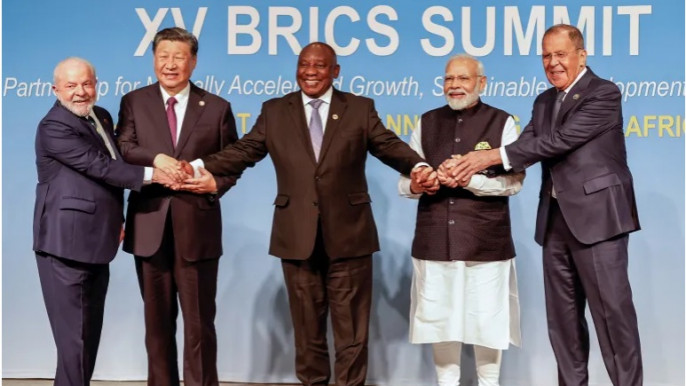
The much-discussed Middle East crisis is expected to be at the center of formal discussions at the upcoming BRICS summit. Russian President Vladimir Putin, Chinese President Xi Jinping and Iranian President Masoud Pezeshkian are scheduled to attend the important summit, which will be held on September 12 and 13.
Countries from Asia, Africa, the Middle East and Latin America will participate in this year’s summit. However, the Middle East conflict is likely to draw the most attention. Iran wants the recent conflict and sanctions against the country to be explicitly mentioned in the summit declaration. Since BRICS decisions are made by consensus, reaching an agreement on the issue could prove difficult.
This year’s BRICS grouping is highly diverse. Russia and China are strategic allies, while Iran is a staunch opponent of the United States. At the same time, Saudi Arabia and the United Arab Emirates maintain close relations with Washington. Representatives from several new member countries, including Indonesia, Egypt, Ethiopia, Nigeria and Cuba, will also participate.
Any instability in the Red Sea could negatively affect Egypt’s trade through the Suez Canal. Meanwhile, Gulf countries are maintaining a cautious position regarding the global energy market.
As the host country, India faces a major diplomatic test at this year’s BRICS summit. Its key challenge will be to bring countries with widely differing positions under one roof while preserving both its own interests and consensus among members.
The summit will also discuss trade, development financing and reforms of global institutions. However, all eyes will be on what the final declaration says about the Middle East.
If world leaders can overcome their differences and reach a consensus on the issue, it would undoubtedly be regarded as a significant diplomatic success.