Staff Correspondent
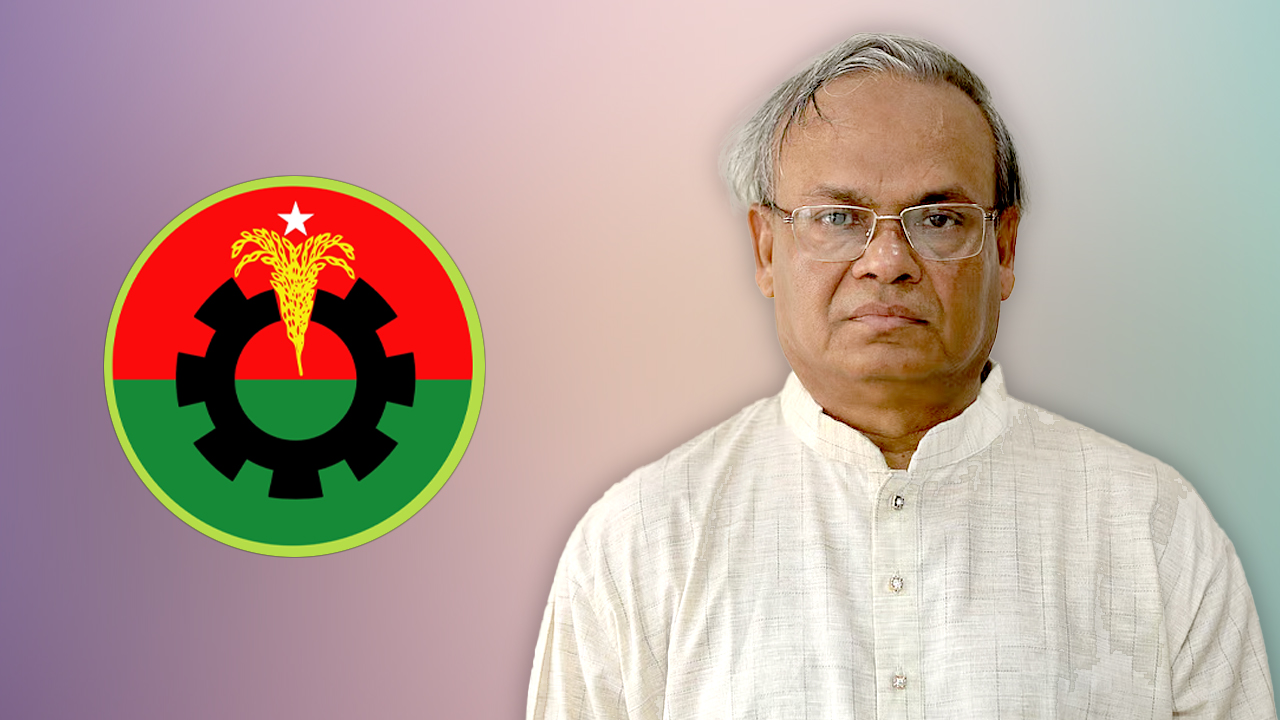
The BNP’s national council could be held in December this year or early next year. At that council, current Secretary General Mirza Fakhrul Islam Alamgir is unlikely to continue in the post, an indication he himself gave to the media some time ago. As a result, speculation over who will become the party’s next secretary general has intensified.
Meanwhile, the presidential election is scheduled for August 20. Multiple BNP sources have told Asia Post that Mirza Fakhrul Islam Alamgir’s nomination as the party’s presidential candidate is now almost certain.
Mirza Fakhrul became BNP acting secretary general in 2011 and took over as full secretary general in 2016. During the Awami League government’s long tenure, the veteran BNP leader was jailed six times. Although there had been speculation about replacing him at various times during his nearly 15 years as secretary general, the party found it difficult to identify an alternative because of his reputation as a decent politician with a clean image.
A review of the BNP’s history shows that the party has often appointed its first joint secretary general as acting secretary general before eventually making that person the full secretary general. In this case, if Mirza Fakhrul is elected president, Senior Joint Secretary General Advocate Ruhul Kabir Rizvi could be appointed acting secretary general and later confirmed at the party council.
Why Rizvi is in the spotlight
BNP Senior Joint Secretary General Ruhul Kabir Rizvi is currently the most discussed name for the post. Party activists believe Rizvi has extensive knowledge of the BNP’s organizational structure across the country, including at the district, upazila and union levels. His long involvement in organizational activities and his role in anti-government movements have earned him considerable respect among party workers.
Since becoming senior joint secretary general, Rizvi has remained actively involved in the party’s organizational affairs. Under the instructions of former BNP Chairperson Khaleda Zia and then acting chairman—and now Chairman and Prime Minister—Tarique Rahman, he has played an important role in implementing various party programmes.
Salahuddin Ahmed also in the race
The name of BNP Standing Committee member and Home Minister Salahuddin Ahmed is also being discussed as a possible successor. After being subjected to enforced disappearance during the Awami League government and spending a prolonged period in India, he continued communicating with party leaders and activists during the anti-government movement.
Salahuddin Ahmed is also known to be close to BNP Chairman and Prime Minister Tarique Rahman. His role in Parliament as a key minister and his strategic responses to criticism from the opposition have also drawn attention.
However, some party activists consider his long absence from the country and relatively limited direct contact with grassroots leaders a potential obstacle to his becoming secretary general.
Other names under discussion
Other names being discussed include BNP Standing Committee member and Finance Minister Amir Khosru Mahmud Chowdhury, Joint Secretary General Habib-un-Nabi Khan Sohel, and Joint Secretary General and Water Resources Minister Shahid Uddin Chowdhury Annie.
Several senior BNP leaders told Asia Post that ruling parties often face a growing disconnect between the central leadership and grassroots activists. Therefore, they believe the secretary general should be an experienced leader with strong ties to the grassroots.
A BNP Standing Committee member, speaking to Asia Post on condition of anonymity, said, “Since our chairman is now the prime minister of the country, the secretary general will be at the center of the party’s organizational activities. Appointing someone without strong grassroots connections to such an important position could prove counterproductive for the organization.”
Grassroots want a leader-friendly leadership
Conversations with BNP leaders and activists at different levels suggest that they want someone who has been associated with the party for a long time, enjoys grassroots support and is friendly toward party workers.
They believe the new secretary general should have a strong understanding of party activists across the country as well as proven organizational capabilities.
BNP Cumilla Divisional Organizing Secretary Principal Selim Bhuiyan told Asia Post, “The people have proven through the election that BNP is the most popular party in the country. Therefore, we expect the party’s secretary general to be an experienced and capable political leader. In this regard, someone who stood beside party leaders and activists during difficult times should be given the responsibility.”
Banchharampur Upazila BNP President Agriculturist Mehedi Hasan Palash said, “We want to see as secretary general the leader who stood beside us during the past 17 years of movements and struggles. We do not want a secretary general who fails to value grassroots activists.”
BNP Joint Secretary General Syed Emran Saleh Prince said the decision would ultimately depend on what is best for the party and the country. He added that a committed, prudent and experienced leader would be given priority.
BNP Vice Chairman Shamsuzzaman Dudu said the next secretary general would be someone preferred by Chairman Tarique Rahman who could work effectively with him and serve the interests of the party and the country. He also indicated that a relatively younger leader could be considered, with priority given to someone who enjoys the confidence of party workers.
Political analysts say maintaining the right balance between the party organization and the government will be a major challenge for the BNP as the ruling party. In the current context, the secretary general’s position is more than a title—it is the key driving force for maintaining the party’s nationwide grassroots network.
Ruhul Kabir Rizvi’s major advantage is his long experience managing the party’s central office and his close connections with party leaders and activists across the country. This network could help the BNP build new organizational momentum as it transitions from years of street-based opposition politics to governing the country.